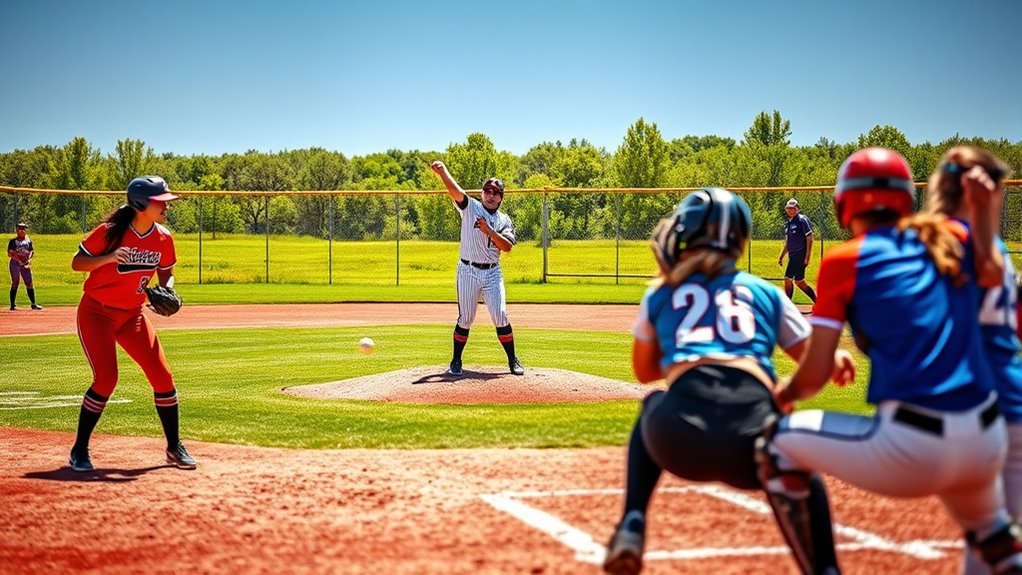

In softball, knowing each position and its responsibilities helps you play smart and work well with your team. You’ll cover specific areas on the field, like the pitcher delivering accurate pitches, the catcher calling pitches, infielders supporting plays, and outfielders covering large gaps. Being aware of roles and strategy will boost your game and teamwork. Keep exploring, and you’ll discover how these positions come together for successful plays.
Key Takeaways
- Know each player’s position and batting order to improve team reaction and game flow.
- Understand defensive alignment to effectively cover key areas and adapt to game situations.
- Recognize core defensive roles: pitcher, catcher, infielders, and their responsibilities.
- Position outfielders based on batter tendencies to enhance coverage and anticipate plays.
- Comprehend offensive roles in the batting order to support strategic decision-making and team success.

Understanding the different softball positions and their responsibilities is key to playing the game effectively. When you step onto the field, knowing where everyone should be and what they need to do can make a huge difference in how smoothly the game runs. It all starts with understanding the batting order and the defensive alignment. The batting order determines who hits and when, and it directly influences how the defensive team configures itself. As a player, you need to be aware of your spot in the lineup because this affects your readiness and positioning, especially in situations where quick shifts are necessary. The defensive alignment, meanwhile, refers to how players position themselves across the field to cover the necessary areas. Proper alignment allows for quick responses to hits and reduces gaps for the batter to exploit. Understanding these alignments and positioning strategies is essential for defensive success. The pitcher and catcher form the core of the defensive setup, working together to control the game. The pitcher’s role is to deliver accurate pitches that challenge the hitter and induce outs, while the catcher calls the pitches and keeps the defense organized. Behind them, the infield consists of first baseman, second baseman, shortstop, and third baseman. Each has specific responsibilities—such as the first baseman covering first base and catching throws, the shortstop controlling the middle infield and fielding ground balls, and the third baseman handling bunts and hard-hit balls down the third baseline. The second baseman supports plays on the right side of the field and helps cover second base during double plays.
Knowing your position and the batting order helps the team react quickly and plays smoothly.
Outfielders—the left, center, and right fielders—cover the largest area and need to anticipate where the ball might go. The center fielder often takes charge, communicating with the other two outfielders to ensure proper coverage. Their positioning depends on the batter’s tendencies and the game situation, which ties back into the defensive alignment. When you’re in the field, understanding your role within this alignment helps you react faster and make smarter plays. Recognizing the importance of defensive positioning can greatly improve your team’s effectiveness on the field. On offense, your role begins with the batting order. Each player’s spot determines when you get to hit and influences how the team strategizes. For instance, leadoff hitters set the tone, while power hitters may come later in the lineup to drive in runs. Knowing your place in the batting order helps you prepare mentally and physically. It also helps your teammates plan their approach—whether they’re looking to advance runners with bunts or hit for power. Overall, comprehending these positions, the batting order, and the defensive alignment allows you to be a more effective player, whether you’re contributing at the plate or in the field.
Frequently Asked Questions
How Do Players Decide Which Position to Play?
You decide your position based on your preferences and skills, often considering where you’re most comfortable or excel. Coaches also assess your abilities and your positional flexibility, which means your ability to play multiple roles. Sometimes, you’ll try different spots to discover where you perform best. Ultimately, your choice combines your interests, coach’s strategy, and your willingness to adapt, helping you find the most suitable and enjoyable role on the field.
What Skills Are Most Important for Infielders?
Ever wonder what skills make an infielders stand out? You need sharp fielding techniques and excellent glove work to succeed. Quick reflexes and agility are essential for stopping ground balls and making accurate throws. Being able to read plays quickly helps you anticipate where the ball will go. Do you practice your footwork and glove positioning regularly? Mastering these skills boosts your confidence and performance on the infield.
How Does a Pitcher Choose Their Pitch Type?
You choose your pitch type by using pitch selection techniques that consider the batter’s weaknesses, game situation, and your pitcher mental approach. Focus on mixing pitches to keep the batter off balance and maintain control. Trust your instincts, read the batter’s stance, and adapt your strategy accordingly. Developing a routine and staying confident helps you make smart decisions under pressure, improving your overall effectiveness on the mound.
What Are Common Strategies for Outfielders?
You might think outfielders just stand around, but their strategies involve sharp communication and smart positioning adjustments. To succeed, you stay vocal with teammates, calling out fly balls and warnings. You also shift your position based on batter tendencies and game situations, staying alert and ready to cover gaps. This proactive approach helps prevent hits and keeps the team’s defense strong, making you a reliable last line of defense.
How Do Team Dynamics Influence Position Assignments?
Team dynamics greatly influence position assignments because effective team communication helps players understand their roles and adapt to changing game situations. When leadership roles are clear, players feel confident and work together cohesively, ensuring the right positions are filled based on strengths and strategy. Your coach or captain guides these decisions, fostering trust and collaboration, which ultimately enhances your team’s overall performance and ability to respond effectively on the field.
Conclusion
Now that you understand the roles on the field, you’ll see how each position, like a puzzle piece, fits perfectly into the game’s flow. Sometimes, a quick change in responsibility can turn the tide, reminding you that every player’s role is interconnected—like fate guiding your team’s success. With this knowledge, you’ll appreciate the game’s intricate dance, where every move, every position, is part of a bigger story unfolding in a moment of perfect coincidence.