
Finding the right youth softball team hinges on understanding how team chemistry and coaching style impact your experience. Look for a team that values communication, support, and shared goals, creating a positive environment where everyone feels motivated and included. Pay attention to the coaching approach—whether structured or relaxed—and how it aligns with your child’s personality and needs. If you want to learn how to choose the best fit and build a successful team dynamic, keep exploring these key factors.

Get sports gear delivered free with Prime
- Fast, free delivery on millions of items
- Prime Video, Amazon Music and more included
- Member-only deals all year
Key Takeaways
- Assess the coach’s coaching style to ensure alignment with your child’s learning and communication preferences.
- Observe team chemistry and camaraderie to determine if the environment fosters trust and support.
- Consider team goals and values, such as skill development, fun, or competition, to match your child’s interests.
- Engage with coaches and players to understand team dynamics and the emphasis on positive communication and cooperation.
- Evaluate the team’s atmosphere to ensure it promotes a balanced, inclusive, and motivating environment for all players.
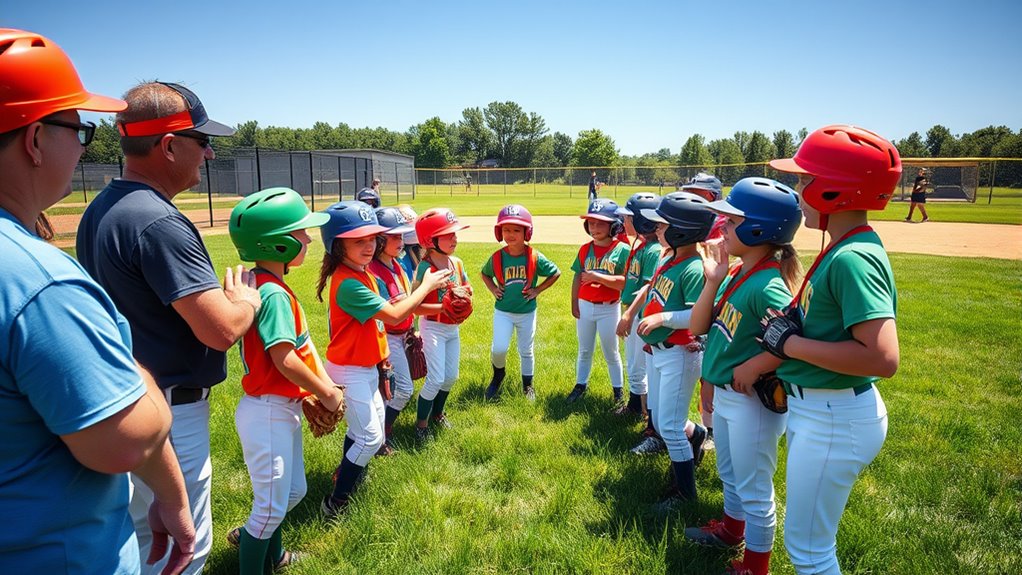
Have you ever wondered what makes a team truly successful? It’s not just about talent or skill; it’s about the synergy that develops among players, often referred to as team chemistry. When you’re part of a youth league or recreation softball team, fostering this chemistry can feel like an art form. You want teammates who communicate well, support each other, and work toward common goals. Achieving this starts with understanding how different coaching styles influence team dynamics. Some coaches prefer a hands-on, structured approach, emphasizing strict rules and drills to build discipline. Others adopt a more relaxed style, encouraging players to experiment and learn from mistakes. Neither is inherently better, but the key is finding a coaching style that resonates with your team’s personality and helps cultivate trust and camaraderie.
When coaching styles align well with the players’ needs, team chemistry naturally improves. If a coach is overly rigid, players might hold back, fearing mistakes or criticism, which hinders open communication. Conversely, a coach who fosters a positive environment, emphasizing encouragement and teamwork, helps players relax and bond. As a player, you’ll notice that when your coach supports a culture of respect and shared effort, it becomes easier to develop trust with teammates. This trust translates into better communication on the field, more coordinated plays, and a collective resilience that keeps everyone motivated, even during tough games. Additionally, integrating AI-driven communication tools can further enhance team coordination and strategy, making teamwork more effective.
Understanding your coach’s style can also help you adapt your own approach to teamwork. If your coach emphasizes individual skill but also values teamwork, you can focus on improving your personal abilities while actively encouraging your teammates. If the coach promotes collaborative strategies, you’ll want to be especially attentive to how you communicate and support others during practices and games. By recognizing how coaching styles shape team chemistry, you can contribute more effectively to the group dynamic. It’s about finding the right balance—knowing when to lead, when to listen, and how to motivate each other.
Ultimately, the success of your youth softball team hinges on more than just strategies or skills; it’s about creating an environment where everyone feels valued and motivated. When team chemistry is strong, and coaching styles are aligned with the team’s needs, you’ll experience that intangible yet powerful sense of unity. This unity isn’t just about winning games; it’s about building friendships, learning invaluable lessons, and enjoying the game together. So, pay attention to how your coach interacts with the team and how you can adapt to foster a positive, cohesive atmosphere. That’s the foundation for a truly successful team.
As an affiliate, we earn on qualifying purchases.
Frequently Asked Questions
How Do I Determine My Child’s Skill Level for Team Placement?
To determine your child’s skill level for team placement, observe their performance during practice drills and games. Pay attention to their throwing, catching, and batting abilities, and consider their comfort level with different skills. You can also request a skill assessment from coaches to get professional input. This helps guarantee they’re placed on a team that matches their current skills, encouraging growth and enjoyment in the sport.
What Should I Consider When Choosing a Team Coach?
Think of a coach as a compass guiding your child’s journey. When choosing one, consider their coaching philosophy—does it emphasize teamwork, growth, and fun? Also, observe their communication skills; a good coach clearly and patiently connects with players and parents. A coach who listens and inspires creates a positive environment. Trust your instincts, and select someone whose values align with fostering your child’s love for the game.
How Competitive Are Youth Softball Leagues Typically?
Youth softball leagues vary in competitiveness, but most focus on skill development and fun. The league structure often emphasizes learning fundamentals over intense competition, especially at younger ages. You’ll find that many leagues balance friendly games with skill-building activities, ensuring players improve while enjoying the sport. If you’re looking for a less competitive environment, seek out leagues that prioritize development and participation, rather than just winning.
Are There Age-Specific Divisions Within the League?
Yes, there are age divisions within youth softball leagues. These divisions help guarantee players compete against others with similar ages and skill levels. Leagues often conduct skill assessments during registration to place players in the appropriate age division, which promotes fair play and development. By organizing teams this way, you can feel confident your child is playing in a suitable environment that fosters growth and enjoyment.
How Can I Support My Child’s Development Outside of Games?
While games are exciting, your child’s real growth happens off the field. You can support their development through active parent involvement and skill development activities like batting drills or agility exercises. By dedicating time to practice together and encouraging their efforts, you help build confidence and foster a love for the game. Your support makes a lasting impact, turning small improvements into lifelong passion for softball.
softball team communication tools
As an affiliate, we earn on qualifying purchases.
As an affiliate, we earn on qualifying purchases.
Conclusion
Finding the right team makes all the difference in your softball journey. When you join a supportive and skilled group, your confidence soars and skills improve faster. Did you know that players who feel connected to their team are 30% more likely to stick with the sport? So, take the time to find that perfect fit. With the right team behind you, you’ll enjoy every game and grow as a player and teammate.
youth softball training equipment
As an affiliate, we earn on qualifying purchases.
As an affiliate, we earn on qualifying purchases.
softball team chemistry building games
As an affiliate, we earn on qualifying purchases.
As an affiliate, we earn on qualifying purchases.
NFL season / tailgating Picks
team gear
As an affiliate, we earn on qualifying purchases.