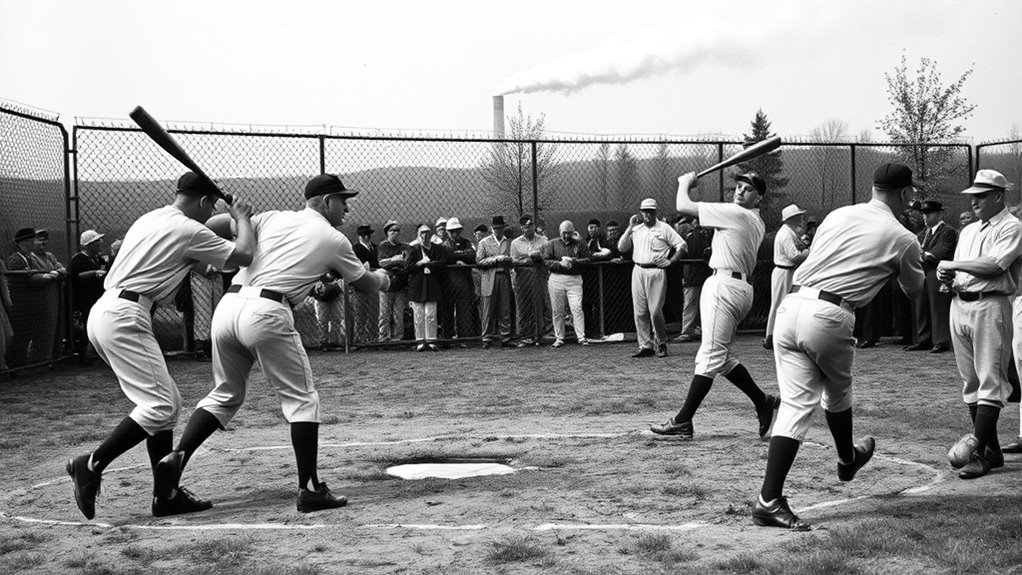

Softball started in late 1800s Chicago as an indoor, softer ball version of baseball, evolving from a simple indoor game. Women’s leagues soon formed, allowing more women to compete and challenging societal norms. Over time, rules were standardized to improve safety and gameplay, helping the sport grow nationally and internationally. Today, softball’s history of innovation and dedication by women athletes continues to influence its ongoing development—discover more about this incredible journey.
Key Takeaways
- Softball originated in late 19th-century Chicago as an indoor baseball alternative with a softer ball.
- Women’s leagues formed early, promoting female participation and challenging societal norms.
- The sport expanded nationally and internationally, increasing popularity among women and in organized leagues.
- Rule changes standardized ball size, pitching distance, and gameplay to enhance safety and engagement.
- Continuous evolution led to Olympic inclusion, with rules promoting fairness and supporting global growth.
Have you ever wondered how softball evolved from a simple indoor game into a popular sport played worldwide? It all started in the late 19th century when a group of men in Chicago wanted to create an indoor version of baseball during the winter months. They played with a softer ball and used a smaller space, which eventually led to the development of softball. Early on, women’s leagues began to form, offering women a chance to compete and enjoy the game just as men did. These leagues became crucial in shaping the sport’s identity and pushing for its recognition. Over time, softball gained popularity among women, especially in the United States, with organized leagues springing up across cities and colleges. These women’s leagues not only promoted the sport but also challenged societal norms about women’s athleticism and participation in competitive sports. These women’s leagues were instrumental in advocating for rules changes that prioritized safety and fairness. As softball grew, rule changes were introduced to make the game safer, faster, and more appealing to a broader audience. For example, the size of the ball was standardized, and pitching distances were adjusted to regulate game speed and difficulty. These modifications helped improve the clarity of the game and made it easier for players to learn and compete. Throughout the 20th century, rule changes also aimed to balance offense and defense, creating a more engaging experience for spectators. The sport’s governing bodies, such as the Amateur Softball Association (ASA), played a key role in formalizing these rules, ensuring consistency across leagues and competitions. The development of women’s leagues was instrumental in advocating for these rule changes, as players and organizers pushed for adjustments that would enhance safety and fairness. As a result, softball became more organized, with standardized rules that are still in use today. These changes helped the sport expand its reach beyond local communities, leading to national and international competitions. The popularity of women’s leagues especially skyrocketed during the mid-20th century, laying the foundation for the sport’s inclusion in events like the Olympics. Today, softball continues to evolve, but its roots in women’s leagues and the continuous refinement of rules remain a testament to its rich history. The game’s journey from a simple indoor pastime to a globally recognized sport reflects not only its adaptability but also the relentless efforts of women athletes and organizers who fought for its growth. So, the next time you watch a game, remember that behind the fast pitches and impressive catches lies a history shaped by determination, innovation, and a passion for the sport.
Frequently Asked Questions
When Was Softball Officially Recognized as a Sport?
Softball was officially recognized as a sport in 1933, gaining popularity quickly. As equipment evolved, like lighter bats and specialized gloves, the game became more dynamic. You’ll notice international growth, with countries adopting different rules and styles, making softball a truly global sport. This recognition helped standardize the game, encouraging more players worldwide to participate and enjoy the fast-paced, exciting sport you love today.
How Did Softball Originate From Baseball?
Imagine you’re playing a game where the ball is smaller and the pitching techniques are underhand instead of overhand. Softball originated from baseball in the late 19th century when players wanted a similar game but with a softer, smaller ball. You can see this evolution in the ball size and pitching methods, which shifted from baseball’s overhand style to soft, underhand throws, creating a distinct sport that’s still related today.
What Are the Major Rule Changes in Softball History?
You’ll see that major rule changes in softball history stem from baseball influence, shaping the game’s evolution. Over time, rule adjustments like the pitching distance, size of the ball, and base paths have evolved to improve safety and gameplay. The rule evolution reflects efforts to make softball more dynamic and fair, often inspired by baseball’s innovations. These changes help keep the game exciting and accessible for players and fans alike.
Who Were Key Pioneers in Softball Development?
Think of the game as a garden, flourishing thanks to historical pioneers and early innovators. These trailblazers, like Lou Henry and Ralph Sawyer, planted the seeds of softball’s development. Their creative ideas and rules shaped today’s game, turning a simple pastime into a competitive sport. By recognizing these key figures, you understand how their vision and effort paved the way for a sport that continues to grow and inspire.
How Has Women’s Participation in Softball Evolved Over Time?
You’ve seen women’s participation in softball grow considerably over time. Today, more women are breaking barriers, promoting gender equality in the sport. Youth participation has surged, encouraging girls to get involved early and develop skills. This evolution fosters a more inclusive environment, empowering women to compete at all levels. Your support helps sustain this progress, ensuring softball continues to be a platform for gender equality and youth engagement.
Conclusion
Just like a tiny seed grows into a mighty tree, softball’s history shows how a simple game can blossom into a beloved sport. Every rule change, legendary player, and shared moment adds a leaf to its flourishing branch. Remember, your passion and dedication keep this tree alive and thriving. As you step onto the field, know you’re part of its ongoing story—helping it grow stronger with each swing and catch.