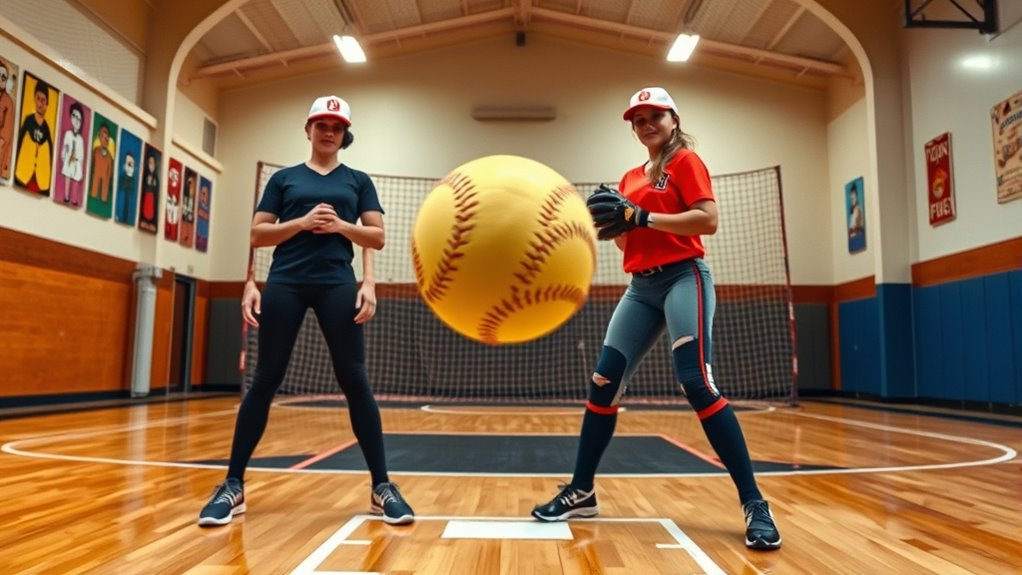

Indoor softball differs from outdoor play mainly due to its specialized equipment, like softer balls and lighter bats, and the modified rules for safety and space constraints. The field is smaller with fixed bases and shortened pitching distances, emphasizing quick reflexes and precise hits. Safety barriers and protective screens are common, creating a controlled environment for year-round play. If you want to understand more about the unique equipment, rules, and strategies, there’s plenty more to explore.
Key Takeaways
- Indoor softball uses synthetic or rubberized surfaces instead of traditional dirt fields, with bases often floor-marked or fixed.
- The game features shorter fields, closer bases, and modified pitching distances for confined indoor spaces.
- Equipment includes softer balls and lighter bats to ensure safety and prevent facility damage indoors.
- Safety measures like protective screens and barriers are more prevalent, with rules emphasizing injury prevention.
- Gameplay strategies focus on precision, quick reflexes, and control due to limited space and faster play.
Have you ever wondered how softball players stay sharp during bad weather or off-season? The secret often lies in practicing indoors, where the environment is controlled, and you can focus on improving your skills without weather interruptions. Indoor softball might seem similar to the outdoor game, but there are key differences, especially when it comes to field equipment and game rules. Knowing these distinctions helps you prepare better and adapt your gameplay effectively.
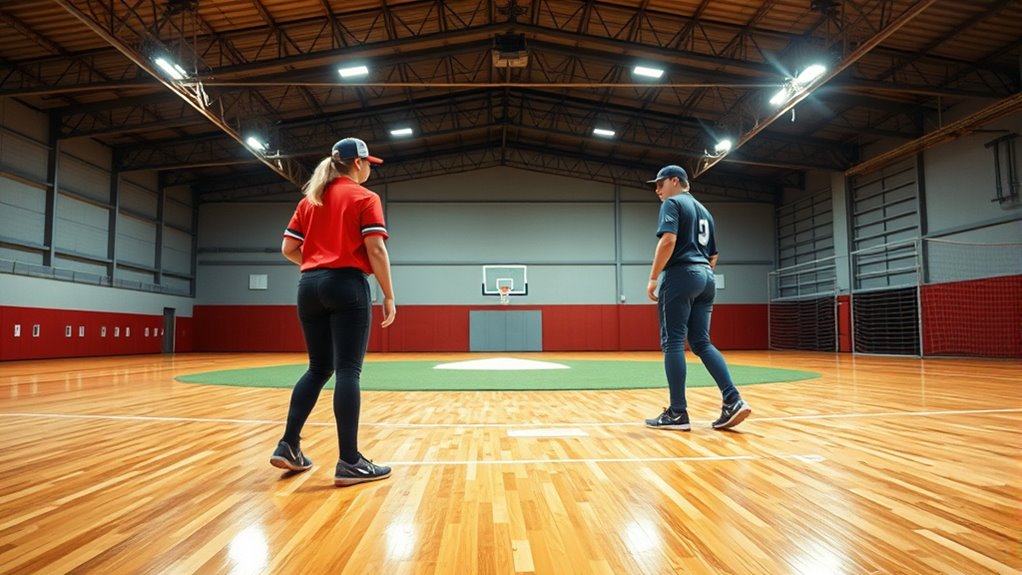
When playing indoors, the field equipment often differs from outdoor fields. You won’t have the large grassy outfield or dirt infield; instead, the surface is usually synthetic or rubberized, designed to minimize injuries and improve traction. The bases are typically fixed or marked on the floor, and the pitching mound might be a designated spot on the synthetic surface rather than a raised dirt mound. Equipment like nets or screens can be used to section off areas or protect players from line drives, which isn’t as common in outdoor settings. The smaller space means that your gloves, bats, and balls might need to be slightly different or specially designed for indoor play. For example, softer balls are often used to prevent damage to the facility and reduce injury risks, and lighter bats can help with control and safety in tighter spaces. Additionally, AI security solutions can be employed to monitor safety protocols and ensure secure access to indoor facilities.
Game rules in indoor softball are often adjusted to fit the confined environment. Since the field is smaller, the bases are closer together, resulting in quicker plays and faster-paced games. Some leagues modify the number of innings or limit the length of each inning to keep the game engaging within limited time frames. Pitching distances may be shortened to match the smaller field size, which can influence batting strategies and pitching techniques. Additionally, you might find rules that emphasize safety, like mandatory use of protective screens or restrictions on certain types of hits to prevent balls from bouncing out of play or causing damage. Because walls or barriers are close to the field, hitting the ball off the walls might be considered a different play compared to outdoor games, where the ball can bounce or roll for longer distances.
The indoor environment also adjusts your approach to gameplay. You need to be more precise with your hits, as there’s less room for error and fewer opportunities for the ball to travel far. The smaller, controlled space demands that you sharpen your reflexes and focus on quick decision-making. While the core principles of softball—such as base running, pitching, and batting—remain the same, these equipment and rule modifications mean you’ll need to adapt your strategy and technique. Whether it’s practicing your swing in a confined space or learning the nuances of indoor game rules, understanding these differences helps you stay competitive and enjoy the game year-round, regardless of the weather outside.
As an affiliate, we earn on qualifying purchases.
Frequently Asked Questions
What Equipment Is Essential for Indoor Softball?
You’ll need essential equipment like protective gear, including a helmet and padding, to stay safe during indoor softball. Choosing the right bat is also vital; opt for a lightweight, well-balanced one suited for indoor play. Don’t forget comfortable athletic shoes with good grip. With the right protective gear and proper bat selection, you’ll be prepared to enjoy the game safely and perform at your best indoors.
How Does Indoor Softball Field Size Vary?
Indoor softball field size varies based on the facility, but generally, the indoor field dimensions are smaller than outdoor fields. You’ll find field size variations, often ranging from 50 to 70 feet in length and 40 to 50 feet in width. These adjustments accommodate indoor space constraints while maintaining the game’s integrity. Knowing the specific indoor field dimensions helps you prepare better and adapt your gameplay accordingly.
Are There Different Rules for Indoor Versus Outdoor Softball?
Yes, there are different rules for indoor versus outdoor softball. Indoor games often have modified rules to suit the smaller field size and controlled environment. You’ll find adjustments in pitching distance, base paths, and game duration. When playing indoors, your outdoor strategy shifts because weather impacts are eliminated, but you need to adapt to the confined space and faster pace, making quick decisions and precise plays essential.
What Safety Precautions Are Necessary Indoors?
You should wear protective gear like helmets and padding to prevent injuries indoors. Make sure the space has good ventilation to avoid overheating and guarantee fresh air circulation during play. Keep the playing area free of obstacles and check for adequate lighting. Regularly inspect equipment for safety. By taking these precautions, you create a safer environment that minimizes risks and enhances your indoor softball experience.
Can Beginners Easily Adapt to Indoor Softball Gameplay?
Yes, beginners can easily adapt to indoor softball gameplay. Although training challenges may arise, the skill transfer from outdoor to indoor play is straightforward. Indoor softball’s smaller field and different ball speed help newcomers develop quick reflexes and better control. With practice, you’ll find it easier to grasp indoor rules and techniques, making the progression smooth and enjoyable as you build confidence in your skills.
lightweight softball bats for indoor play
As an affiliate, we earn on qualifying purchases.
As an affiliate, we earn on qualifying purchases.
Conclusion
Indoor softball offers a fast-paced, controlled environment where precision matters, yet it retains the core excitement of traditional softball. The confined space demands quick reflexes, but the camaraderie remains just as strong. While the game’s pace accelerates indoors, the spirit of teamwork stays steady. Whether you seek intense focus or shared laughter, indoor softball combines the best of both worlds—intensity and camaraderie—making every game a unique, unforgettable experience.
protective screens for indoor softball
As an affiliate, we earn on qualifying purchases.
As an affiliate, we earn on qualifying purchases.
synthetic indoor softball field equipment
As an affiliate, we earn on qualifying purchases.
As an affiliate, we earn on qualifying purchases.