
To create a customized conditioning program for elite softball athletes, you should assess individual strengths and weaknesses, focusing on sport-specific demands. Incorporate strength, flexibility, and injury prevention exercises tailored to common areas like shoulders and hamstrings. Integrate mental skills training to boost focus and resilience. Work closely with coaches and sports scientists to adapt the program as athletes progress. Keep exploring ways to optimize these routines for peak performance—more insights await you ahead.
Key Takeaways
- Conduct comprehensive assessments to identify individual strengths, weaknesses, and injury risks for tailored conditioning.
- Collaborate with coaches and sports scientists to design sport-specific drills and exercises.
- Incorporate strength, flexibility, and injury prevention strategies targeting common softball injuries like shoulder and hamstring issues.
- Integrate mental toughness and resilience training, including visualization and mindfulness, into physical conditioning routines.
- Continuously monitor progress and adapt programs dynamically to ensure ongoing development and injury risk reduction.

Developing tailored conditioning programs is vital for helping elite softball athletes reach their peak performance. When you tailor a program specifically to your needs, you not only optimize your physical capabilities but also reduce your risk of injury. Injury prevention becomes a fundamental focus, as a personalized plan targets your unique weaknesses and imbalances, addressing areas prone to strain or overuse. By incorporating strength training, flexibility exercises, and sport-specific drills, you build a resilient body capable of withstanding the demands of high-level competition. This proactive approach minimizes downtime caused by injuries, ensuring you stay on the field and continue improving.
Tailored conditioning reduces injury risk and enhances performance through targeted strength, flexibility, and sport-specific training.
Beyond physical preparedness, mental toughness plays a pivotal role in your overall development. A customized conditioning program should challenge you mentally, pushing your limits and fostering resilience. When you face tailored drills that simulate game pressure, you learn to maintain focus, control anxiety, and recover quickly from setbacks. This mental conditioning helps you develop the confidence needed to perform under pressure, whether you’re in a clutch moment or recovering from a mistake. The process of adhering to a personalized routine also builds discipline and consistency, reinforcing mental strength over time.
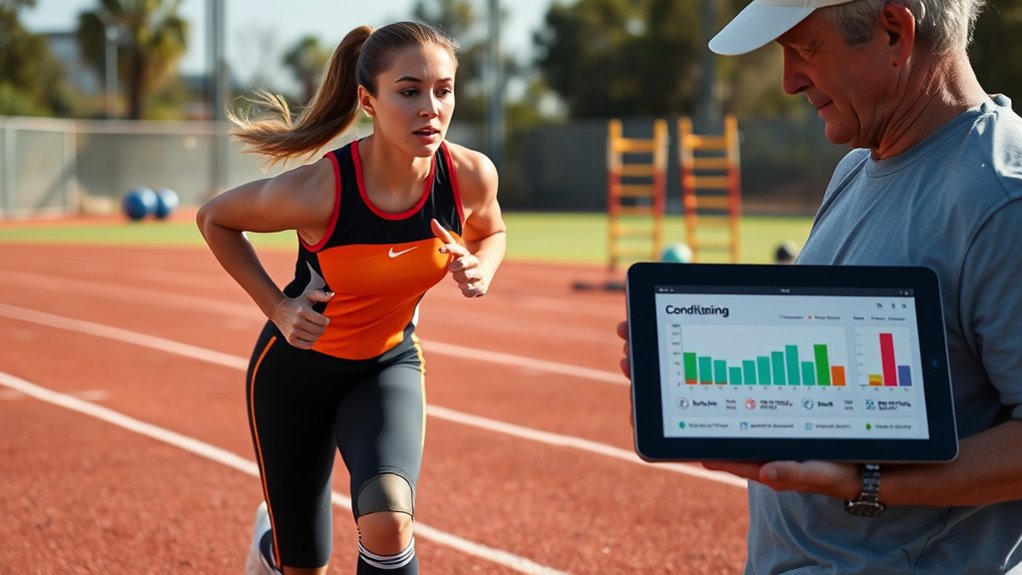
Creating an effective program starts with a thorough assessment of your current fitness level, strengths, and weaknesses. You work closely with coaches and sports scientists to identify specific areas for improvement. For instance, if you have a tendency to strain your shoulder or hamstring, your program will incorporate targeted exercises to strengthen those areas and improve flexibility. It’s not a one-size-fits-all solution; instead, it’s a dynamic plan that evolves as you progress, ensuring continual growth and adaptation. This customization helps you stay motivated, as the exercises are relevant to your goals, and you can see tangible progress. Incorporating proper tracking and assessment methods further ensures your program remains effective and aligned with your evolving needs.
In addition, your conditioning plan should integrate mental skills training, such as visualization, mindfulness, and goal-setting. These techniques enhance your mental toughness, allowing you to stay focused and composed during intense moments. When combined with physical training, they create a holistic approach that prepares you comprehensively for competition. As you develop this personalized routine, you gain confidence not only in your physical abilities but also in your mental resilience. This dual focus enables you to handle the emotional and physical challenges of elite softball, giving you a competitive edge that’s hard to beat.
Ultimately, creating a tailored conditioning program is about more than just physical training; it’s about building a stronger, more resilient athlete in every sense. When injury prevention and mental toughness are integrated into your plan, you set yourself up for sustained success, on and off the field.
Frequently Asked Questions
How Often Should Conditioning Programs Be Reassessed for Elite Softball Players?
You should reassess conditioning programs for elite softball players through periodic assessments, ideally every 4 to 6 weeks. This allows you to evaluate progress and make individualized adjustments based on performance, fatigue, and recovery. Regular check-ins help prevent plateaus, reduce injury risk, and optimize training effectiveness. By staying proactive with these assessments, you guarantee the program remains tailored to each athlete’s evolving needs and goals.
What Role Does Mental Training Play in Conditioning Programs?
Mental training boosts athletic performance considerably, with studies showing athletes with strong mental resilience perform 20% better under pressure. It plays an essential role in conditioning programs by enhancing focus and reducing anxiety. When you incorporate mental resilience exercises, you strengthen your ability to stay focused during high-stakes moments. This focus enhancement helps you maintain consistency, recover quickly from setbacks, and ultimately perform at your best on the field.
How Do Injury Prevention Strategies Integrate Into Customization?
You integrate injury prevention strategies by focusing on injury mitigation through biomechanical analysis, which helps identify movement flaws that could lead to injury. You then tailor exercises and techniques to correct these issues, reducing risk. Incorporating flexibility, strength, and proper warm-up routines further enhances safety. By continuously monitoring and adjusting the program based on biomechanical feedback, you guarantee the athlete stays protected and performs at peak levels.
Are There Specific Nutrition Guidelines for Optimal Conditioning?
You should focus on tailored nutrition planning that aligns with your training schedule. Prioritize dietary timing by consuming carbs and protein before and after workouts to fuel performance and recovery. Hydrate properly, and include nutrient-dense foods to support stamina and muscle repair. Listening to your body’s needs and adjusting your intake accordingly helps optimize conditioning, reduce injury risk, and make sure you perform at your best during every game and practice.
How Can Technology Be Used to Monitor Progress Effectively?
You can use wearable devices to track key performance metrics like heart rate, speed, and endurance in real-time. These devices provide valuable performance analytics, allowing you to monitor progress and identify areas for improvement. By analyzing this data regularly, you can adjust your conditioning plan for peak results, ensuring you’re pushing your limits safely and efficiently to enhance your softball performance.
Conclusion
To optimize your performance, tailor your conditioning program to your specific needs and goals. For example, imagine a top pitcher focusing on explosive strength and shoulder stability—custom exercises help prevent injuries and boost durability. By analyzing your strengths and weaknesses, you can create a targeted plan that elevates your game. Remember, a personalized approach keeps you motivated and guarantees you’re training smart, so you can dominate on the field when it counts most.