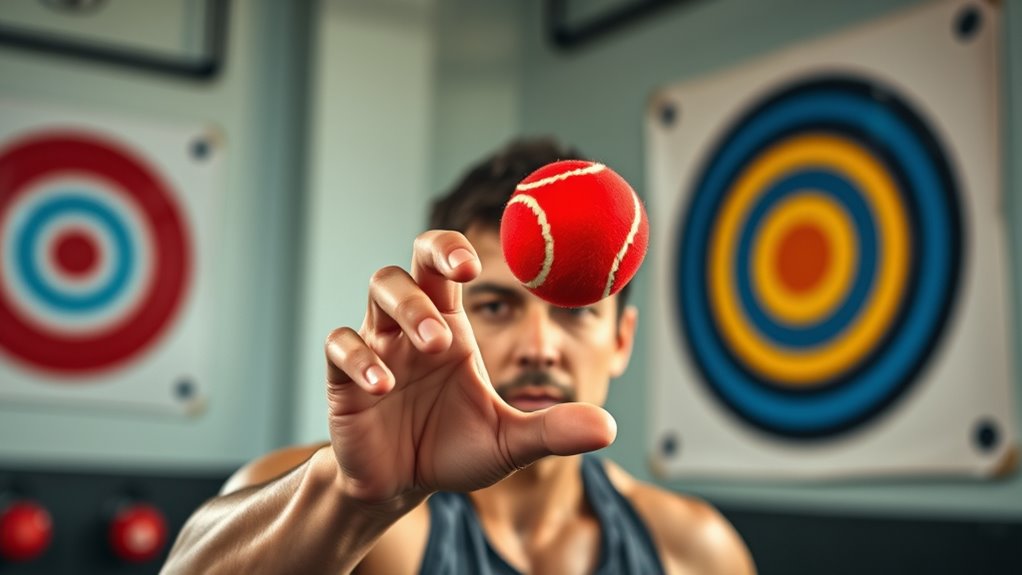

To improve your hand-eye coordination, incorporate daily drills like following moving objects with your eyes, practicing catching balls unexpectedly, and using reaction-time apps. These exercises help you enhance visual tracking and quick responses, making everyday tasks and sports smoother. Consistency is key—set aside time each day to perform these activities. Keep practicing, and you’ll notice your coordination and reflexes improving steadily as you focus on specific techniques and routines.
Key Takeaways
- Practice visual tracking exercises by following moving objects to enhance eye movement control.
- Incorporate reaction time drills, such as responding to sudden stimuli, to improve reflexes.
- Use tools like reaction balls or apps for unpredictable and dynamic hand-eye coordination training.
- Establish a consistent routine combining eye movement and reaction exercises for steady progress.
- Engage in sports or physical activities that require quick hand-eye responses to strengthen coordination naturally.
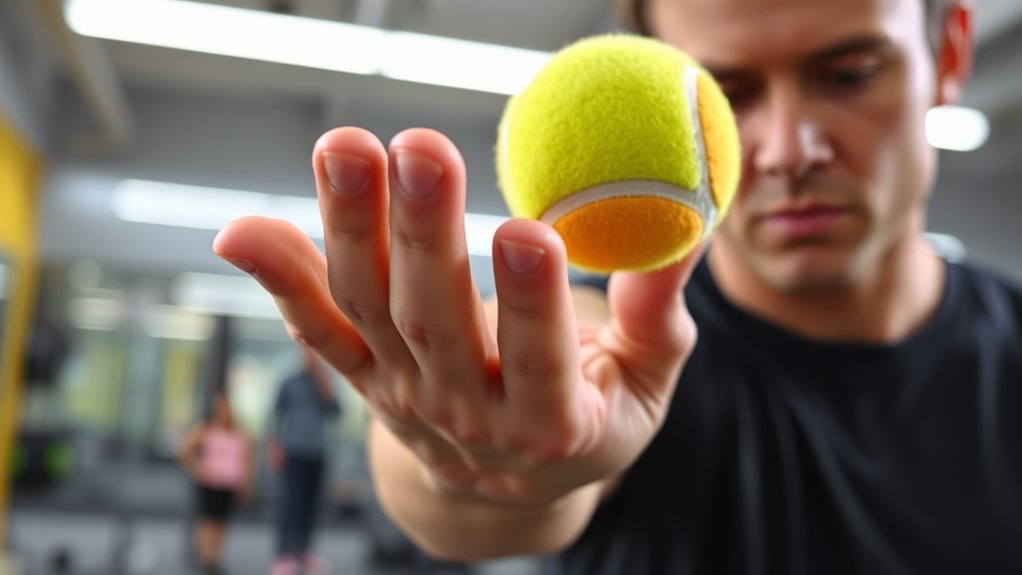
Hand-eye coordination is a crucial skill that influences many everyday activities, from sports to simple tasks like typing or cooking. It’s the ability to synchronize what you see with your hand movements, allowing you to perform tasks smoothly and accurately. Improving this coordination involves training your visual tracking and reaction time, two key components that determine how well you respond to visual stimuli. Visual tracking is your capacity to follow moving objects steadily across your field of vision, while reaction time measures how quickly you respond once you notice something. Enhancing both can considerably boost your overall hand-eye coordination.
One effective way to improve visual tracking is through activities that require you to follow moving objects carefully and consistently. For example, using a pen or a small ball, move it slowly across your line of sight and follow its path with your eyes without moving your head. As you get better, increase the speed gradually. You can also practice tracking moving objects on a screen or with specialized apps designed for eye movement training. These exercises challenge your visual tracking ability and help your eyes work together more efficiently. Incorporating consistent practice into your routine can lead to more noticeable improvements over time.
Reaction time drills are equally essential. When you see a stimulus, how quickly you respond can make a big difference in tasks like catching a ball or reacting to unexpected obstacles. To train reaction time, start with simple exercises like tapping a button as soon as a light or sound appears. As you improve, make the exercises more complex by adding unpredictable stimuli or incorporating physical movements, such as catching a ball thrown unexpectedly at you. The goal is to reduce the delay between seeing the stimulus and your response, sharpening your reflexes and overall coordination.
Integrating these drills into your routine can be very effective, especially if you do them consistently. For example, dedicate a few minutes daily to visual tracking exercises, like following a moving object with your eyes, and combine that with reaction time drills, like reacting to sudden visual cues. You can also use tools like reaction ball trainers, which bounce unpredictably and force you to react quickly. Over time, these exercises will help your brain process visual information faster and improve your hand-eye synchronization, making everyday tasks and sports activities feel more natural and responsive.
Frequently Asked Questions
How Long Does It Take to See Improvements in Hand-Eye Coordination?
You can start noticing improvements in hand-eye coordination within a few weeks of consistent practice. The timing of progress varies depending on individual differences like age, fitness level, and dedication. If you stick to your drills regularly, you might see noticeable changes in a month or two. Remember, patience and persistence are key; everyone’s learning curve is different, so stay committed and track your progress over time.
Can Hand-Eye Coordination Exercises Benefit Seniors or Children Differently?
Yes, hand-eye coordination exercises benefit seniors and children differently. You should use age-specific strategies aligned with developmental milestones. For children, activities focus on basic motor skills and coordination development, while seniors benefit from exercises that improve balance and fine motor control. By tailoring drills to each age group, you guarantee effective improvement, helping you maintain agility and coordination appropriate to your stage of life.
Are There Specific Sports That Require Better Hand-Eye Coordination?
Yes, sports like ball sports and racket sports demand excellent hand-eye coordination. In ball sports such as baseball or basketball, you need quick reactions to catch or hit moving objects. Racket sports like tennis or squash require precise timing and control for striking fast-moving balls. Practicing these sports helps you sharpen your hand-eye coordination, which can boost your overall reaction time and fine motor skills.
What Are Common Mistakes to Avoid During Hand-Eye Coordination Drills?
A stitch in time saves nine, so avoid common pitfalls during drills. Don’t rush or lose focus, as poor concentration hampers progress. Make sure you use proper technique, like maintaining good posture and consistent timing. Avoid overtraining, which can cause fatigue and reduce accuracy. Stay patient and disciplined, and remember that consistency beats intensity. Keep your drills purposeful and mindful to truly improve your hand-eye coordination effectively.
Is There a Recommended Daily Duration for Effective Practice Sessions?
You should aim for about 15 to 20 minutes of practice each day to see steady progress. Keep your practice consistent, as regular sessions make a bigger impact than sporadic ones. Focus on maintaining an ideal session duration that keeps you engaged without causing fatigue. Short, focused drills are more effective than long, exhausting sessions, so find a routine that fits into your daily schedule and stick with it.
Conclusion
So, after all these drills, you’d think your hand-eye coordination would be perfect. But surprise! Even with all the practice, you might still miss that easy catch or spill your coffee. Ironically, the more you try, the more your coordination improves—eventually. So keep at it. Because, honestly, who knew that hitting a ball or catching a spoon could be your secret weapon in life’s little chaos? Keep practicing—you’ll get there, maybe just in time for dinner.