Choosing softball training equipment often comes down to a practical tradeoff: should you buy a portable practice net that catches balls across several drills, or a hitting aid that makes one part of the swing easier to repeat? A net can support tee work, soft toss, and some throwing or fielding practice, but it takes more room and usually costs more than a basic tee. Hitting aids are more focused and often easier to store; they can be a better first purchase for a player working on contact, timing, or swing path. Neither category replaces coaching or game practice. This comparison looks at cost, skill development, versatility, space, safety, setup, and durability so families and players can choose equipment that matches their training routine.

Get sports gear delivered free with Prime
- Fast, free delivery on millions of items
- Prime Video, Amazon Music and more included
- Member-only deals all year

BAGAIL 7×7 ft Baseball & Softball Training Net
- ✔ Net size: 7 ft x 7 ft
- ✔ Net material: 7-ply knotless thickened polyester mesh
- ✔ Frame: Heavy-duty steel tubes with reinforced fiberglass poles
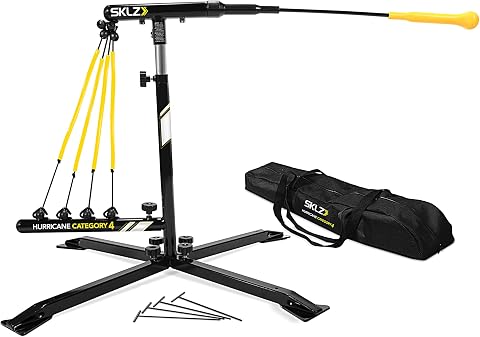
SKLZ Hurricane Baseball and Softball Swing Trainer
- ✔ Adjustable height: 23 to 38 inches
- ✔ Frame material: Aluminum
- ✔ Ball head: Anti-dent

Bandit Sports Tee Popper – Durable Nylon Batting Tee with Popper Ball
- ✔ Dimensions: 11.57 x 5.39 x 5.31 inches
- ✔ Weight: 0.59 kg
- ✔ Material: Glass-infused nylon
At a Glance
| Criteria | Portable practice net | Hitting aids | Winner |
|---|---|---|---|
| Typical cost | Usually a higher initial cost, especially for larger nets or sturdy frames. | Often less expensive for a basic tee; specialized trainers can cost more. | B |
| Skill development | Supports repeated contact practice while letting players focus on direction and consistency. | Targets specific mechanics such as contact point, swing path, or timing through repetition. | Depends |
| Drill versatility | Can accommodate tee work, soft toss, and some throwing or fielding drills. | Usually narrower; different skills may call for separate aids or additional equipment. | A |
| Space and portability | Needs a clear practice area; folding models can travel but still take up more room than a tee. | Typically compact and easier to store or bring along, particularly a basic tee. | B |
| Ball containment and safety | Provides a target and catches many hits when correctly positioned, though missed or deflected balls can escape. | A tee has no net to catch batted balls, so it needs a safe hitting area and retrieval plan. | A |
| Setup and ease of use | Requires assembly and careful placement; once set, it can support a session with several drills. | A basic tee is quick to adjust; some timing trainers need more instruction or a partner. | B |
| Long-term value | Can serve multiple players and practice types, making the higher cost worthwhile with regular use. | A focused tool can deliver strong value when it gets used consistently for a defined need. | Depends |
BAGAIL 7×7 ft Baseball & Softball Training Net
The BAGAIL is our strongest starting point when we want one softball practice station to support more than one kind of hitting drill. Its 7-by-7-foot net gives balls somewhere to go, while the adjustable tee and two strike zone targets add tee work and target practice to the setup. Compared with the Bandit popper, it asks for more room but supports a broader routine; compared with the SKLZ Hurricane, it emphasizes ball contact and containment rather than resistance through a swing.The listed 7-ply knotless polyester mesh, steel tubes and reinforced fiberglass poles are intended for repeated impact practice. Tool-free assembly is described as taking under two minutes, which suits a home session where we want to get started without a complex build. The carry bag and ground stakes make transport and outdoor setup possible, although the steel frame can be heavy to carry and windy conditions may call for staking. The net’s footprint also makes it less suitable for cramped indoor spaces.This pick makes the most sense for a player or family building a flexible hitting area and willing to reserve space for it. We should choose the Hurricane instead if resistance training is the main goal, or the Bandit if we specifically want a small pop-up reaction drill. BAGAIL’s range is its differentiator, but it does not provide the same focused resistance mechanism as SKLZ or the rising-ball cue of the popper.
Pros:
- Combines a 7-by-7-foot net with an adjustable tee and two strike zone targets.
- Tool-free setup is described as taking under two minutes.
- 7-ply mesh and a steel-and-fiberglass frame are built for impact practice.
- Carry bag and ground stakes support transport and outdoor use.
Cons:
- The full-size frame needs more storage and practice space than the Bandit popper.
- Steel frame weight can make transport cumbersome.
- Outdoor stability may require stakes, especially in windy conditions.
Best for: Players and families who want a versatile home hitting station for tee work, target practice and contained ball contact.
Not ideal for: Anyone with very limited floor or yard space, or a player whose priority is swing resistance rather than net-based hitting drills.
Bottom line: We rank BAGAIL first for its mix of net containment, tee practice and target work, provided we have room for its frame.
“We rank BAGAIL first for its mix of net containment, tee practice and target work, provided we have room for its frame.”
SKLZ Hurricane Baseball and Softball Swing Trainer
When we want a player to repeat a swing against resistance, the SKLZ Hurricane has a more specific job than BAGAIL’s net. Its four interchangeable power bands let us vary resistance, and the anti-dent ball head provides a consistent contact point for solo hitting practice. The 23-to-38-inch adjustable height can accommodate different player sizes, making it a better fit for a household with growing youth players than a fixed-height station.That focus comes with a setup and transport cost. The listed trainer weighs 34 pounds, substantially more than the Bandit popper, and base legs must be screwed in while metal stakes help secure it. A carry bag is included, but frequent moving may still feel like a chore. Unlike BAGAIL, it does not provide a large net for containing balls or strike-zone targets; unlike Bandit, it does not simulate a ball popping up for a reaction swing.The Hurricane is therefore our pick for a player whose routine centers on repeated swings and adjustable resistance, particularly when the trainer can stay set up in one place. The product is described for youth ages 14 and under, so buyers should account for that stated fit. We would skip it for a lightweight grab-and-go routine or a practice plan that needs a ball-catching net. Its value here is repeatable, resistance-focused reps, not broad practice versatility.
Pros:
- Four interchangeable power bands allow resistance adjustments.
- Height adjusts from 23 to 38 inches for different player sizes.
- Anti-dent ball head and aluminum frame are designed for repeated impact.
- Carry bag and ground stakes are included.
Cons:
- Listed weight of 34 pounds makes frequent relocation less convenient.
- Assembly involves screwing in base legs and inserting stakes.
- Does not offer BAGAIL’s net containment or Bandit’s pop-up reaction drill.
Best for: Youth players, described for ages 14 and under, who want adjustable resistance for repeated solo swing practice.
Not ideal for: Players who need a lightweight trainer to move often, or a practice station that catches balls and supports several drill types.
Bottom line: We choose the Hurricane when resistance-based swing repetitions matter more than portability or an all-in-one net setup.
“We choose the Hurricane when resistance-based swing repetitions matter more than portability or an all-in-one net setup.”
Bandit Sports Tee Popper – Durable Nylon Batting Tee with Popper Ball
The Bandit Sports Tee Popper stands apart because it sends a ball upward for the hitter to track and meet. Its reinforced spring is described as producing a high arc up to 46 inches, creating a different cue from the fixed contact point on the SKLZ Hurricane. At 0.59 kg and roughly 11.57 inches long, it is the most compact option in this group by its listed dimensions and weight, while BAGAIL remains the better choice when we need a net and several ways to practice.Glass-infused nylon construction is intended to resist breakage on impact, and the package includes a dedicated popper ball. The key limitation is also central to how we use it: the holder is compatible only with the included type of popper ball, and standard baseballs may damage it. That makes this a specialized drill tool rather than an open-ended tee. We should keep track of compatible balls and avoid substituting a standard softball or baseball unless the manufacturer confirms compatibility.This pick suits a player who wants a compact reaction exercise to add to a larger practice routine. It is less appropriate as a first and only piece of softball training equipment because it does not include a net, adjustable resistance bands or a full batting station. Compared with the Hurricane, it is lighter and emphasizes timing a rising ball; compared with BAGAIL, it takes less space but covers fewer practice needs. Its role is clear, and buyers should choose it for that role alone.
Pros:
- Reinforced spring is described as producing a pop-up arc up to 46 inches.
- Glass-infused nylon construction is intended to resist impact damage.
- Compact listed dimensions and 0.59 kg weight make it easier to store than the larger setups.
- One dedicated popper ball is included.
Cons:
- Compatible only with the designated popper balls; standard baseballs may damage the holder.
- Does not include a net, targets or resistance bands.
- Its specialized pop-up drill offers less routine variety than BAGAIL.
Best for: Players adding a compact rising-ball reaction drill to an existing softball practice setup.
Not ideal for: Buyers seeking a complete hitting station, or anyone who wants to use standard balls with the holder.
Bottom line: We recommend the Bandit as a compact add-on for pop-up reaction practice, not as a complete training station.
“We recommend the Bandit as a compact add-on for pop-up reaction practice, not as a complete training station.”
As an Amazon Associate we earn from qualifying purchases.
Key Differences
The main distinction is breadth versus focus. A net creates a contained place to hit and can anchor several practice routines. A tee or other hitting aid helps repeat a particular movement, often at a lower starting cost and with less setup. For a player who needs many quality swings, a tee paired with a net is a useful combination, but it is not necessary to buy both at once. Start with the tool that removes the biggest obstacle to regular practice.
Think about the conditions where the equipment will be used. A net helps when space is limited to a backyard or training area where free hitting would send balls too far, but it still needs clearance and reliable anchoring. A tee is easier to store and use in different locations, yet it does not stop balls. Coaches and families should choose a safe hitting zone, account for other people nearby, and follow the equipment maker’s setup guidance. For younger or less experienced players, supervision and instruction matter more than adding a specialized device.
Value depends on repetition. A larger net earns its higher price when several players use it or when it supports a regular mix of drills. A basic tee can be the better buy for a player who will practice swing mechanics often but has access to another safe way to handle hit balls. Extra spending makes sense when it directly enables consistent use, improves the training setup, or addresses a specific skill need.
Detailed Comparison
Typical cost (Hitting aids wins — moderate)
A basic hitting aid, particularly a tee, generally costs less to start with than a full practice net. Nets vary widely in size and construction, so a durable model can raise the upfront bill. The gap is moderate: players who only need a tee-height contact station may not benefit from paying for a frame and netting, while a net can replace the need to improvise a target and ball-catching area. Choose the less expensive aid when budget is tight and a safe hitting location is already available.
Skill development (moderate difference)
Hitting aids win when the goal is narrow and specific. A tee lets a player repeat contact at chosen heights and locations, while some trainers add timing or swing-path feedback. A net supports contact practice too, but it does not by itself teach mechanics or identify mistakes. The difference is moderate and depends on the skill: a tee is a strong starting point for repeatable contact, while the net is more useful as a destination for struck balls. Neither tool provides coaching feedback on its own.
Drill versatility (Portable practice net wins — moderate)
A net takes a clear win because it can catch balls from multiple hitting routines and can sometimes double as a target for throwing or fielding work. A tee can be used across different contact points, but it remains a hitting aid and does not contain the ball afterward. The gap is moderate: a player who practices several skills gains more from a net, while someone focused on one swing issue may not use the extra range of drills.
Space and portability (Hitting aids wins — major)
Hitting aids usually win on storage and transport. A tee can be adjusted and put away quickly, while a net needs a larger footprint and room for safe swings. Some nets fold down for transport, but they remain bulkier and require suitable setup space. The difference can be major for apartment living, shared yards, or travel to practice. A net is still manageable when there is a consistent practice spot and the model fits it.
Ball containment and safety (Portable practice net wins — moderate)
A net has the advantage because it catches many balls when properly positioned, reducing retrieval and helping define the hitting station. It cannot guarantee every ball will stay contained: mis-hits, rebounds, gaps, or poor anchoring can send balls outside it. A tee offers no containment, so the practice area must be chosen with that in mind. This is a moderate practical advantage for the net, not a substitute for a clear, supervised hitting zone.
Setup and ease of use (Hitting aids wins — minor)
A basic tee is generally quicker to put in place, adjust, and store than a net that needs assembly and anchoring. Specialized timing aids may take practice to use well, so not every hitting aid is automatically simpler. The gap is minor to moderate for routine use: a net’s initial setup can be worthwhile if it stays assembled, while a tee is convenient when training is short or the practice location changes.
Long-term value (moderate difference)
There is no universal winner. A net can provide better value for a team, family, or frequent player who will use its catching and drill flexibility. A lower-cost hitting aid offers better value when it is used regularly for a clearly identified skill and a ball-catching solution already exists. The difference is moderate but usage-driven: equipment that makes practice happen more often is usually a better purchase than a broader setup that stays in storage.
Portable practice net: Pros and Cons
Pros:
- Supports several drills in one station.
- Catches many hit balls when positioned and anchored correctly.
- Useful for players who want repeated swings without retrieving every ball.
Cons:
- Costs more upfront than a basic tee.
- Needs more storage and a suitable setup area.
- Assembly, anchoring, and occasional ball escape require attention.
Hitting aids: Pros and Cons
Pros:
- A basic tee is usually affordable and compact.
- Makes it easy to repeat contact at different heights and positions.
- Quick to adjust, store, and bring to another practice location.
Cons:
- Offers less drill variety than a net.
- Does not catch hit balls, so a safe hitting area and retrieval plan are needed.
- A specialized aid may address only one skill and may require separate equipment for others.
Who Should Choose What
Choose Portable practice net if:
- You have a regular practice space and want one station for tee work, soft toss, or other ball drills.
- Several players will share the equipment, making the net’s broader use worth the higher cost.
- Ball retrieval or containing many hits is a practical obstacle in your current setup.
Choose Hitting aids if:
- You want an affordable first tool for repeated contact practice.
- Storage space is limited or you carry equipment between locations.
- You already have a safe way to handle hit balls and want to work on a specific swing skill.
Skip both if: You lack a safe place to swing or do not yet know what skill needs practice; start with coached instruction or a supervised team practice before buying home equipment.
Value for Money
Pay more for a net when the added space, catching function, and drill range will see regular use. That premium is easiest to justify for a family with multiple players, a coach building a practice station, or a player who has a suitable setup area and wants to hit often without chasing every ball. If the net will only be used occasionally, the higher price and storage burden may outweigh its range.
A basic hitting aid is often the better value for an individual who wants to repeat a particular movement and can practice safely without a net. Start with a tee if contact consistency is the goal; consider a more specialized trainer only when its purpose matches a clear need. Paying more for extra features does not automatically improve practice. Choose the least costly option that supports a routine you can sustain, then add equipment when a real limitation appears.
Final Verdict
For most players buying one item to improve swing practice on a budget, start with a basic hitting aid such as a tee. It is compact, affordable, and useful for deliberate repetition. Choose a portable practice net instead when you have room, plan to practice often, and want a contained station that serves several drills or multiple players. The deciding factor is whether you need focused repetition or a broader practice area that catches many hits. If you can afford both and have space, a tee inside a net is a practical setup; if not, buy the tool that makes safe, regular practice possible.
Frequently Asked Questions
Should I buy a softball net or a tee first?
Buy a tee first if you want an affordable way to repeat contact practice and already have a safe area for hit balls. Choose a net first if containment and a multi-drill practice station are the main needs and you have room to set it up.
Can a practice net replace a hitting aid?
A net catches many balls and gives a target for hitting, but it does not set the ball at a chosen height like a tee or provide specialized timing feedback. It can support practice, yet a focused aid may still help with specific swing work.
Are hitting aids enough for softball training?
They can support focused skill practice, but they do not cover every part of training. Players also benefit from instruction, movement practice, throwing, fielding, and game situations suited to their level.
Is a more expensive net worth it?
It can be worth paying more for a net that fits the practice space, handles regular use, and serves more than one player or drill. For occasional individual practice, a lower-cost tee may deliver better value.