TL;DR

Get sports gear delivered free with Prime
- Fast, free delivery on millions of items
- Prime Video, Amazon Music and more included
- Member-only deals all year
Softball training equipment works best when each tool matches a specific skill, such as a tee and net for hitting or a rebounder for fielding. Start with a few age-appropriate basics, use them with sound coaching and safe workloads, and add specialized gear only when a clear training need arises.
Choose equipment for a specific training goal, such as tee work for hitting or a rebounder for fielding and throwing.
A glove, suitable practice balls, a tee, and a safe hitting area can make a practical beginner setup.
Check fit, league rules, equipment condition, and practice space before use.
Use video or connected tools as feedback, then review what you see with a coach or knowledgeable partner.
Count team practices when planning extra work, and leave room for warm-ups and recovery.
Start with the skill you want to improve
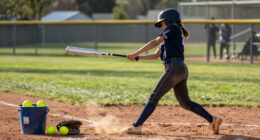
Softball training equipment is most useful when you choose it for a specific skill, such as repeatable contact, accurate throws, or quicker footwork. A tee supports stationary swing practice, a rebounder gives a fielder balls to react to, and cones can mark out short movement drills. Start with the next practice problem you can name, then look for a tool that helps address it. Think of equipment as a trail marker: it can guide a drill, but it cannot walk the route for you. A tee can put the ball in the same spot for each swing, which lets a player focus on balance and bat path. That repeatability is valuable because it reduces one source of variation, making it easier to notice whether a movement changed. But tee work does not reproduce pitch speed, location, or timing, so success on a tee does not automatically carry over to live hitting. A coach, parent with softball knowledge, or practice partner can identify what the tool cannot show, such as opening the shoulders too soon. For example, if Maya keeps popping up pitches, her coach might use a tee set at a comfortable height to work on contact through the middle of the ball. If she struggles with glove position on grounders, a rebounder and a few soft tosses may make more sense. The best purchase depends on the player’s age, experience, position, goals, and the space available. Matching the drill to the problem also helps avoid practicing a movement that feels productive simply because it produces many repetitions.Products Worth Considering

Therabody Theragun Relief Massage Gun, 3-Speed, Black

YETI Roadie 48 Wheeled Cooler with Retractable Periscope Handle

Therabody TheraFace Mask Glo Cordless LED Skincare Mask
As an affiliate, we earn on qualifying purchases.
Build a useful starter kit before buying extras
A beginner can cover several basic skills with a glove, appropriate practice balls, a tee, and a net or another safe hitting area. That small kit can support catching, simple throwing, and swing practice without asking a new player to learn several unfamiliar tools at once. Add specialized equipment when a coach identifies a particular need. Softball training equipment does not have to mean a large collection of gear. A folded net may fit beside the garage, while a tee and a few balls can come out for a short session before dinner. Those practical details matter: equipment that takes ten minutes to set up may stay in the shed, while a portable setup may get used more often. The tradeoff is that compact, simple gear may offer fewer drill options than a machine or larger training station. For a beginner, though, easy setup and repeatable basics often matter more than variety because regular practice depends on gear being accessible and understandable. Picture a family choosing between a heavy automated pitching machine and a simple tee for an eight-year-old’s first season. If the immediate goal is learning a balanced swing, the tee gives the player a calm, repeatable target and leaves the adult free to watch. The machine could become useful later, when the player is ready to work on timing against moving pitches, but it needs suitable space, safe setup, supervision, and enough skill to respond to its delivery. A tool earns its place by supporting a real practice goal, not by having the most features.Match each tool to the drill it supports
Hitting, pitching, throwing, fielding, conditioning, and game readiness call for different tools, so match each purchase to the practice task. A net can catch balls during tee work, while a rebounder can return throws or ground balls. For a comparison at a glance, use the goal-to-tool pairings below as a starting point, then check whether the gear suits your player and practice space. The pairings are starting points because tools shape the kind of repetition available: a tee offers control over ball placement, while a rebounder adds a less predictable return. Neither choice is universally better; the useful one depends on whether the player needs consistency, reaction practice, or feedback from another person.Keep practice safe, age-appropriate, and repeatable
Safe softball training equipment practice starts with well-fitted protective gear, a clear practice area, and drills suited to the player’s age and ability. Before a hitting session, check that the net is secure, the bat and balls are in good condition, and nobody is standing in the swing path. Check your league’s current rulebook before buying competition gear, since requirements can vary and change. These checks matter because equipment only reduces risk when it is correctly fitted, intact, and used in a space designed for the drill; a net, for example, cannot protect someone standing outside its coverage. A backyard may look roomy until a full swing sends a ball toward a window or a sibling wanders behind the hitter. Set the net on stable ground, mark a waiting area, and keep spectators well away from bats and thrown balls. For indoor work, check the ceiling, walls, floor, and netting, and use balls appropriate for the space. Softer balls may reduce damage, but they also behave differently from game balls, so indoor practice can help with movement or contact without fully reproducing game conditions. Workload matters too. Repeated high-volume hitting or throwing without enough recovery can contribute to overuse injuries, especially for young athletes. A player who has already thrown at team practice should not automatically add a long throwing session at home. Warm up, learn sound technique before raising effort, and follow a coach’s plan; get qualified medical guidance for pain or injury concerns. The practical tradeoff is that more repetitions can build familiarity, but once fatigue changes mechanics, extra volume may reinforce poor movement and leave less time for recovery.Use video and training gadgets as helpful feedback
A phone video can help a player and coach review movement, while connected tools may estimate swing or throwing measurements. These tools offer useful feedback, but their readings depend on the device and setup and should not stand in for coaching or a full picture of performance. Use the result to guide a conversation, not as a final grade. This distinction matters because a measurement can be precise without answering the right question: a faster swing reading does not tell you whether the player made better contact or stayed balanced. For instance, a coach might film a player’s swing from the side and notice that her front foot lands well before the bat moves. A short clip can make that timing easier to see, then the coach can suggest a drill. A sensor might provide another data point, but a number alone cannot explain why the swing changed or whether the device recorded the movement correctly. Video is also limited by camera angle and framing; a view that clarifies foot timing may hide the bat path. Reviewing the same movement from a consistent angle makes comparisons more useful. Portable nets, folding tees, and rebounders also make at-home practice easier to arrange. Their value depends on the player actually using them and practicing with sound instruction. If a new app says a swing is faster after a week, check the conditions of both measurements and ask whether contact and control improved too. Data helps most when it answers a clear question, such as whether a specific adjustment changed the movement, and when a coach can interpret the result in context.Follow a simple routine that leaves room to recover
A useful practice session gives you a clear task, a manageable amount of repetition, and time to rest. Start with a warm-up and technique work, then add speed or intensity only when the player can keep good form. If you’re new to softball or unsure how much work is appropriate, get a coach to help set the routine. A defined goal keeps practice from turning into uncounted extra volume, and stopping when form slips helps preserve the quality of the repetitions.- Pick one goal. Choose a task such as steady contact or accurate throws, rather than trying to fix everything at once.
- Set up safely. Check the net, protective gear, balls, and space around the drill.
- Practice with feedback. Use a tee or target for repetition, and ask a coach or knowledgeable partner to watch form.
- Stop and recover. Finish before fatigue makes technique sloppy, and account for team practices in the player’s total workload.