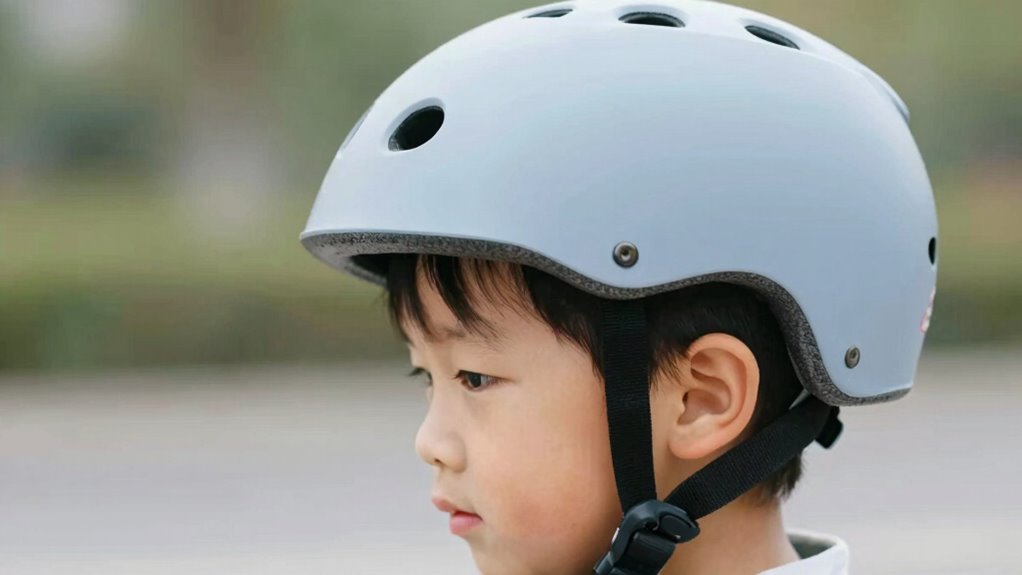

To guarantee your child’s helmet fits properly, do the “wobble test”: place the helmet level on their head, adjust the straps snugly, and gently shake side to side. The helmet should wobble slightly without sliding off or feeling too tight. If it moves excessively or feels uncomfortable, adjustments are needed. Mastering the wobble test helps keep your child safe during play. Keep going to learn how to get the perfect fit every time.
Key Takeaways
- The wobble test verifies helmet stability by gently shaking the helmet to ensure minimal movement, indicating a proper, secure fit.
- Adjust straps and helmet position so it sits level, low on the forehead, and snugly without causing discomfort.
- Proper fit is confirmed when the helmet wobbles slightly with gentle shaking but stays in place during normal activity.
- Avoid applying excessive force during the test; gentle movements provide accurate assessment of fit.
- Regularly perform the wobble test, especially after growth spurts or impacts, to maintain optimal helmet safety and comfort.
As an affiliate, we earn on qualifying purchases.
What Is the Wobble Test and Why Is It Essential for Helmet Safety?

The wobble test is a simple but essential way to check if your helmet fits properly. When you do this test, you see if the helmet stays securely on your child’s head without excessive movement. A well-fitting helmet offers better helmet comfort, ensuring your child feels secure without pinching or pressure points. It also promotes proper helmet ventilation, allowing air to circulate and keep your child’s head cool during activity. If the helmet wobbles side to side or front to back, it may be too loose, reducing its effectiveness in protecting against impacts. Ensuring a snug fit with the wobble test helps your child stay comfortable and safe, giving you peace of mind that their helmet offers the right level of protection. Proper helmet fit is crucial for maximizing safety and comfort during active play or sports. Additionally, understanding helmet standards can help you select the best protective gear for your child’s needs. Properly fitting helmets are also more likely to meet the necessary safety certifications, ensuring they provide the intended level of impact absorption and protection. Recognizing proper fit techniques can make a significant difference in choosing the safest helmet for your child. For example, selecting a helmet that aligns with regional safety requirements can ensure compliance with local safety regulations.
kids helmet safety certification
As an affiliate, we earn on qualifying purchases.
As an affiliate, we earn on qualifying purchases.
How to Prepare Your Child’s Helmet for an Accurate Wobble Test

Before testing your child’s helmet, make sure it’s clean to remove any dirt or debris that could affect the results. Adjust the straps properly so the helmet fits snugly on your child’s head without being too tight or loose. Ensuring the helmet fits correctly is key to getting an accurate wobble test, so double-check that everything is in place. Additionally, home organization tips can help keep your helmet and accessories tidy, making it easier to prepare for the test. Paying attention to contrast ratio can also ensure the helmet’s visibility and safety in different lighting conditions. Proper storage helmet storage can prevent damage and maintain the helmet’s integrity over time. Maintaining good helmet hygiene is essential for your child’s comfort and safety, especially during active play. Regularly inspecting the helmet for signs of damage or wear can further ensure it provides optimal protection.
Clean Helmet Thoroughly
To guarantee an accurate wobble test, you need to start by thoroughly cleaning your child’s helmet. Proper helmet cleanliness ensures no debris or dirt affects the fit assessment. Follow these steps:
- Use a mild soap and warm water to gently wipe down the entire helmet, paying attention to vents and straps.
- Remove any sweat or grime buildup that could interfere with helmet storage or cause discomfort.
- Dry the helmet completely with a soft cloth before testing to prevent slipping or misjudging fit.
- Avoid harsh chemicals or abrasive cleaners that could weaken the helmet’s materials or damage decals.
- Regularly cleaning your child’s helmet also aligns with traditional Indonesian home decor principles, emphasizing natural materials and maintaining a harmonious environment.
- Additionally, inspecting the helmet for any cracks or damage during cleaning helps ensure ongoing safety and helmet integrity. This routine also supports helmet longevity, ensuring it remains effective over time.
- Incorporating regular maintenance practices can help detect early signs of wear and tear, preserving the helmet’s protective qualities.
- Remember that a well-maintained helmet not only extends its protective effectiveness but also contributes to consistent fit and comfort during use.
Adjust Straps Properly
Ensuring your child’s helmet fits correctly for an accurate wobble test requires properly adjusting the straps. Start by securing the chin strap snugly under your child’s chin so it’s firm but comfortable. The strap tension should prevent the helmet from moving excessively when you gently shake it side to side, but it shouldn’t be so tight that it causes discomfort. Adjust the straps evenly on both sides, ensuring they lie flat and are not twisted. Check that the chin strap buckle is centered and securely fastened. Proper strap tension ensures the helmet stays in place during the wobble test, giving you an accurate assessment of fit. Additionally, proper drying and cleaning techniques can help maintain the helmet’s integrity and ensure it remains safe for use. Regularly inspecting the helmet’s positioning can help identify any shifts that might compromise safety during the test. Ensuring the helmet’s fit and stability is maintained is essential for safety and can be achieved through routine adjustments and inspections. Taking the time to check the helmet’s positioning and perform routine inspections ensures the fit remains correct during the test. Make small adjustments as needed until the helmet feels secure yet comfortable.
Ensure Proper Fit
Preparing your child’s helmet properly sets the stage for an accurate wobble test. To guarantee the helmet fits well and provides helmet comfort and good helmet aesthetics, follow these steps:
- Check that the helmet sits level and low on the forehead, about one or two finger-widths above the eyebrows.
- Ensure the helmet feels snug but not tight; it should stay in place without causing discomfort.
- Confirm the helmet is centered and symmetrical, enhancing helmet aesthetics.
- Remove any thick padding or accessories that could alter the fit or impede the wobble test.
- Proper helmet fit is essential for safety and comfort, so taking the time to prepare correctly helps ensure your child’s helmet performs optimally during the wobble test.
Doing this prepares the helmet for an effective wobble test, helping you verify proper fit and safety without sacrificing comfort or style.
As an affiliate, we earn on qualifying purchases.
How to Perform the Wobble Test Step-by-Step on Your Child’s Helmet

Performing the wobble test is a simple yet effective way to check if your child’s helmet fits properly. First, place the helmet on your child’s head, ensuring it sits level and snug. Gently grasp the sides of the helmet and give it a slight side-to-side shake. A properly fitted helmet should wobble minimally, indicating it’s snug but not tight. As you perform the test, pay attention to how the helmet materials respond—if it’s too loose, it may shift excessively. Check any helmet accessories, like pads or straps, to confirm they don’t interfere with the fit or cause instability. The goal is to ensure the helmet’s shell and interior liner work together to stay securely in place without causing discomfort or excessive movement during the wobble.
As an affiliate, we earn on qualifying purchases.
How to Know If Your Helmet Fits Properly: Reading Wobble Test Results

When you perform the wobble test, the way the helmet responds reveals if it fits properly. If the helmet wobbles side to side easily, it’s a sign it needs better helmet adjustment. To interpret the results:
- No movement indicates a snug, proper fit aligning with safety compliance.
- Slight movement shows it’s secure but may need minor tightening.
- Excessive wobbling suggests the helmet is too loose and requires adjustment.
- Resistance to movement might mean it’s too tight, risking discomfort.
A properly fitting helmet should stay stable with only gentle, minimal movement. Remember, a helmet that fits well not only passes the wobble test but also guarantees optimal safety compliance during impact.
Common Mistakes to Avoid When Checking Helmet Fit With the Wobble Test

Many people make the mistake of testing helmet fit with an overly forceful wobble, which can give false readings and lead to improper adjustments. When performing the wobble test, it’s important to be gentle; applying too much pressure can make the helmet seem loose, even if it fits correctly. Avoid rushing through the helmet adjustment process or relying solely on a quick shake. Remember, proper helmet sizing depends on a snug fit without excessive pressure. If you’re too vigorous, you might think the helmet is loose and over-tighten, compromising comfort and safety. Instead, test gently to ensure the helmet stays stable with a slight wobble. Accurate helmet adjustment is key to ensuring your child’s helmet provides the protection it needs.
How Often Should You Recheck Your Child’s Helmet Fit Using the Wobble Test?

You should recheck your child’s helmet fit after growth spurts to make certain it still fits properly. It’s also important to do routine checks, especially before outdoor play, and after any impact incidents. Staying vigilant helps keep your child safe and protected at all times.
Check After Growth Spurts
After a child experiences a growth spurt, it’s important to recheck the helmet fit promptly. Growth spurts can quickly change your child’s head size, affecting helmet size and safety. To keep them protected, consider these key points:
- Check helmet fit immediately after any noticeable growth spurt.
- Reassess every 2-3 months during rapid growth periods.
- Look for looseness or tightness that may develop as they grow.
- Remember, a well-fitting helmet should sit snugly without causing discomfort.
Reassess During Routine Checks
Regularly rechecking your child’s helmet fit guarantees ongoing protection, especially during periods of steady growth. Incorporate routine helmet maintenance and safety reminders into your schedule to ensure the helmet stays secure and effective. Aim to reassess the fit every few weeks or monthly during regular activities, like school or sports seasons. The wobble test is quick and easy—if the helmet moves excessively or shifts easily, it’s time to adjust or replace it. Remember, even if your child’s helmet looks fine, growth can affect fit over time. Staying consistent with these safety checks helps prevent accidents caused by a poorly fitting helmet. By making helmet maintenance a regular habit, you reinforce safety and keep your child’s head protected every step of the way.
Inspect After Impact Incidents
Whenever your child experiences a head impact, it’s crucial to recheck the helmet fit immediately. Impact damage can compromise helmet durability, even if there’s no visible crack or dent. Regularly inspecting after such incidents helps ensure your child’s safety. Here are key points to consider:
- Check for cracks, dents, or deformities in the helmet shell.
- Reassess the fit using the wobble test—if it moves excessively, it’s time for a replacement.
- Remember, impact damage might weaken helmet materials without obvious signs.
- Replace the helmet if any damage is found or if it no longer fits snugly.
Timely inspections protect your child from unseen impact damage, maintaining helmet effectiveness and safety. Don’t overlook post-impact checks—they’re vital for ongoing protection.
Extra Tips for Ensuring a Perfect Helmet Fit Beyond the Wobble Test

While the wobble test is a good starting point, there are additional ways to confirm your helmet fits perfectly. Ensure helmet comfort by checking that it sits snugly without causing pressure points or discomfort. Look for style options that suit your child’s personality, making helmet-wearing more appealing. To deepen your understanding, consider this table:
| Fit Aspect | What to Check | Why It Matters |
|---|---|---|
| Comfort | No pinching or tight spots | Ensures willingness to wear consistently |
| Position | Helmet covers forehead slightly | Provides ideal protection |
| Stability | No excessive movement side to side | Prevents slipping during activity |
| Style options | Colors and designs your child likes | Promotes regular use |
| Adjustment features | Easy to tighten or loosen | Customizes fit for comfort |
These tips help ensure your child’s helmet is comfortable and stylish, encouraging consistent wear.
What Should You Do If Your Child’s Helmet Fails the Wobble Test?

If your child’s helmet fails the wobble test, it’s essential to make certain to take immediate action to ensure safety. First, check if the helmet is properly positioned and snug, then try a gentle helmet adjustment to improve fit. If that doesn’t work, consider these steps:
- Verify that the helmet is the right size for your child’s head.
- Replace the helmet if it continues to wobble after adjustments.
- Consult safety tips from the manufacturer for proper fit techniques.
- Schedule a professional helmet fitting if needed.
Never compromise on helmet safety—an ill-fitting helmet can reduce protection. Always ensure that adjustments are secure and comfortable, and prioritize replacing any helmet that fails the wobble test to keep your child safe during every ride.
Why Proper Helmet Fit Matters for Your Child’s Safety and Injury Prevention

A properly fitting helmet is vital for your child’s safety because it guarantees maximum protection during falls or collisions. When the helmet fits well, it stays in place and distributes impact forces effectively. Helmet design and materials play a key role in this protection. A well-designed helmet with durable helmet materials absorbs shock and reduces injury risk. The right fit prevents the helmet from shifting or slipping, ensuring consistent coverage of vulnerable areas. Here’s a quick comparison:
| Aspect | Importance | Key Features |
|---|---|---|
| Helmet Design | Ensures proper coverage and comfort | Adjustable straps, ventilation |
| Helmet Materials | Absorbs impact and resists wear | EPS foam, polycarbonate shells |
| Fit | Maintains protection during accidents | Correct size, snug but not tight |
Proper fit maximizes safety, making it worth the extra effort.
FAQs About the Wobble Test and Keeping Your Child Safe in Their Helmet

When you perform the wobble test, it’s important to use the proper technique to make certain your child’s helmet fits snugly without being too tight. You might notice common concerns, like the helmet shifting too much or feeling uncomfortable. Addressing these issues helps keep your child safe and comfortable while riding.
Proper Wobble Test Technique
The wobble test is a simple yet effective way to guarantee your child’s helmet fits properly. To perform the test correctly, start by ensuring the helmet is well-adjusted to your child’s head circumference. Place the helmet on their head, then gently shake it from side to side. If the helmet shifts more than a finger’s width or feels loose, it needs a better helmet adjustment.
Here are four key steps to follow:
- Ensure the helmet sits level and covers the forehead.
- Check that the straps are snug but comfortable.
- Confirm there’s no excessive movement when performing the wobble test.
- Adjust the helmet’s fit system if necessary, maintaining proper head circumference.
This technique helps you verify that your child’s helmet provides ideal safety and comfort.
Common Helmet Fit Concerns
Many parents worry about whether their child’s helmet fits correctly, especially after performing the wobble test. Common concerns include helmet comfort; if the helmet feels too tight or causes pressure points, it may need adjusting. Conversely, if it’s too loose, it won’t provide adequate protection. Another frequent worry involves helmet aesthetics—some kids dislike how their helmet looks, which can affect wearing compliance. Keep in mind, a well-fitting helmet should feel snug but not uncomfortable, with no excessive movement when you perform the wobble test. Ensuring your child’s helmet fits properly helps maximize safety while maintaining helmet comfort and appealing aesthetics. Addressing these concerns early helps your child wear their helmet confidently and consistently, keeping them protected during every adventure.
Frequently Asked Questions
How Often Should I Perform the Wobble Test on My Child’s Helmet?
You should perform the wobble test on your child’s helmet monthly to guarantee it stays properly fitted and maintains helmet longevity. Regular checks help you spot signs of wear or looseness early, aligning with replacement guidelines to keep your kid safe. If the helmet shifts easily or feels loose during the test, it’s time for a new helmet. Consistent testing keeps protection ideal and ensures your child’s safety during play.
Can a Helmet Pass the Wobble Test but Still Be Unsafe?
Did you know that over 70% of helmets are replaced before they expire? A helmet might pass the wobble test but still be unsafe if it’s too old or damaged. Helmets have a limited lifespan due to helmet longevity concerns and can lose effectiveness even if they meet helmet certification standards. Always check for visible damage and replace helmets after a crash or when they reach their expiration date.
Is the Wobble Test Suitable for All Helmet Types?
The wobble test isn’t suitable for all helmet types because different helmet materials and designs respond differently. For example, hard-shell helmets may not wobble much, even if they’re poorly fitted, while soft foam helmets might wobble more but still be safe. Always check the helmet’s fit based on manufacturer guidelines, and consider additional safety checks, since the wobble test alone can’t guarantee helmet safety across all types.
What Signs Indicate My Child’s Helmet Is Too Old or Damaged?
Think of your child’s helmet like a trusty shield; if it shows cracks, dents, or feels brittle—like a shattered mirror—it’s time for a new one. Old helmets made from worn or compromised helmet material may no longer absorb impacts effectively. Always check for damage and verify it still meets helmet certification standards. If in doubt, replace it to keep your little one safe, like a hero with the best armor.
How Do I Choose the Right Helmet Size Initially?
You should measure your child’s head with a soft tape measure to find the right helmet size. Look for helmets made of durable, impact-absorbing materials, and guarantee it fits snugly without being too tight. Adjust the straps properly so they sit level and secure under the chin. Remember, a well-fitting helmet stays in place during movement, providing maximum protection while allowing comfortable breathing and vision.
Conclusion
Remember, performing the wobble test is a simple way to guarantee your child’s helmet fits properly and keeps them safe. For example, if your child’s helmet wobbles excessively during the test, it might not provide adequate protection in a fall. By regularly checking and adjusting the fit, you reduce injury risk and give your child peace of mind. Don’t skip this quick step—it’s a small effort that could make a big difference in their safety.