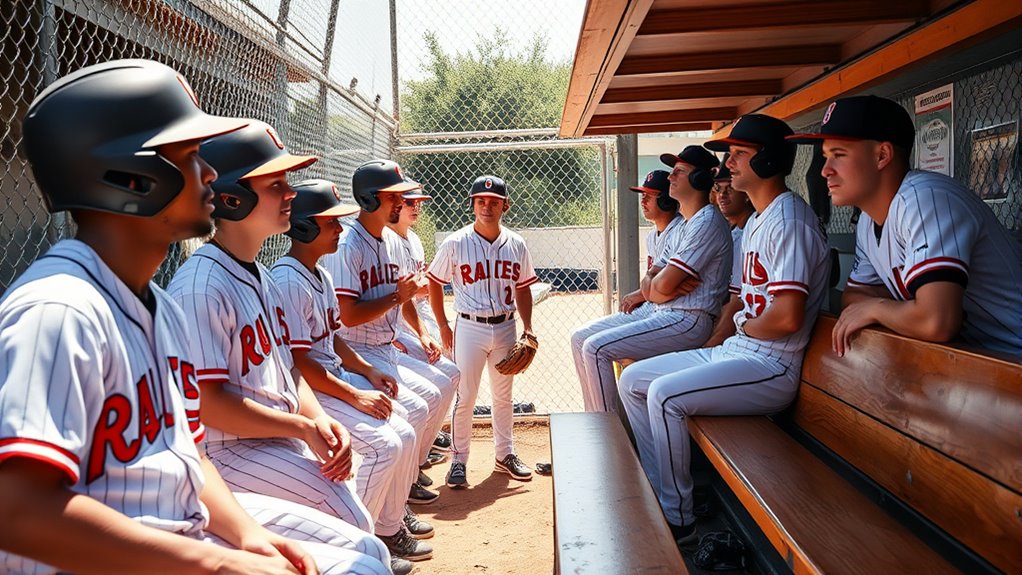

In the dugout, showing respect and practicing good etiquette help build team unity and create a positive atmosphere. You should cheer for teammates, accept decisions gracefully, and avoid taunting or negative comments. Communicate clearly and calmly, listen actively, and handle conflicts privately and maturely. Demonstrating sportsmanship strengthens bonds and boosts morale. Continued focus on these respectful behaviors can transform your team environment and lead to better overall performance.

Get sports gear delivered free with Prime
- Fast, free delivery on millions of items
- Prime Video, Amazon Music and more included
- Member-only deals all year
Key Takeaways
- Maintain respectful communication with teammates, coaches, and officials at all times.
- Avoid negative comments, taunting, or distracting behaviors during the game.
- Support teammates with positive encouragement and congratulate good plays.
- Follow team protocols for substitutions, downtime, and on-field conduct.
- Demonstrate maturity by handling conflicts privately and accepting decisions gracefully.

Have you ever wondered why some teams work seamlessly together while others struggle to stay on the same page? The answer often comes down to team etiquette—specifically, how players demonstrate sportsmanship and communicate with one another. In the dugout, these qualities are essential for fostering a positive environment and ensuring everyone feels respected and valued. When you show good sportsmanship, you set a standard that encourages others to do the same, creating an atmosphere where collaboration and mutual respect thrive. This means congratulating teammates on good plays, accepting decisions gracefully, and refraining from negative comments or taunting. Such actions reinforce a sense of unity and trust, which are indispensable for effective teamwork.
Good sportsmanship and respectful communication build trust, unity, and a positive team environment.
Communication skills are equally critical in maintaining proper dugout etiquette. Clear, respectful, and timely communication helps prevent misunderstandings and keeps everyone aligned. When you speak with your teammates, you should be mindful of your tone and choice of words, especially during high-pressure moments. Active listening plays a significant role here—you need to pay close attention to what others are saying and respond appropriately. If a teammate is giving advice or feedback, acknowledge it with a nod or a simple reply to show you’re engaged. Conversely, if you have a question or concern, express it calmly and constructively, rather than interrupting or dismissing others. Good communication also involves non-verbal cues—eye contact, gestures, and body language—that demonstrate your attentiveness and respect. Additionally, practicing positive reinforcement can motivate teammates and foster a supportive environment.
Maintaining proper dugout etiquette isn’t just about following rules; it’s about creating a culture of respect and professionalism. When you consistently practice sportsmanship and sharpen your communication skills, you help set a positive tone for the entire team. This encourages teammates to mirror your behavior, leading to a more cohesive and supportive environment. Remember, every interaction in the dugout can influence team morale and performance. If conflicts arise, handle them privately and maturely, rather than airing grievances in front of everyone. Respecting the game, your teammates, and the officials shows maturity and dedication, which can inspire others to do the same.
Ultimately, the way you conduct yourself on and off the field reflects your commitment to the team. By demonstrating sportsmanship and honing your communication skills, you contribute to a respectful, unified team culture that can overcome challenges more effectively. When everyone adheres to these principles, the game becomes more enjoyable, and your team’s bond strengthens—making winning not just about skill, but about the respect and camaraderie you build along the way.
baseball dugout sportsmanship training kit
As an affiliate, we earn on qualifying purchases.
As an affiliate, we earn on qualifying purchases.
Frequently Asked Questions
How Should Teams Handle Disagreements During Games?
During games, you should handle disagreements by prioritizing sportsmanship conduct and staying calm. Use conflict resolution strategies like listening to the other person’s perspective and calmly discussing the issue. If needed, involve a coach or umpire to mediate. Remember, maintaining respect for teammates and opponents helps foster a positive environment. Your goal is to resolve conflicts quickly, keeping the focus on playing the game and supporting each other.
What Is the Proper Way to Address Coaches and Officials?
You should always address coaches and officials respectfully, using proper titles like “Coach” or “Sir,” and maintain a calm tone. Focus on good player conduct by listening carefully and avoiding confrontational language. When communicating with coaches, be clear and concise about your concerns. Respect their authority, and if needed, discuss issues politely after the game. This approach promotes positive coach communication and sets a good example for everyone.
Are There Specific Dress Code Expectations in the Dugout?
Yes, there are specific dress code expectations in the dugout. You should follow your team’s uniform standards, ensuring your jersey, pants, and cap are properly worn and clean. Also, adhere to equipment guidelines by keeping your gear organized and in good condition. Wearing appropriate footwear and avoiding unnecessary accessories helps maintain a professional environment. Following these guidelines shows respect for your team, coaches, and the game itself.
How Can Players Support Teammates Who Make Mistakes?
You can support teammates who make mistakes by offering positive encouragement and constructive feedback. When you see someone struggle, focus on their effort and remind them that everyone makes errors. Avoid criticism and instead, cheer them on to stay motivated. Your supportive words boost confidence and foster a team environment where players feel safe to learn and improve, ultimately helping your team perform better together.
What Are the Consequences of Violating Dugout Etiquette?
Violating dugout etiquette can lead to loss of respect from teammates and undermine sportsmanship. You might face disciplinary actions from coaches or team leaders, and it can create a negative team environment. Your actions could also diminish your leadership role and damage team cohesion. Staying disciplined and respectful in the dugout demonstrates good sportsmanship, showing you’re committed to supporting your team and upholding the values that make everyone’s experience positive.
team communication and sportsmanship guide
As an affiliate, we earn on qualifying purchases.
As an affiliate, we earn on qualifying purchases.
Conclusion
By following proper dugout rules and showing respect, you help keep the team united and focused. Remember, a single act of sportsmanship can inspire everyone around you. Did you know that teams with strong etiquette practices are 25% more likely to win games? So, stay positive, support your teammates, and keep the dugout a place of encouragement. Your attitude can make all the difference on and off the field.
baseball team etiquette coaching tools
As an affiliate, we earn on qualifying purchases.
As an affiliate, we earn on qualifying purchases.
sportsmanship and teamwork training aids
As an affiliate, we earn on qualifying purchases.
As an affiliate, we earn on qualifying purchases.
Columbus Day / Indigenous Peoples' Day Picks
long weekend sales
As an affiliate, we earn on qualifying purchases.