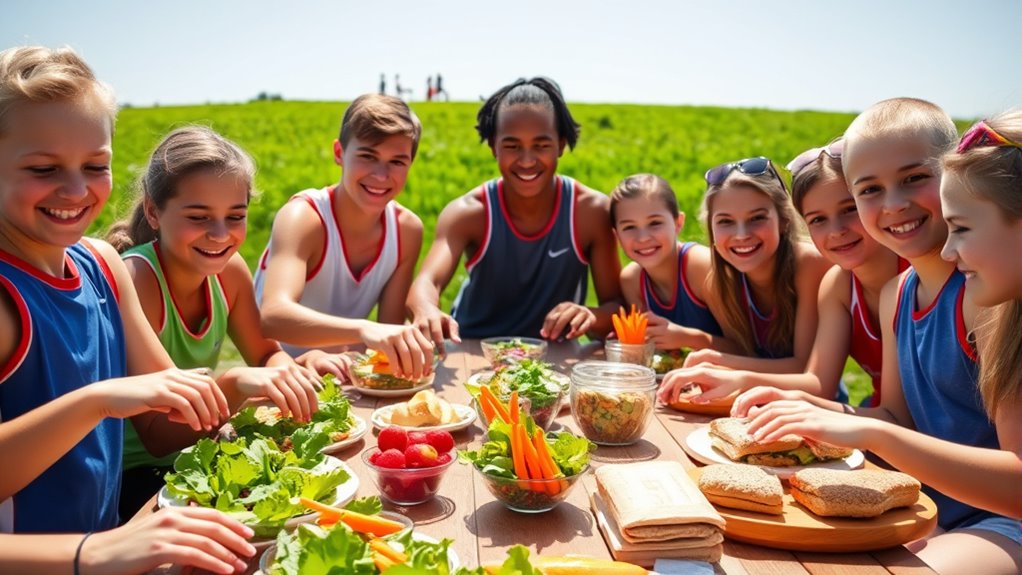

To build healthy habits, focus on balanced meals with carbs, protein, and healthy fats, eaten regularly to keep energy steady. Eat light snacks 30-60 minutes before activity, like fruit or nuts, and hydrate consistently with water or electrolyte drinks during and after efforts. Avoid greasy foods before exercise to prevent sluggishness. Developing these routines supports growth, performance, and overall health—stay tuned for more tips to help you optimize your nutrition strategies.

Get sports gear delivered free with Prime
- Fast, free delivery on millions of items
- Prime Video, Amazon Music and more included
- Member-only deals all year
Key Takeaways
- Encourage balanced meals with carbs, protein, and healthy fats for sustained energy and recovery.
- Promote consistent meal and snack timing to prevent energy dips and support focus.
- Teach young players to hydrate regularly with water and electrolyte drinks during activity.
- Advise eating light, easily digestible snacks before exercise to boost energy without discomfort.
- Foster healthy habits by avoiding heavy, greasy foods before activity and emphasizing proper post-game nutrition.

Proper nutrition is essential for young players to perform their best and stay healthy. When you focus on meal timing, you make sure your body has the energy it needs during practice and games. Eating at regular intervals helps prevent dips in blood sugar, which can leave you feeling tired or unable to concentrate. For example, having a balanced meal about two to three hours before a workout ensures you’re fueled without feeling weighed down. If you need a quick snack closer to game time, opt for easily digestible options like fruit or yogurt, which provide quick energy without discomfort.
Eat balanced meals 2-3 hours before activity for sustained energy and focus.
Hydration strategies are equally important. Staying properly hydrated helps maintain your stamina and keeps your muscles functioning well. Don’t wait until you’re thirsty to drink water; by then, you may already be dehydrated. Make it a habit to sip water consistently throughout the day, especially before, during, and after physical activity. For prolonged sessions, consider drinks with electrolytes to replenish minerals lost through sweat. Keep a water bottle with you and take small, frequent sips—this approach helps your body absorb fluids efficiently and prevents dehydration. Proper hydration is also enhanced by choosing water over sugary drinks, which can lead to energy crashes.
Timing your meals and snacks around your activity schedule helps maximize your performance. For instance, a light snack about 30 to 60 minutes before exercise, such as a banana or a handful of nuts, can give you that extra boost of energy without feeling too full. After activity, focus on replenishing your energy with a balanced meal containing carbs, protein, and healthy fats to aid recovery and muscle repair. Avoid heavy, greasy foods right before activity; they can make you feel sluggish and uncomfortable.
Incorporating good hydration strategies is simple but effective. Carry a water bottle everywhere, and make a habit of drinking small amounts frequently, not just when you’re thirsty. During intense or long sessions, include beverages that contain electrolytes to help replace lost minerals. Remember, consistent hydration is key to maintaining your focus, reducing fatigue, and preventing cramps.
sports nutrition for young athletes
As an affiliate, we earn on qualifying purchases.
As an affiliate, we earn on qualifying purchases.
Frequently Asked Questions
How Can Parents Encourage Healthy Eating Habits in Young Athletes?
You can encourage healthy eating habits in young athletes by involving the whole family in meal planning, making nutritious choices fun and engaging. Offer a variety of balanced meals and snacks, and set a positive example through your own eating habits. By actively participating and supporting their nutritional goals, you help instill lifelong healthy habits. Consistent encouragement and shared responsibility create a supportive environment where healthy eating becomes second nature.
What Are the Best Snacks for Young Players Before Games?
For pre-game snacks, opt for healthy snack options like bananas, granola bars, or yogurt, which provide quick energy without causing discomfort. Timing of snacks is key; eat them about 30 to 60 minutes before the game to fuel your body without feeling too full. Stay hydrated with water, and avoid heavy or sugary foods that might lead to sluggishness or stomach issues during play.
How Does Hydration Affect Athletic Performance in Children?
Hydration is your secret weapon for peak performance, preventing dehydration risks that can sap energy faster than a lightning bolt. When kids stay properly hydrated, their electrolyte balance remains intact, enabling muscles to function smoothly and stamina to soar. Without enough fluids, fatigue sets in quickly, and performance plummets. Keep young athletes sipping water consistently, especially during activity, to access their full potential and avoid injury caused by dehydration.
Are Supplements Necessary for Young Athletes’ Growth?
Supplements aren’t usually necessary for young athletes, as most get enough nutrients from a balanced diet. However, if you notice dietary deficiencies, like low Vitamin supplements or limited food variety, consulting a healthcare professional is wise. They can determine if supplements are needed to support growth and performance. Focus on providing nutrient-rich foods first, and only consider supplements when advised by a specialist to ensure safe, healthy development.
How Can Schools Promote Proper Nutrition Among Student Athletes?
Imagine planting a garden; schools can do this by providing nutrition education and guiding meal planning. You can promote proper nutrition among student athletes by offering workshops, creating informative posters, and encouraging balanced meal choices. Incorporate lessons on healthy eating habits into the curriculum and work with parents to guarantee nutritious meals are available. These steps help students develop lifelong healthy habits and fuel their athletic performance effectively.
As an affiliate, we earn on qualifying purchases.
Conclusion
Remember, you are what you eat, so make every bite count. Building healthy eating habits now sets the foundation for a strong, active future. Encourage young players to choose nutritious foods, stay hydrated, and listen to their bodies. As the saying goes, “You are what you eat,” so fuel your body with care and consistency. Doing so will help them perform at their best and grow into healthy, confident individuals.
hydration water bottles for children
As an affiliate, we earn on qualifying purchases.
As an affiliate, we earn on qualifying purchases.
balanced meal prep containers for kids
As an affiliate, we earn on qualifying purchases.
As an affiliate, we earn on qualifying purchases.
Fall Picks
fall essentials
As an affiliate, we earn on qualifying purchases.