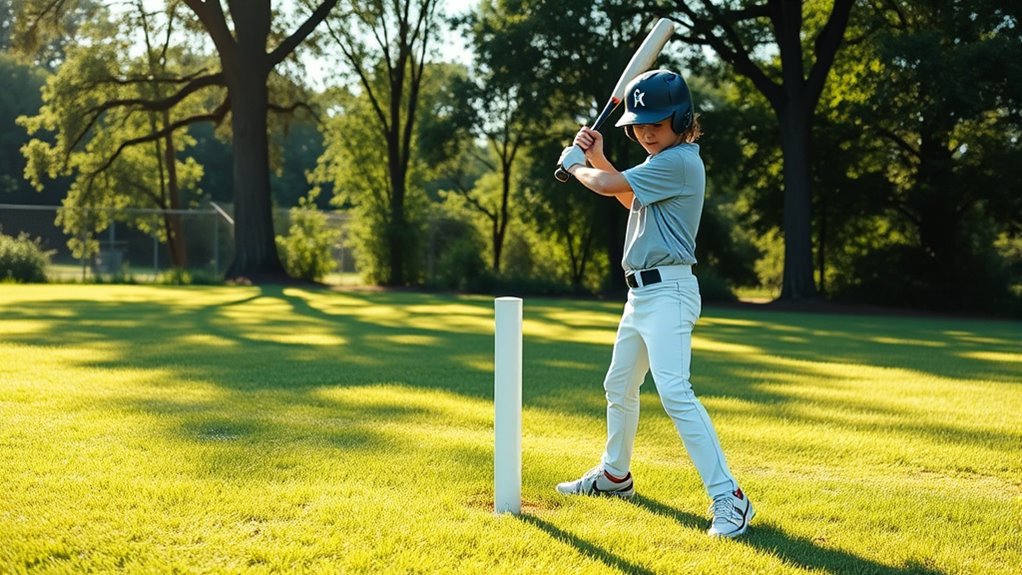

To hit off a tee with proper mechanics, start with a balanced stance—feet shoulder-width apart, knees slightly bent, and weight evenly distributed. Focus on a level or slightly upward swing path, initiating with a smooth takeaway and driving with your hips. Keep your hands inside the ball and maintain controlled, fluid motions. Consistent practice with small adjustments will build muscle memory. Keep practicing these fundamentals, and you’ll discover how to develop a consistent, powerful swing.

Get sports gear delivered free with Prime
- Fast, free delivery on millions of items
- Prime Video, Amazon Music and more included
- Member-only deals all year
Key Takeaways
- Maintain a proper stance with feet shoulder-width apart, knees slightly bent, and weight evenly distributed for stability.
- Start with a smooth, level or slightly upward takeaway, avoiding downward or looping motions.
- Keep hands close to the body, and initiate the swing with a slight hip rotation for power.
- Focus on making contact on a level plane, with hands inside the ball and eyes locked on the target.
- Practice consistently with a tee to develop smooth mechanics and muscle memory before progressing to live pitching.

Hitting off a tee is a fundamental skill that helps players develop proper swing mechanics and build confidence at the plate. When you set up, your batting stance is the foundation of a good swing. Stand with your feet shoulder-width apart, knees slightly bent, and distribute your weight evenly on the balls of your feet. Keep your hands relaxed and hold the bat comfortably, positioning it at a slight angle. Your eyes should be focused on the tee, with your chin slightly tucked to maintain good posture. This stance allows for a balanced, controlled swing and sets the stage for consistent contact.
A balanced batting stance sets the foundation for consistent, controlled swings and solid contact.
Once you’re in your stance, focus on your swing path. Your goal is to swing the bat on a level or slightly upward plane, ensuring the barrel makes solid contact with the ball. A proper swing path starts with a smooth, short takeaway, where the bat moves back in a straight line or slightly upward, avoiding any downward or looping motions. As you bring the bat forward, keep your hands close to your body and lead with your hips. This sequence helps generate power and control, guiding the bat through the hitting zone efficiently. Avoid rushing or swinging across your body, as this can cause off-center hits and inconsistency.
Practicing with a tee allows you to focus on maintaining a consistent swing path. Start slow, emphasizing a smooth, controlled motion rather than sheer speed. Pay attention to your hands, ensuring they stay inside the ball as you swing through the hitting zone. Visualize a direct, straight line from your hands through the ball, which encourages a proper swing path and improves contact quality. As you become more comfortable, gradually increase your swing speed without sacrificing the correct mechanics. Consistency is key, so repeat the process, making small adjustments to your stance or swing as needed.
Another tip is to use your hips effectively. Initiate your swing with a slight rotation of your hips, which helps generate power and keeps your swing on a proper path. Keep your head steady and eyes locked on the ball at all times. This focus helps you stay connected to your swing and ensures your hands follow the correct path. Remember, the goal is to make solid contact with the ball on a level plane, driving it back up the middle or to the opposite field. Additionally, understanding how to create a proper mechanical foundation can greatly improve your consistency and success at the plate. Over time, these fundamentals become second nature, allowing you to transfer your tee-hitting mechanics into live pitching or game situations. With patience and consistent practice, you’ll develop a reliable swing path and a strong batting stance that serve you well at the plate.
As an affiliate, we earn on qualifying purchases.
Frequently Asked Questions
What Is the Ideal Tee Height for Different Age Groups?
You should set the tee height so the ball is just above the bat’s grip, with a slightly higher tee for younger players and lower for older ones. Keep your stance width comfortable and consistent, allowing smooth swings. Adjust the tee height to promote a level swing path, helping you make solid contact. This setup builds proper mechanics and confidence at any age, leading to better hitting fundamentals over time.
How Should I Adjust My Stance for Better Contact?
To improve contact, adjust your stance by focusing on your bat angle and weight distribution. Keep the bat slightly angled with the barrel pointed toward the ball’s path. Distribute your weight evenly, leaning slightly forward on your toes. This helps you stay balanced and generate power. Practice consistent weight transfer from your back foot to your front foot, ensuring you make solid contact every time.
What Common Mistakes Do Beginners Make When Hitting off a Tee?
Did you know that 65% of beginners struggle with bat control? Common mistakes include rushing their swing, which disrupts swing tempo, and misjudging the ball’s placement, leading to weak contact. You might also neglect proper stance or fail to stay relaxed, making it harder to develop a consistent swing. Focus on slow, controlled swings to improve bat control and maintain steady swing tempo, helping you hit more solidly off the tee.
How Can I Improve My Hand-Eye Coordination at the Plate?
To improve your hand-eye coordination at the plate, focus on exercises that enhance visual tracking and reaction time. Practice tracking pitched balls with your eyes, even when they’re stationary, and do reaction drills like quick catches or using a ball machine. These activities sharpen your ability to see the ball clearly and react swiftly, helping you make better contact. Consistent practice boosts your coordination and overall hitting skills.
What Drills Can I Do to Develop Consistent Swing Mechanics?
To develop consistent swing mechanics, focus on drills that improve your bat speed and swing path. Use slow tee drills to concentrate on a smooth, efficient swing, ensuring a level swing path. Incorporate tee drills that emphasize quick hands and controlled movement, helping you generate better bat speed. Repeating these consistently trains your muscle memory, leading to more reliable mechanics at the plate.
As an affiliate, we earn on qualifying purchases.
Conclusion
Mastering the art of hitting off a tee is like revealing a secret superpower—suddenly, your swings become lightning-fast and unstoppable. With perfect mechanics, you’ll crush balls so effortlessly that even the baseballs will marvel at your precision. Keep practicing, and you’ll transform into a batting legend faster than you can say “home run,” turning every at-bat into a show-stopping masterpiece. Remember, consistency turns good swings into legendary hits!
As an affiliate, we earn on qualifying purchases.
As an affiliate, we earn on qualifying purchases.
Fall Picks
fall essentials
As an affiliate, we earn on qualifying purchases.