Using a weighted bat the wrong way can lead to bad habits that hurt your swing. Common mistakes include overtraining, swinging with too much force, and neglecting proper technique. Rushing the change back to a regular bat or choosing weights that are too heavy can also cause setbacks. If you keep these errors, you’ll develop poor mechanics and increase injury risk. Keep going to discover how to avoid these pitfalls and improve your performance.

Get sports gear delivered free — and shop member deals
- Fast, free delivery on millions of items
- Access to Prime Big Deal Days deals on October 6–7
- Prime Video, Amazon Music and more included
Key Takeaways
- Overusing weighted bats leads to fatigue, poor mechanics, and injury, fostering bad habits.
- Ignoring proper technique during weighted swings reinforces incorrect form and reduces transferability to game swings.
- Rushing from heavy weights to regular bats disrupts muscle memory and causes swing inconsistency.
- Prioritizing quantity over quality in practice can entrench bad habits and weaken muscle control.
- Choosing excessively heavy weights impairs mechanics and increases injury risk, hindering skill development.
As an affiliate, we earn on qualifying purchases.
Why Use Weighted Bats? Benefits and Risks to Know

Weighted bats are popular among players aiming to improve their swing speed and strength, but it’s essential to understand both the benefits and potential risks. Using a weighted bat can help increase bat speed by training your muscles to generate more force through repeated swings. This process also promotes muscle development in your arms, shoulders, and core, leading to a more powerful swing. However, overusing weighted bats or relying on them improperly can cause strain or injury. If your muscles aren’t conditioned or if you swing with poor technique, you risk developing bad habits that could hinder your performance. Always balance weighted bat training with proper technique and rest to maximize benefits while minimizing risks.
As an affiliate, we earn on qualifying purchases.
Common Weighted Bat Mistakes That Hurt Your Swing

Even though using a weighted bat can boost your power, many players make mistakes that actually harm their swing. One common mistake is swinging with too much force, which can slow down your bat speed over time and disrupt your muscle memory. If you focus solely on swinging harder, you risk developing bad habits that don’t translate to game situations. Another mistake is using a weighted bat for too long or too frequently, leading to fatigue and improper mechanics. This can cause you to develop tension and inconsistency in your swing, ultimately hurting your progress. To avoid these pitfalls, it’s essential to maintain proper technique and focus on controlled, deliberate swings. Overdoing it or relying solely on weighted bat drills can undermine your ability to generate bat speed naturally. Additionally, understanding how muscle memory and technique are vital in training for power can help you develop better habits that transfer effectively to game situations. Incorporating proper recovery and rest into your training routine is also crucial to prevent overtraining and injury. Remember that training consistency plays a key role in developing a reliable swing and avoiding setbacks. Being aware of training mistakes can help you make smarter adjustments and optimize your practice sessions.
As an affiliate, we earn on qualifying purchases.
How to Maintain Proper Technique When Using Weighted Bats
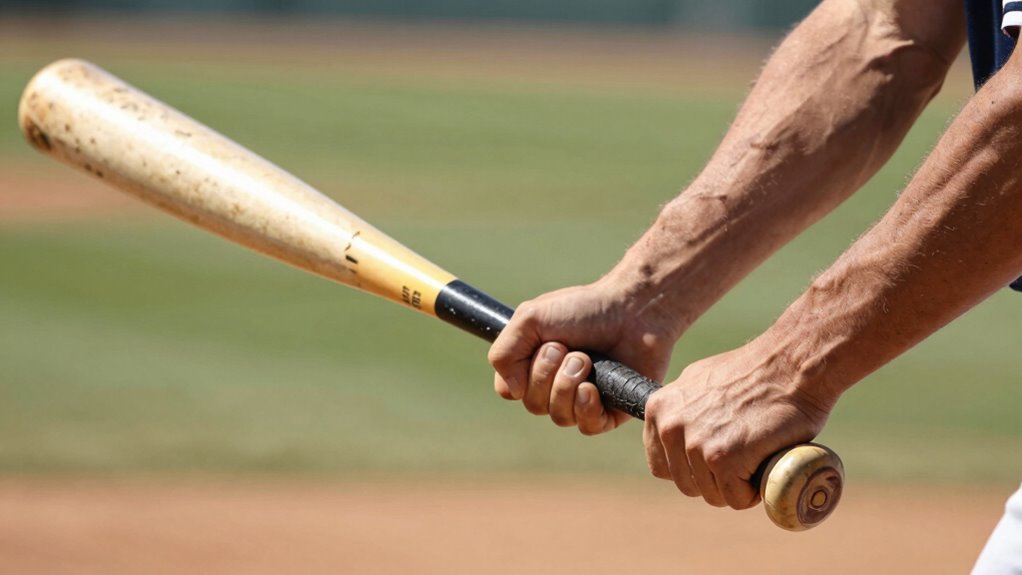
To get the most benefit from weighted bat training, focus on maintaining a proper grip and stance. Keep your hands comfortable and centered, and stand with a balanced, athletic posture. Make certain your swing mechanics stay controlled and smooth, even with the added weight. Incorporating correct technique ensures you develop good habits and avoid common mistakes that can hinder progress. Additionally, paying attention to proper form throughout your practice helps reinforce muscle memory and enhances overall performance. Remember that consistent practice with proper technique is essential for long-term improvement and injury prevention. Developing awareness of your body positioning and muscle engagement can further improve your training effectiveness. Understanding training progression can help you gradually increase intensity while maintaining proper form, reducing the risk of bad habits.
Proper Grip and Stance
Maintaining proper grip and stance is essential for maximizing the benefits and minimizing the risk of injury when using weighted bats. Your grip pressure should be firm but relaxed, allowing control without tension that could cause fatigue or strain. Focus on a natural grip that promotes fluid movement. Stance alignment is equally important; keep your feet shoulder-width apart, with knees slightly bent and weight evenly distributed. This balanced stance provides stability and facilitates smooth swings. Avoid leaning too far forward or back, which can throw off your balance. Proper grip and stance work together to ensure efficient force transfer and reduce the risk of bad habits forming. Consistently maintaining these fundamentals helps you develop safe, effective training with weighted bats. Incorporating correct technique into your routine supports long-term skill development and injury prevention. Paying attention to basic biomechanics helps optimize your swing mechanics and prevent compensatory errors.
Controlled Swing Mechanics
When swinging a weighted bat, controlling your mechanics is essential for both effectiveness and safety. Focus on maintaining a smooth, consistent swing path to prevent bad habits. To keep your bat speed ideal, avoid over-swinging or rushing through your motions. Instead, stay relaxed and deliberate with each swing. Incorporate controlled swing mechanics to enhance your training and prevent injury. Consider these key points:
- Keep your swing path level and direct toward the ball
- Maintain a steady, controlled tempo to maximize bat speed
- Avoid swinging too hard, which can cause poor mechanics
- Focus on a proper grip and stance to support controlled movements
- Consistently practicing muscle memory helps reinforce proper technique and reduces the risk of developing bad habits.
- Incorporating training aids can provide immediate feedback and help refine your swing mechanics.
- Paying attention to swing tempo ensures your movements stay smooth and controlled throughout each swing.
baseball hitting training equipment
As an affiliate, we earn on qualifying purchases.
As an affiliate, we earn on qualifying purchases.
Overdoing It: How Excessive Weighted Bat Practice Creates Bad Habits
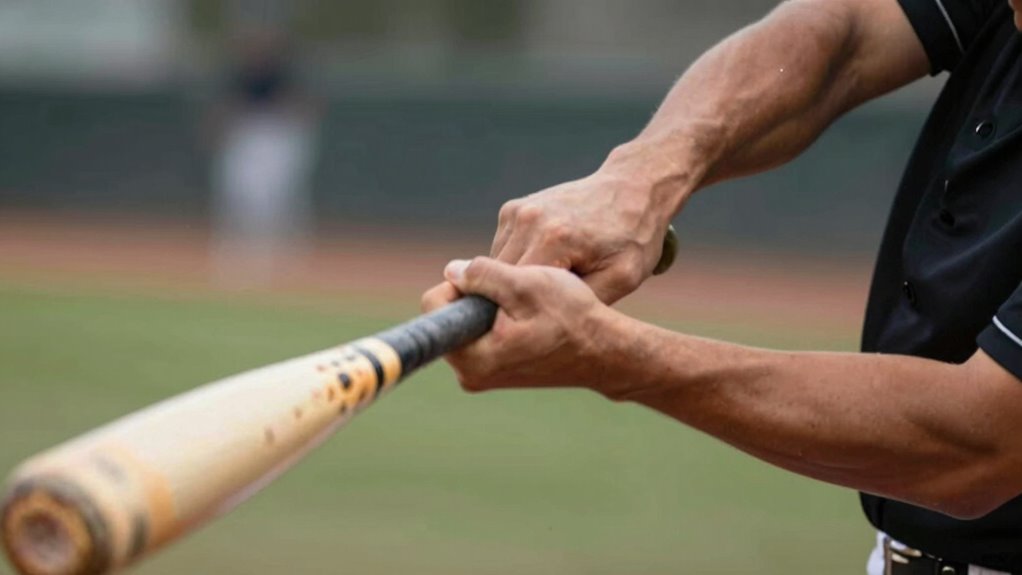
While weighted bat practice can improve strength and swing mechanics, overdoing it often leads to the development of bad habits. When you push too hard or practice for too long, your muscles become fatigued, which can cause a decline in bat speed and control. Muscle fatigue hampers your ability to swing efficiently, leading you to develop compensatory movements or poor timing. These mistakes become ingrained over time, making it harder to execute proper techniques with your regular bat. Instead of enhancing your skills, excessive weighted practice can create a false sense of strength and bad habits that hinder performance. To avoid this, focus on quality over quantity, and listen to your body to prevent fatigue from undermining your progress. Additionally, understanding proper training techniques and recovery methods can help you avoid overtraining and develop better habits. Incorporating proper recovery strategies ensures your muscles repair and adapt correctly, reducing the risk of bad habits forming. Recognizing the signs of fatigue early can help prevent overtraining from negatively impacting your technique. Paying attention to muscle recovery is essential for maintaining consistent performance and avoiding injury.
Tailoring Weighted Bat Drills to Your Skill Level

To get the most benefit from weighted bat drills, you need to tailor them to your current skill level. Using too heavy a weight can hinder your bat speed and disrupt muscle memory development. Adjust the weight so it challenges you without sacrificing proper form. Focus on consistency rather than power, gradually increasing weight as your skills improve. Consider these tips:
- Start with a weight that feels manageable for your current strength
- Prioritize maintaining correct swing mechanics
- Use drills that emphasize quick, controlled swings
- Monitor your bat speed and adjust weights accordingly
Transitioning From Weighted to Regular Bats for Peak Performance
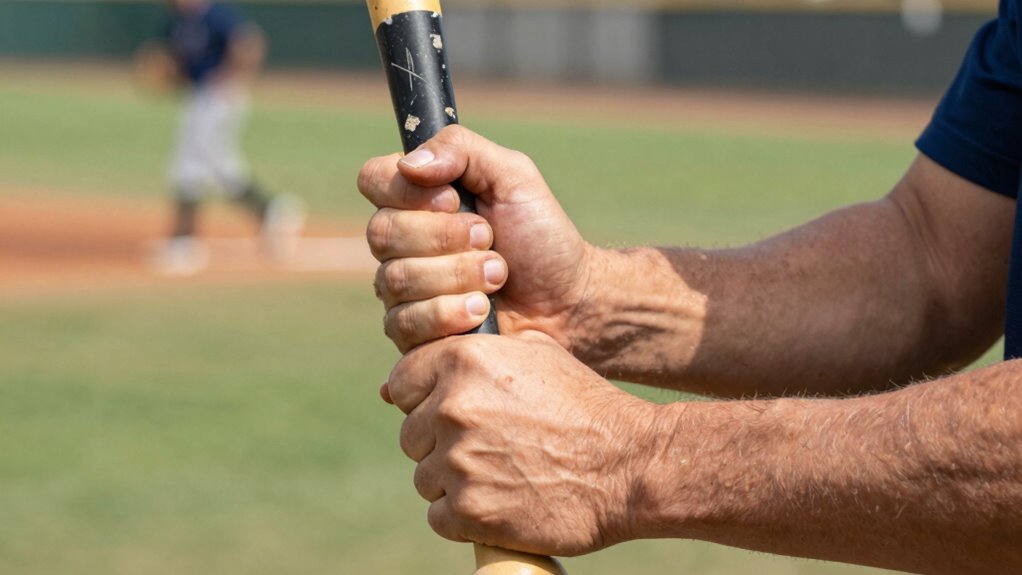
Switching from weighted to regular bats is a critical step in maximizing your hitting performance. After training with added weight, your muscles adapt to generate more power, but you must now focus on translating that strength into bat speed with an unweighted bat. To do this effectively, gradually reduce the weight over several sessions, allowing your muscle memory to adjust without disrupting your swing mechanics. It’s essential to avoid rushing this transition, as sudden changes can cause inconsistency and hinder your progress. Focus on maintaining proper form and timing, ensuring that the speed you build during weighted drills carries over. By carefully transitioning, you’ll sharpen your bat speed and solidify muscle memory, setting the stage for peak performance at the plate.
Frequently Asked Questions
How Long Should Each Weighted Bat Practice Session Last?
You should aim for 10 to 15-minute weighted bat practice sessions to build proper technique without risking injury. Keep your focus on proper technique and controlled swings, avoiding overexertion. Use equipment selection that matches your skill level and gradually increases weight. Short, focused sessions help reinforce good habits while preventing the development of bad ones. Remember, quality over quantity guarantees you’re improving safely and effectively.
Can Weighted Bats Cause Long-Term Arm or Shoulder Injuries?
Using weighted bats can lead to long-term arm or shoulder injuries if you’re not careful. You might experience muscle strain or joint fatigue from overtraining or improper technique. To prevent this, make certain your practice sessions are limited, and focus on proper form. Pay attention to how your body responds, and give yourself adequate rest. This way, you reduce the risk of developing injuries that could affect your swing long-term.
Are There Specific Drills to Correct Bad Habits From Weighted Bat Use?
To correct bad habits from weighted bat use, focus on drill correction that emphasizes proper swing mechanics. Practice slow, controlled swings with a lighter bat to reinforce good habits and prevent habit formation of poor techniques. Incorporate drills like tee work or soft toss to build muscle memory and guarantee your swing stays consistent. Regularly review your form and seek feedback to avoid ingraining incorrect habits that can be tough to break later.
How Do I Know When to Stop Using a Weighted Bat?
You should stop using a weighted bat once you notice your bat speed and swing mechanics start to decline or feel unnatural. If your swing becomes sluggish, inconsistent, or you feel discomfort, it’s time to take a break. Overusing a weighted bat can lead to bad habits and hinder your progress. Focus on quality, not duration, and gradually incorporate lighter drills to maintain proper technique and power development.
What Are Signs of Overtraining With Weighted Bats?
You might be overtraining with weighted bats if you notice your bat speed decreasing or your grip tension increasing substantially. Fatigue, persistent soreness, and difficulty maintaining proper form are also signs. If you feel your swing becomes sluggish or your muscles feel overly tight, it’s a clear indicator to rest. Listening to your body helps prevent bad habits and guarantees you build strength without sacrificing technique or risking injury.
Conclusion
To truly improve, avoid letting weighted bat training become a double-edged sword. Like a carefully balanced scale, it can elevate your swing or tip you into bad habits if misused. Focus on proper technique, don’t overdo it, and tailor drills to your skill level. When done right, weighted bats become a powerful tool—helping you sharpen your skills without sharpening flaws, ensuring your swing remains a finely tuned instrument ready for any game.
Fall Picks
fall essentials
As an affiliate, we earn on qualifying purchases.