Finding the right softball training aids can significantly enhance your practice sessions, whether you’re focusing on pitching, hitting, or fielding. The best equipment offers a balance of durability, versatility, and ease of use, but many options come with tradeoffs. For example, some aids excel at developing specific skills but may lack overall versatility, while others provide comprehensive training but at a higher cost. The top picks in this guide are selected for their performance, build quality, and value, helping you choose the perfect aids for your training needs. Continue reading to see the full breakdown of the best softball training aids in 2026.

Get sports gear delivered free with Prime
- Fast, free delivery on millions of items
- Prime Video, Amazon Music and more included
- Member-only deals all year
Complete the kit


Key Takeaways
- Top picks balance durability with versatility, making them suitable for different training needs.
- The best training aids often focus on specific skills like pitching or hitting, but some provide all-in-one solutions.
- Price varies widely; premium options offer advanced features, while budget-friendly aids still deliver solid performance.
- Ease of setup and portability are common features among the most effective training aids.
- Tradeoffs often involve choosing between specialized, high-performance gear and more general, multi-use options.
| PowerNet Windmill Softball Pitching Aid, 2 Pack |  | Best Overall Pitching Mechanics Trainer | Brand: PowerNet | Quantity: 2-pack | Adjustability: Adjustable strap | VIEW LATEST PRICE | See Our Full Breakdown |
| SWINGRAIL Baseball/Softball Hitting Trainer |  | Best Swing Correction Tool | Recommended Age: 9 and up | Sport: Baseball/softball | Feedback Mechanism: Detachable Velcro strap release | VIEW LATEST PRICE | See Our Full Breakdown |
| BAGAIL 7×7 ft Baseball & Softball Training Net |  | Best All-in-One Practice Station | Net Size: 7 x 7 ft | Net Material: 7-ply knotless thickened polyester mesh | Frame: Heavy-duty steel rods with reinforced fiberglass tubes | VIEW LATEST PRICE | See Our Full Breakdown |
| Markwort Christie Ambrose Softball Pitching Trainer, 11-Inch, White |  | Best Budget Grip Guide | Size: 11 inches | Color: White | Handedness: Left or right handed | VIEW LATEST PRICE | See Our Full Breakdown |
| Baseball and Softball Hitting Trainer with Adjustable Height and Resistance Bands |  | Best Compact Solo Hitting Station | Height Range: 28–43 inches | Resistance Levels: 4 | Durability: Tested for 50,000 hits | VIEW LATEST PRICE | See Our Full Breakdown |
| 6×6 ft Baseball & Softball Training Net Set with Strike Zone, Adjustable Tee, and Ball Caddy |  | Best Complete Practice Kit | Net Size: 6×6 ft | Netting: 7-ply knotless thickened | Frame Base: Coated heavy-duty steel | VIEW LATEST PRICE | See Our Full Breakdown |
| Baseball and Softball Batting Trainer with Hook and Ball |  | Best Budget Solo Hitting Fix | Rope Length: 10.5 ft (3.2 m) | Included Accessories: Steel hook and foam practice ball | Attachment: Fence, pole, or tree | VIEW LATEST PRICE | See Our Full Breakdown |
| Softball Pitching Mat with Pitcher’s Rubber, 10 × 3 ft |  | Best for Pitching Mechanics at Home | Dimensions: 10 × 3 ft | Weight: 12 kg | Surface: Durable baseball turf | VIEW LATEST PRICE | See Our Full Breakdown |
| SKLZ Hurricane Baseball & Softball Swing Trainer with Adjustable Power Bands | 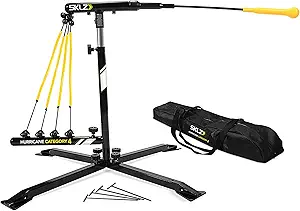 | Best Solo Hitting Station | Height Range: 23 to 38 inches | Weight: 37 lbs | Power Bands: 4 adjustable bands | VIEW LATEST PRICE | See Our Full Breakdown |
| Perfect Circle Softball Pitcher’s Training Aid for Developing Correct Pitching Mechanics |  | Best for Arm-Path Correction | Fits: Youth & Adult | Pitches Supported: Fastball, Change-up, Drop Ball, Screw Ball, Rise Ball, Curve Ball | Feedback: Instant during practice | VIEW LATEST PRICE | See Our Full Breakdown |
More Details on Our Top Picks
PowerNet Windmill Softball Pitching Aid, 2 Pack
This option stands out for attacking the single hardest part of windmill pitching: repeating a clean arm circle and release. The strap gives instant feedback on arm path, so pitchers can self-correct during solo sessions instead of guessing what went wrong. Compared with the Perfect Circle Softball Pitcher’s Training Aid, which focuses purely on circle mechanics, the PowerNet two-pack adds value for families with two pitchers or a coach running small-group sessions. The tradeoff is fit: players with larger thighs may find the strap less secure, which undermines the feedback loop. It also does nothing for grip, unlike the Markwort Christie Ambrose trainer, so it is a mechanics tool rather than a complete pitching system.
Pros:- Provides immediate feedback on arm circle and release point during solo practice
- Adjustable strap fits most players comfortably
- Two-pack suits teams or siblings training together
- Reinforced stress points hold up to repeated windmill reps
Cons:- Fit can feel less secure on larger thighs, weakening the feedback
- Long-term durability of the strap material is unproven
Best for: Windmill pitchers from beginner to advanced who practice alone and need immediate feedback on arm mechanics
Not ideal for: Pitchers whose primary problem is grip or pitch selection — this addresses arm path only, so pair it with a grip trainer
- Brand:PowerNet
- Quantity:2-pack
- Adjustability:Adjustable strap
- Skill Level:Beginner to advanced
- Sport:Softball, baseball
- Package Weight:0.09 kg
- Package Dimensions:7.6 x 7.44 x 1.69 inches
Our verdict“The most sensible buy for any windmill pitcher serious about cleaning up mechanics without a coach present every session.”
SWINGRAIL Baseball/Softball Hitting Trainer
Where the BAGAIL 7×7 ft Training Net catches balls, the SWINGRAIL fixes the swing that puts them in play. Its detachable Velcro strap physically releases when the swing breaks down, which is a harder, more honest form of feedback than the visual-only cues from the adjustable hitting trainer with resistance bands. That blunt feedback is the tradeoff: younger or less experienced hitters can get frustrated when the strap pops off repeatedly, and the device really only works off a batting tee or controlled front toss — never live pitching. For players nine and up who already have decent fundamentals and a specific swing flaw to iron out, this makes more sense than a net-and-tee combo alone.
Pros:- Velcro release gives unmistakable feedback on every bad swing
- Developed with input from professional players and hitting coaches
- Builds muscle memory that carries into game at-bats
- Includes detailed online instructional videos
Cons:- Learning curve is steep for inexperienced players
- Limited to tee work and controlled toss — not useful for live pitching practice
Best for: Hitters age 9+ with established fundamentals who need to break a specific swing habit through repetition
Not ideal for: Very young or brand-new hitters — the constant strap release will frustrate rather than teach, and it can’t be used against live pitching
- Recommended Age:9 and up
- Sport:Baseball/softball
- Feedback Mechanism:Detachable Velcro strap release
- Best Use:Batting tee, front toss, controlled pitching drills
- Included:Online instructional videos
- Design:Patented hands-path guide
Our verdict“A targeted fix for a stubborn swing flaw, provided the hitter is old enough and patient enough to handle the feedback.”
BAGAIL 7×7 ft Baseball & Softball Training Net
Most training aids sharpen one skill; this one builds a complete backyard practice station. The 7-ply knotless mesh absorbs hard hits, and the bundle — adjustable tee, two strike zone targets, stakes, and carry bag — means a player can hit, pitch, and throw without buying anything else. Compared with the 6×6 ft net set elsewhere in this roundup, the larger 7×7 footprint gives pitchers a bigger backstop and more margin for wild throws, at the cost of a slightly bulkier carry. The ball collection pocket quietly saves ten minutes per session. The main compromise is stability: it needs staking in wind, so solo indoor or calm-day use is where it shines best.
Pros:- 7-ply knotless mesh handles hard contact and outdoor wear
- Complete kit includes tee, strike zone targets, stakes, and carry bag
- Tool-free setup in under two minutes
- Ball collection pocket cuts down retrieval time between reps
Cons:- Must be staked down in windy conditions
- Larger footprint makes it less convenient than compact trainers for indoor or travel use
Best for: Families building a single do-everything backyard setup for hitting, pitching, and throwing reps
Not ideal for: Players with only one narrow skill to fix — a dedicated swing or grip trainer delivers faster progress for less outlay
- Net Size:7 x 7 ft
- Net Material:7-ply knotless thickened polyester mesh
- Frame:Heavy-duty steel rods with reinforced fiberglass tubes
- Included Accessories:Adjustable tee, 2 strike zone targets, baseball, 4 ground stakes, carry bag
- Setup Time:Under 2 minutes, tool-free
- Use Environment:Indoor and outdoor
- Suitable Sports:Baseball, softball, cricket, hockey
Our verdict“The practical pick for any household that wants one purchase covering full solo practice sessions.”
Markwort Christie Ambrose Softball Pitching Trainer, 11-Inch, White
This is the cheapest, simplest entry in the pitching category: a regulation-size ball with color-coded finger-placement markings for multiple pitch styles, plus a short instructional booklet. It does not fix mechanics the way the PowerNet Windmill aid does — it assumes your motion is fine and solves the earlier question of where fingers actually go for a curve, drop, or rise ball. That narrow scope is both its strength and its limit. Ambidextrous labeling means lefties are not left guessing, and because it is just a ball, it travels anywhere. Players who already know their grips will get nothing new from it, and it offers zero feedback on spin or release quality.
Pros:- Color-coded markings teach finger placement for multiple pitch types
- Works for both left- and right-handed pitchers
- Regulation 11-inch size transfers directly to game balls
- Includes an instructional booklet for guided learning
Cons:- Single-purpose design covers grip only, with no mechanics or feedback features
- Markings can’t tell a pitcher whether the pitch actually executed correctly
Best for: Beginner and intermediate pitchers learning pitch grips, especially those without regular access to a pitching coach
Not ideal for: Advanced pitchers who already know their grips — it provides no feedback on spin, speed, or mechanics
- Size:11 inches
- Color:White
- Handedness:Left or right handed
- Guides:Color-coded finger placement markings
- Included:Instructional booklet
- Sport:Softball
- Model:SPT1050-11-Inch
Our verdict“An inexpensive, low-risk starting point for pitchers whose problem is grip knowledge rather than mechanics.”
Baseball and Softball Hitting Trainer with Adjustable Height and Resistance Bands
This trainer trades the footprint of the BAGAIL 7×7 net for a single pole-mounted target that returns the ball to the hitter — no net, no tee, no shagging balls. The 28-to-43-inch height range lets one device cover high and low strike zones, and the four resistance bands double it as a bat-speed and strength tool, something the SWINGRAIL deliberately avoids doing. The tradeoff is feedback quality: it shows whether contact happened, but not why a swing failed, so hitters with technical flaws will still need a correction device or a coach. It suits players who want high-rep timing practice in a driveway or garage where a full net is impractical.
Pros:- Height adjusts across the full strike zone for varied pitch locations
- Four resistance levels add strength and bat-speed training
- Self-returning target means no ball retrieval or net needed
- Built for repeated use with a durable head and stable base
Cons:- No assembly dimensions or weight published, making storage planning a guess
- Resistance bands need matching to skill level or drills become counterproductive
Best for: Players with limited space who want hundreds of timing and contact reps plus bat-speed work in one device
Not ideal for: Hitters trying to diagnose and fix swing mechanics — this counts contacts but cannot explain a broken swing
- Height Range:28–43 inches
- Resistance Levels:4
- Durability:Tested for 50,000 hits
- Skills Targeted:Timing, contact, swing path, hand-eye coordination
- Sports:Baseball and softball
- Design:Durable target head, flexible arm, stable base
Our verdict“A space-efficient rep machine for hitters focused on timing and bat speed rather than swing reconstruction.”
6×6 ft Baseball & Softball Training Net Set with Strike Zone, Adjustable Tee, and Ball Caddy
Most training nets sell you just the net and leave you sourcing everything else, but this option bundles a 6×6 ft net, adjustable tee, ball caddy, and two strike zone targets into one package — which is why it earns the full-kit role over the standalone BAGAIL 7×7 ft net elsewhere in this roundup. For a household with multiple players or a coach setting up stations, that means one purchase covers batting, pitching, and fielding work instead of three separate ones. The 7-ply knotless netting and coated steel base are the genuine strengths here; the two-minute tool-free setup makes backyard sessions realistic on a weeknight. The tradeoff is quality balance: the tee and strike zone targets feel like accessories rather than equals to the net, and serious hitters may eventually upgrade the tee. Compared with the SKLZ Hurricane, this set favors volume repetition over swing-mechanics feedback.
Pros:- All-in-one bundle covers net, tee, caddy, and strike zone targets
- Tool-free setup in under two minutes with a carry bag for transport
- 7-ply knotless netting and heavy-duty steel frame hold up to repeated hard hits
- Versatile enough for batting, pitching, fielding, and other sports
Cons:- Tee and strike zone targets are weaker in build quality than the net itself
- Large footprint makes small indoor spaces impractical
Best for: Families and coaches who want a full batting-and-pitching practice setup in a single purchase
Not ideal for: Players focused purely on swing mechanics — a dedicated trainer like the SKLZ Hurricane gives better feedback than this net-and-tee combo
- Net Size:6×6 ft
- Netting:7-ply knotless thickened
- Frame Base:Coated heavy-duty steel
- Bow Poles:12.7mm fiberglass
- Ball Caddy Capacity:50+ balls
- Strike Zone Targets:2
- Setup Time:Under 2 minutes, no tools required
- Carry Bag:Included
Our verdict“Buy this if you want the most complete practice station per dollar and can accept a mediocre tee; skip it if you already own a net or need precision hitting feedback.”
Baseball and Softball Batting Trainer with Hook and Ball
Where the SKLZ Hurricane and the 6×6 ft net set demand money, space, and setup time, this hook-and-rope batting trainer takes the opposite approach: attach the steel hook to a fence, pole, or tree, and you have a swing station for the cost of a couple of batting-cage tokens. The 10.5-foot rope and high-visibility foam ball let a player work on timing and hand-eye coordination entirely solo, indoors or out. This pick makes the most sense for casual reps and travel — it fits in a bat bag, unlike any net in this roundup. The tradeoff is depth: there is no resistance, no pitch-speed variation, and no feedback on mechanics, so it supplements rather than replaces trainers like the SWINGRAIL. You also need a suitable anchor point, which not every backyard or garage offers.
Pros:- Enables solo practice with no partner, pitcher, or pitching machine
- Sets up in seconds on any fence, pole, or tree
- Weather-resistant rope and sturdy steel hook for outdoor use
- Fits easily in a bag for travel teams and vacations
Cons:- Requires a suitable anchor point, which limits where you can practice
- No durability testing data and the rope/ball will wear with heavy use
- Single fixed drill type offers no progression as skills advance
Best for: Players and parents who want cheap, portable solo swing reps without buying a net or machine
Not ideal for: Hitters working on mechanics or power — this trains timing only, with no resistance or feedback
- Rope Length:10.5 ft (3.2 m)
- Included Accessories:Steel hook and foam practice ball
- Attachment:Fence, pole, or tree
- Use:Indoor and outdoor solo batting practice
- Recommended For:Youth, high school, college, and adult players
Our verdict“A low-commitment timing tool for casual solo reps — pair it with a mechanics trainer rather than expecting it to do everything.”
Softball Pitching Mat with Pitcher’s Rubber, 10 × 3 ft
Pitchers get the short end of most training gear, so this 10 × 3 ft pitching mat earns its spot by solving a specific problem: practicing foot placement and stride mechanics without a mound. The alignment lines and positioning patches do the coaching a parent can’t — every rep shows whether the drive foot landed correctly, which no net or swing trainer in this roundup addresses. TPR foam padding under the turf cushions the knees and joints during long windmill sessions, a real benefit for pitchers working daily. Compared with the Perfect Circle trainer, which fixes arm path, this mat fixes the lower half — the two are complements, not rivals. The tradeoff is portability: at 12 kg with unspecified turf thickness, moving it between rooms or to a facility is a chore, and the warranty situation is unclear.
Pros:- Alignment lines and positioning patches give instant visual feedback on foot placement
- TPR foam padding reduces knee and joint stress during long sessions
- Non-slip surface plus anchor hooks keep the mat planted on hard floors or grass
- Carrying strap and storage bag ease transport between sessions
Cons:- At 12 kg, it is cumbersome to move regularly
- Turf thickness and warranty are not specified, making durability hard to judge
Best for: Softball pitchers building consistent footwork and stride mechanics through regular home or facility practice
Not ideal for: Players short on storage or who need to haul gear frequently — 12 kg and a 10-foot length make it awkward
- Dimensions:10 × 3 ft
- Weight:12 kg
- Surface:Durable baseball turf
- Padding:TPR foam
- Stability Features:Non-slip surface and anchor hooks
- Included Accessories:Pitcher rubber, carrying strap, storage bag
- Intended Users:Youth and adults
- Use:Indoor and outdoor pitching practice
Our verdict“The right buy for a pitcher who practices often enough to justify a permanent practice strip — occasional users should pass.”
SKLZ Hurricane Baseball & Softball Swing Trainer with Adjustable Power Bands
This option stands out as the most feedback-rich hitting tool in the batch: unlike the hook-and-ball trainer’s fixed timing drill, the Hurricane’s four adjustable power bands simulate varying pitch speeds, and the ball head swings back after contact so a hitter sees her own bat speed and contact quality on every rep. The 23-38 inch height range and 37 lb weighted base make it genuinely shareable across ages — a youth player and a high schooler can both use it in the same session, something the SWINGRAIL chest harness can’t offer as cleanly. It works on grass, dirt, or pavement with no net to catch balls, which simplifies setup but means you’re chasing mis-hits. The honest tradeoff: it’s heavy to lug around, and swapping height settings between users interrupts the rhythm of a station-based practice.
Pros:- Four adjustable power bands let you vary pitch speed and build bat speed progressively
- Anti-dent, high-visibility ball head survives repeated hard contact
- Height range of 23-38 inches suits youth through adult hitters
- Stable on grass, dirt, or hard surfaces with included stakes
Cons:- 37 lb weight makes it cumbersome to move between locations
- Assembly and height adjustments slow things down when multiple players share it
- No net means foul balls and mis-hits still need chasing
Best for: Families and small teams who want repeated live-speed swing reps without a pitcher or net
Not ideal for: Players who train at a park or field without a car nearby — 37 lbs makes frequent transport annoying
- Height Range:23 to 38 inches
- Weight:37 lbs
- Power Bands:4 adjustable bands
- Frame Material:Steel
- Ball Head:Anti-dent, high-visibility
- Includes:Screw-in base legs, metal stakes, carry bag
- Recommended Ages:14 and under (versatile for all ages)
Our verdict“The strongest pick for solo or small-group hitting practice with real progression — worth the weight if it lives mostly in one place.”
Perfect Circle Softball Pitcher’s Training Aid for Developing Correct Pitching Mechanics
Windmill pitching lives or dies on arm path, and this Perfect Circle trainer targets exactly that — forcing the arm through the correct circle on fastballs, change-ups, drop balls, screw balls, rise balls, and curves. Unlike the pitching mat in this roundup, which coaches the lower body, this wearable aid gives instant feedback when the arm strays, making the two a natural pair for a complete pitching practice setup. It fits both youth and adult arms, so it survives a player’s entire development rather than being outgrown. The tradeoffs are real, though: the elastic band wears out with regular use and needs eventual replacement, the included instructions are thin enough that a first-time user may attach it wrong, and no device substitutes for a coach’s eye on advanced spin mechanics. Think of it as a corrective tool, not a teacher.
Pros:- Supports all major softball pitches from fastball to curve ball
- Instant feedback shows immediately when arm path breaks down
- One size fits both youth and adult players
- Lightweight and usable anywhere, unlike mats or nets
Cons:- Elastic band is a wear item and will need replacing over time
- Limited instructions make correct setup difficult for beginners
- Cannot replace hands-on coaching for advanced technique work
Best for: Windmill pitchers at any age who need repetitive arm-path correction between lessons
Not ideal for: Advanced pitchers chasing fine spin and speed gains — coaching and video review will outpace this device
- Fits:Youth & Adult
- Pitches Supported:Fastball, Change-up, Drop Ball, Screw Ball, Rise Ball, Curve Ball
- Feedback:Instant during practice
- Included:Training aid and user instructions
- Focus:Windmill arm-path mechanics
Our verdict“A cheap, targeted fix for pitchers whose arm circle needs repetition-based correction — pair it with coaching, not instead of it.”

How We Picked
Products were evaluated based on their build quality, ease of use, versatility, and durability. We prioritized aids that can be used repeatedly without degradation, and those that target specific skills like pitching or hitting while also offering broader training benefits. Cost-effectiveness was also a factor, ensuring that each product provides good value for its price. The ranking reflects a combination of performance features, user-friendliness, and overall durability, helping buyers find aids suited for different skill levels and training goals.Factors to Consider When Choosing Softball Training Aids
Choosing the right softball training aid depends on your specific skill level, training goals, and budget. It’s important to consider how each aid complements your existing skills, whether it’s for improving swing mechanics, pitching accuracy, or fielding agility. Investing in versatile equipment can save money and space, but sometimes a specialized aid yields faster results. Balancing these factors against your available training time and space will help you select the most effective products for your needs.Skill Focus and Training Goals
Determine whether you want to improve hitting, pitching, or fielding, as many aids target specific areas. For example, pitching aids like the Perfect Circle improve mechanics, while hitting trainers like the SWINGRAIL focus on swing consistency. Setting clear goals helps narrow down the options and avoid investing in equipment that doesn’t align with your primary training needs. Consider if you prefer multi-use aids or specialized tools for faster skill development.
Durability and Build Quality
Look for training aids made from high-quality materials that can withstand frequent use, outdoor conditions, and accidental impacts. Cheaper options may wear out quickly or require frequent replacement, which diminishes long-term value. Investing in robust construction can be more cost-effective over time, especially for serious players or coaches who train regularly. However, more durable aids often come with higher price tags, so weigh durability against your budget.
Ease of Use and Setup
Ease of assembly, portability, and straightforward operation are key factors, especially for younger players or those training alone. A complicated setup can discourage frequent use or disrupt training routines. Lightweight, foldable, or adjustable aids tend to be more convenient, but sometimes they sacrifice stability. Find a balance that aligns with your training environment and frequency of use to maximize effectiveness and convenience.
Versatility and Expandability
Products that offer multiple functions or adjustable features provide greater value and adaptability as skills develop. For example, a net that can be used for both batting and pitching practice offers more training options in limited space. Avoid overly specialized aids if you want to address multiple aspects of your game. Conversely, if your focus is narrow, a specialized aid might deliver faster results with less complexity.
Price and Long-Term Value
While budget-friendly options are appealing, they may lack durability or versatility, leading to additional costs down the line. Premium aids tend to provide advanced features, better build quality, and longer lifespan, which can justify higher upfront costs if you’re committed to serious training. Consider your training frequency and long-term goals to determine the right investment level, ensuring you get an aid that will serve you well over time.
Frequently Asked Questions
How do I choose between a pitching aid and a hitting trainer?
Choosing between a pitching aid and a hitting trainer depends on your primary focus. If your goal is to improve pitching mechanics, look for aids like the Perfect Circle or Markwort Christie that emphasize accurate pitching motion. For hitting improvements, trainers like the SWINGRAIL or hitting nets offer immediate feedback on swing consistency and power. Many players benefit from combining both, so consider your overall training plan and select aids that complement each other for a balanced skill set.
Are portable training aids effective for outdoor practice?
Portability is a key factor for outdoor training aids, and many are designed specifically for easy setup in driveways, parks, or fields. While lightweight aids are convenient, they may sometimes compromise stability, especially in windy conditions. Heavier, more stable options tend to perform better outdoors, but they can be harder to transport. Balancing weight, durability, and ease of setup is essential to ensure your outdoor sessions are productive and safe.
Should I prioritize multi-use training aids or specialized tools?
Multi-use aids provide versatility and are excellent if you have limited space or want to address multiple aspects of your game. They often offer adjustable features to target different skills, making them a good investment for ongoing development. However, specialized tools tend to deliver more precise results in specific areas, such as pitching accuracy or swing mechanics. Your choice should reflect your current skill level, training focus, and budget, with many players finding value in a mix of both.
How often should I replace or upgrade my training aids?
The lifespan of training aids depends on their build quality and frequency of use. Regular use, especially outdoors, can cause wear and tear, and some materials may degrade over time. If you notice cracks, loose parts, or reduced effectiveness, it’s time to replace or upgrade. Investing in higher-quality aids often extends the usability and maintains consistent training quality, which is especially important for serious players or teams.
Can training aids substitute for actual live practice with a coach or teammates?
Training aids are designed to supplement live practice, not replace it entirely. They are excellent for skill repetition, developing muscle memory, and specific mechanics but lack the dynamic feedback and strategic complexity of real game situations. Combining aids with coaching and team practice provides a well-rounded approach to skill development, ensuring improvements translate effectively into game scenarios. Use training aids to reinforce what you learn during live practice for the best results.
Conclusion
For those seeking an all-around performer, the PowerNet Windmill Softball Pitching Aid stands out as the best overall choice for serious players. Beginners or casual enthusiasts will find the SWINGRAIL Baseball/Softball Hitting Trainer offers excellent value and ease of use. If budget is a concern, the Baseball and Softball Hitting Trainer with Resistance Bands delivers solid performance without breaking the bank. Serious pitchers should consider premium options like the Perfect Circle Softball Pitcher’s Training Aid, while coaches or trainers will benefit from versatile, multi-use nets like the BAGAIL 7×7 ft Training Net. Ultimately, choosing the right aid depends on your specific training goals, skill level, and budget, but this guide offers a solid starting point for making an informed decision in 2026.