
TL;DR

Get sports gear delivered free with Prime
- Fast, free delivery on millions of items
- Prime Video, Amazon Music and more included
- Member-only deals all year
A single recorded video can generate a full set of publishing assets—clips, transcripts, social posts, and more—entirely on your device, skipping cloud services. This approach boosts privacy, speeds up production, and keeps content fully in your hands.
Imagine transforming a single video into a dozen different assets—clipped highlights, social snippets, transcripts, blog drafts—without ever uploading your raw footage to the cloud. Sounds like a dream? It’s becoming a reality with local-first video automation tools. This isn’t just about convenience; it’s about reclaiming your privacy, speeding up your workflow, and owning every piece of your content.
In this article, you’ll see how a local, device-based pipeline can handle complex tasks—analyzing audio, visual cues, and meaning—all offline. We’ll explore how it works, what outputs it can generate, and whether it’s the right fit for your creative process.
Key Takeaways
- A local-first workflow transforms one video into a full publishing kit, including clips, transcripts, metadata, and social assets, all on your device.
- Processing locally boosts privacy and speeds up production, making it ideal for sensitive content or fast-paced creators.
- You can build a four-step process—drop, analyze, review, publish—that keeps your entire workflow on-site.
- Compared to cloud tools, local solutions require hardware investment but eliminate ongoing fees and data privacy concerns.
- While setup can be complex, the long-term benefits include full control, faster turnaround, and peace of mind about your media.
As an affiliate, we earn on qualifying purchases.
How a Local Video Workflow Turns One File into a Complete Publishing Kit
Processing your video locally means analyzing it on your own device—no cloud, no third-party servers. This approach matters because it directly impacts your control over content, privacy, and speed. When you analyze on-site, you eliminate delays caused by data transfer, which can be significant with large files or slow internet connections. Moreover, local processing ensures that sensitive or proprietary footage remains secure, reducing the risk of breaches or leaks. The tradeoff, however, is that your hardware must be capable of handling intensive AI tasks—meaning investment in a robust machine is often necessary. This setup emphasizes the importance of hardware quality, as it directly influences processing time and accuracy. The core difference from cloud solutions is that all analysis and asset generation happen in real-time on your device, giving you immediate feedback and control, which can accelerate your creative cycle and enhance data security.
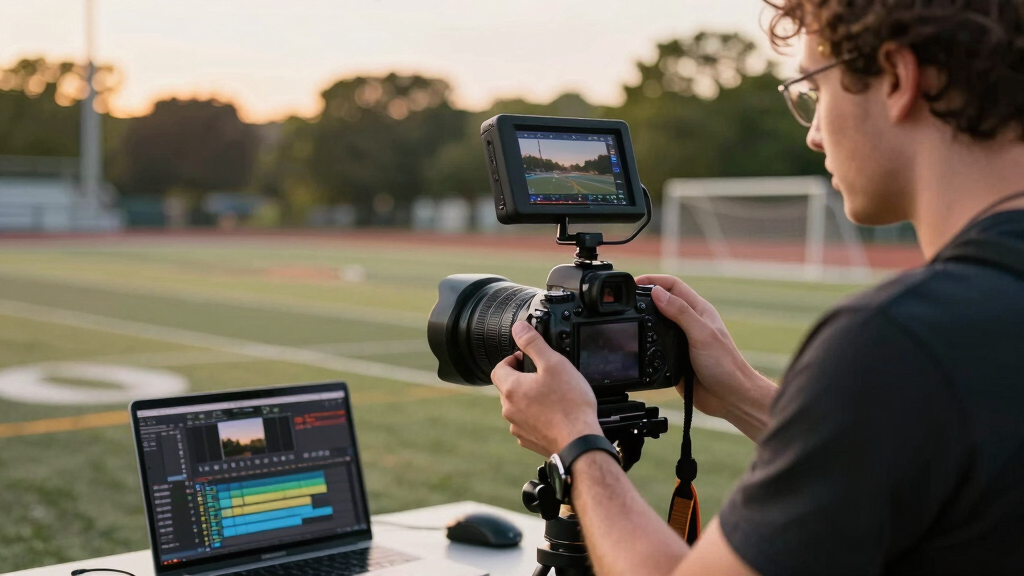
offline video transcription tool
As an affiliate, we earn on qualifying purchases.
As an affiliate, we earn on qualifying purchases.
What You Can Do with One Video—From Clips to Social Posts
The promise of a single video transforming into a full publishing kit hinges on what you can produce. Here’s a quick rundown of outputs you can expect:
- Clips and Shorts: Highlight moments, vertical snippets, teaser reels—auto-cut based on engagement potential. These clips help target different platforms and audience segments, increasing reach and engagement. The tradeoff is that automated cuts may need human refinement to ensure narrative coherence or brand consistency.
- Transcripts & Captions: Accurate, timestamped text for subtitles or blog content. This not only improves accessibility but also enhances SEO. High-quality transcripts depend on AI accuracy, which can vary, so manual review remains vital for critical content.
- Metadata & Titles: Auto-suggested titles, tags, and descriptions aligned with content hooks. Proper metadata improves discoverability but requires human oversight to avoid keyword stuffing or misrepresentation.
- Thumbnail Concepts: Visual ideas pulled from key moments, ready for quick design. Thumbnails significantly influence click-through rates, so selecting the right frame and style is crucial—automated suggestions serve as a starting point rather than final choices.
- Social Posts & Threads: Crafted messages tailored for platforms like Twitter, Instagram, TikTok, and LinkedIn. These are designed to maximize engagement based on content analysis, but tailoring tone and style often requires manual editing to match your voice.
For instance, a fitness coach could record a 15-minute workout, and the system generates a 60-second tip clip, a blog draft summarizing the session, and social posts—all from one upload. You can learn more about automating content creation here. While these outputs streamline content creation, understanding their limitations helps you decide where manual input enhances automation.

As an affiliate, we earn on qualifying purchases.
Speed and Privacy: Why Local First Beats Cloud Every Time
Processing locally means your raw footage never leaves your device. That’s a massive win for privacy because it reduces the attack surface—no data is transmitted over the internet, minimizing risks of interception or breaches. This is especially critical for sensitive content like corporate footage or personal videos. Speed-wise, local processing removes the bottleneck of uploading and downloading large files, allowing for near-instantaneous analysis and asset generation. This immediacy accelerates your workflow, enabling rapid iteration and decision-making. The tradeoff is that local processing demands significant hardware resources—powerful CPUs, ample RAM, and sometimes dedicated GPUs—to handle AI workloads efficiently. If your hardware is insufficient, processing times can extend, or outputs may be less accurate. Therefore, the choice of local-first tools hinges on having the right setup, but the benefits—full control over your data and faster turnaround—often outweigh these challenges for serious creators and organizations.

privacy-focused video publishing kit
As an affiliate, we earn on qualifying purchases.
As an affiliate, we earn on qualifying purchases.
How to Build a Local Video-to-Publishing Workflow in 4 Simple Steps
- Drop or Link: Insert your video file or paste a YouTube link into the system. It recognizes your channel and starts analyzing. Ensuring your hardware can handle the initial load is key—this step sets the foundation for smooth processing.
- Understand & Analyze: The system transcribes speech, detects scene changes, reads on-screen text, and fuses data into a structured log. This comprehensive analysis enables the subsequent asset creation, but the accuracy depends on AI quality and your hardware’s processing power. Recognizing its limitations allows you to plan manual review or adjustments accordingly.
- Review & Edit: Check the drafted assets—titles, clips, summaries—and edit inline or regenerate sections as needed. Partial uploads or incremental processing help maintain workflow momentum. This step emphasizes human oversight to ensure outputs meet your standards and align with your branding.
- Publish & Track: Dispatch your assets to platforms—YouTube, social media, blogs—and monitor the progress from your local dashboard. The immediacy of local processing enables faster publishing cycles, but integrating with various platforms may require additional setup or plugins.
For example, you can start reviewing your social snippets while the clips are still rendering, saving hours in post-production. The key is balancing automation with manual refinement for optimal results.

Comparison: Cloud-Based vs Local Video Publishing Tools
| Feature | Cloud-Based Tools | Local-First Workflow |
|---|---|---|
| Privacy | Data stored on third-party servers, risk of leaks | All data stays on your device, full control |
| Speed | Dependent on internet speed, often slower due to data transfer | Immediate processing on your hardware, reduces latency |
| Cost | Recurring subscriptions, ongoing fees can add up over time | One-time investment in hardware/software can be more cost-effective in the long run |
| Scalability | Easy to scale through cloud resources as your needs grow | Limited by your local hardware’s capacity, which may require upgrades |
| Collaboration | Facilitates easy sharing and multi-user workflows via cloud access | Requires local network setup, less flexible for distributed teams |
Choosing the right tool hinges on your priorities. If data privacy and speed are paramount, local solutions offer significant advantages. However, if collaboration and remote access are essential, cloud options might be more suitable. Understanding these tradeoffs helps you align your workflow with your goals and resources.
When Is a Local Workflow Best for You?
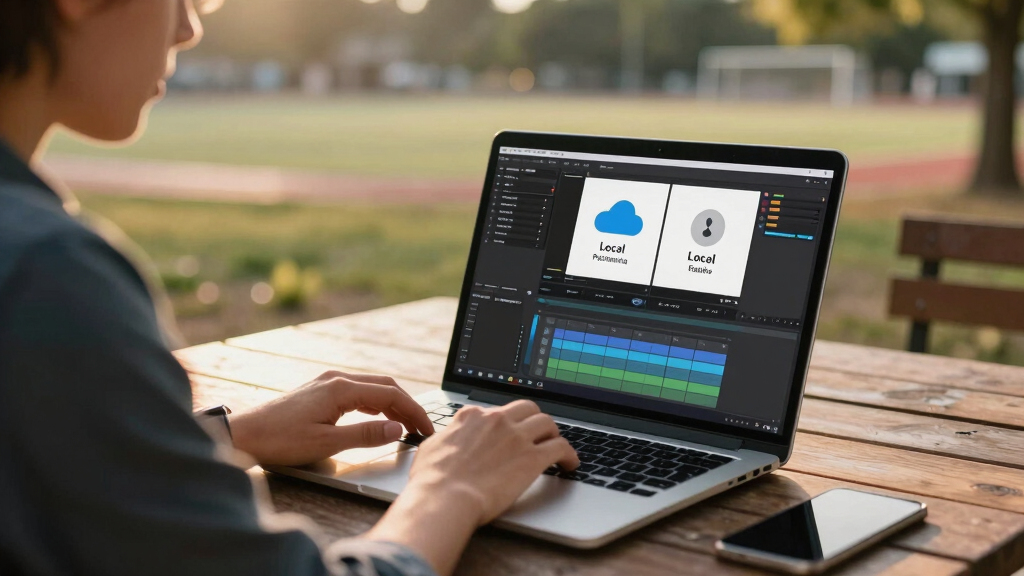
If you’re a solo creator, a small team, or working with sensitive content, local processing makes a lot of sense. It cuts out ongoing costs, enhances privacy, and speeds up your editing cycle. But it’s not a plug-and-play setup—hardware requirements and initial investment matter. The benefits are maximized when you have a dedicated machine with sufficient processing power, allowing you to run AI models efficiently without delays. For example, independent filmmakers or journalists handling confidential footage gain control over their entire pipeline, ensuring that proprietary content remains secure and under their full command. The decision also depends on your technical comfort level—setting up and maintaining local workflows may require a learning curve but pays off through autonomy and security. For those prioritizing control and privacy, investing in a capable local system is often worth the upfront effort.

Risks and Realities of Going Local
Building a fully local video workflow isn’t without challenges. Hardware needs to be robust enough to handle heavy processing—think modern laptops with dedicated GPUs or dedicated servers designed for AI workloads. Without sufficient power, processing times can become prohibitively long, reducing efficiency and potentially discouraging use. AI models used for transcription, scene detection, and clip selection are not infallible—they can misfire, miss important cues, or generate inaccurate outputs. This means human oversight remains essential, especially for critical or high-stakes content. Additionally, initial setup and integration can be time-consuming, requiring technical knowledge and troubleshooting skills. However, these challenges are offset by the long-term benefits of total control, no recurring cloud fees, and enhanced privacy. Proper planning, hardware investment, and understanding AI limitations help mitigate risks, making local workflows a powerful option for dedicated creators willing to invest upfront.

How It Compares to Cloud AI Video Tools
Cloud tools like Descript or Kapwing offer quick setup, user-friendly interfaces, and easy sharing, making them appealing for fast-paced workflows. They rely heavily on internet connectivity, which can introduce delays, especially when dealing with large files or slow connections. Data transfer to and from the cloud also raises privacy concerns, as sensitive content may be exposed during upload or storage. In contrast, local-first systems like ChannelHelm (check out its details at channelhelm.com) prioritize security, speed, and ownership by performing all processing on your own hardware. This means you retain full control over your data and can operate independently of internet stability. While cloud solutions excel in scalability and collaboration, local workflows are more suitable for scenarios requiring high security, immediate processing, or limited internet access—making them ideal for sensitive or high-volume content creators who value privacy above all.
Frequently Asked Questions
What does ‘without the cloud’ actually mean?
It means all video processing, analysis, and asset generation happen on your device—no data is sent to cloud servers. Your raw footage and derivatives stay under your control, ensuring privacy and reducing dependence on internet connectivity.
What exactly can one video be turned into?
From a single recording, you can produce clips, transcripts, metadata, social snippets, blog drafts, thumbnails, and chapter summaries—everything needed to publish across multiple platforms.
Is the output fully automatic, or does it still need human editing?
The system automates the initial drafts, but human review remains crucial—especially for branding, accuracy, and style. You can easily edit, regenerate, or refine assets before publishing.
How accurate are the AI-generated clips, summaries, or metadata?
While current AI models are quite reliable—often 85-95% accurate—they still need human oversight to catch errors or improve quality, especially for nuanced content.
Does it work locally on a laptop, a server, or a dedicated appliance?
It can run on high-performance laptops or dedicated local servers. The key is having sufficient processing power—modern CPUs, ample RAM, and good GPU support—to handle intensive AI tasks offline.
Conclusion
Thinking about a workflow that keeps your videos and assets entirely on your own device? The shift toward local-first automation isn’t just a trend—it’s a game-changer for control, speed, and privacy. When you handle your content on-site, you own every bit of it, from raw footage to finished publication.
So, ask yourself: does your creative process need that extra layer of independence? If yes, a local, cloud-free system might just be the smart move—saving time, money, and headaches in the long run.

Fall Picks
fall essentials
As an affiliate, we earn on qualifying purchases.