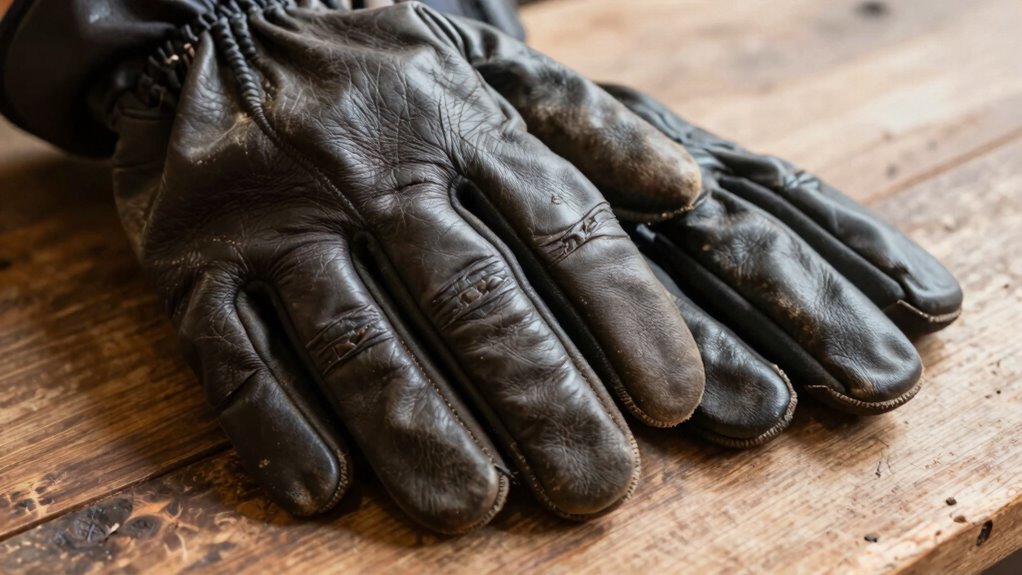

You can break in your glove without wrecking the pocket by using gentle techniques like applying glove-specific conditioners, working the leather with your hands, and wrapping it around a ball overnight. Avoid aggressive pounding, soaking, or heat methods. Patience is key—slowly molding the pocket and softening the leather guarantees durability and proper shape. If you want to learn more about safe, damage-free break-in methods, keep exploring these effective tips.
Key Takeaways
- Use gentle shaping techniques like molding the pocket with a ball and wrapping it overnight to preserve pocket integrity.
- Apply glove-specific oils or conditioners sparingly and evenly, avoiding over-soaking or aggressive treatments.
- Employ soft mallets or glove mallets to gradually soften leather without damaging stitches or material.
- Handle the glove delicately, bending fingers and squeezing to increase flexibility without overstressing the leather.
- Regularly check leather flexibility and avoid high heat or soaking methods that can warp or weaken the pocket.

SARNA BASEBALL Glove Conditioner, Liquid, 8 Oz – Break in Faster, Keep Leather Maintained – Water-Based, Non-Darkening, No Sticky Residue – Glove Conditioner for Mitts & Softball Gear Made in USA
COLOR-SAFE SOFTNESS – If keeping the original color of your glove is important to you, look no further….
As an affiliate, we earn on qualifying purchases.
As an affiliate, we earn on qualifying purchases.
How to Break in a Glove Without Damaging the Pocket
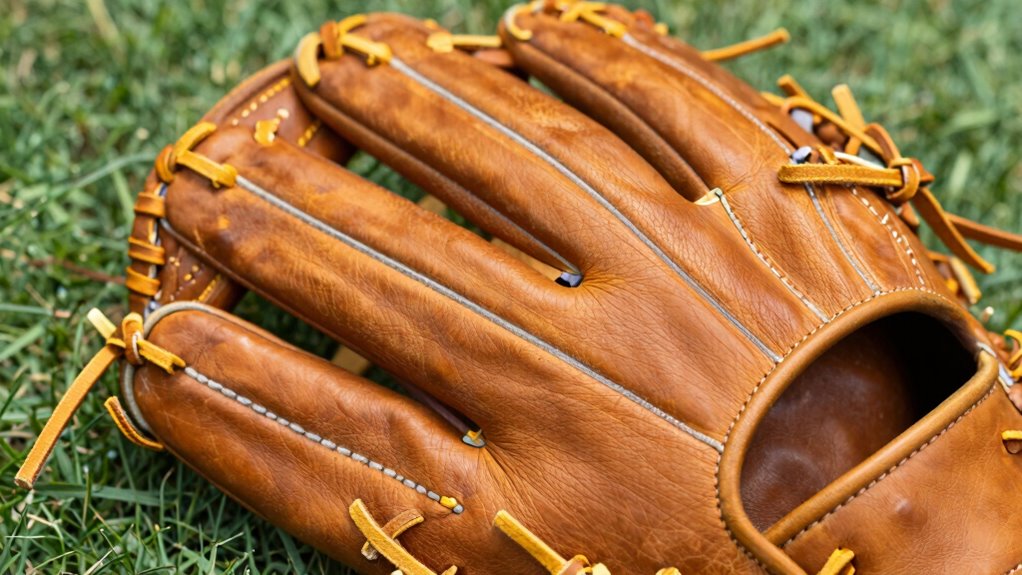
Breaking in a glove without damaging the pocket requires a careful approach. You need to understand your glove’s materials because different leather types, like mitt or steerhide, respond differently to break-in methods. Using the right break in tools, such as a mallet or a glove mallet, helps soften the leather gradually without overstretching or ruining the pocket. Avoid aggressive methods like pounding the glove with excessive force, as this can deform the leather or create uneven wear. Instead, focus on gentle, consistent pressure to mold the pocket naturally. Applying a small amount of glove-specific oil can also help soften the material, making it easier to work with. Proper glove care techniques are essential for maintaining the shape and longevity of your glove. Incorporating appropriate break-in techniques ensures your glove molds correctly without damage. Patience and proper tools ensure your glove breaks in evenly, maintaining its shape and pocket integrity. Additionally, understanding the material properties of your leather can guide you toward better, damage-free break-in practices. Being mindful of the glove’s overall flexibility can help prevent overstressing the material during the process. Recognizing how the leather responds to different stretching methods can further improve your break-in routine.

Baseball Hammer, Baseball Softball Glove Mallet, One-Piece Mallet, Baseball Glove Shaping Hammer with 2Pcs Baseball Lock, Glove Mallet 12inch 11inch
【Baseball Glove Hammer Material】The baseball hammer is made of beech wood. The wood is hard and heavy. It…
As an affiliate, we earn on qualifying purchases.
As an affiliate, we earn on qualifying purchases.
Why Proper Glove Break-In Matters for Your Game
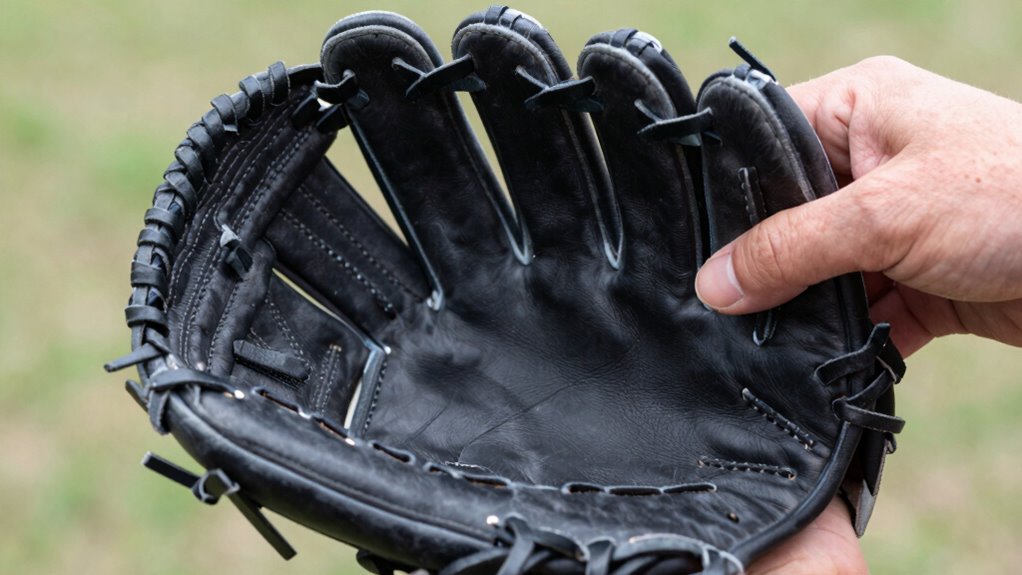
Proper glove break-in improves your game by making your glove more flexible and comfortable, so you can catch with ease. It also helps your glove last longer, saving you money and frustration over time. Plus, a well-broken-in glove can boost your overall performance by providing better control and quickness. Additionally, understanding the importance of proper break-in techniques can prevent damage and ensure your glove maintains its shape and durability. Being aware of time zone information can help you coordinate training schedules or games across different locations effectively. Taking the right steps during the backyard transformation process can also enhance your overall game setup, making practice and play more enjoyable. Knowing these cybersecurity tips ensures your equipment and data stay protected during your training and gameplay sessions. Proper glove maintenance and appropriate handling are also essential to preserve the quality and longevity of your glove over time.
Enhances Flexibility and Fit
When you take the time to properly break in your glove, it becomes more flexible and molds better to your hand. This flexibility enhancement improves your glove fit, making it feel like an extension of your body rather than an obstacle. A well-broken-in glove allows for easier closure and quicker reactions, which can boost your confidence on the field. Proper break-in techniques soften the leather without damaging the pocket, ensuring your glove remains comfortable and responsive. When your glove fits snugly and moves smoothly, you’ll notice better control and less frustration. Taking the right steps to break in your glove not only enhances flexibility but also helps it conform perfectly to your grip, giving you a more natural feel during gameplay. Additionally, understanding proper bedding techniques can help preserve the integrity of the leather and pocket, extending the lifespan of your glove. Using appropriate leather conditioning products can also aid in softening the leather evenly and maintaining its durability over time. Incorporating care and maintenance practices can further protect your glove and keep it performing at its best. Regularly air-drying your glove after use can prevent unwanted mold and odor buildup, ensuring it stays in optimal condition for longer. Applying proper storage methods can also help maintain the shape and longevity of your glove between uses.
Improves Glove Longevity
Taking the time to properly break in your glove can considerably extend its lifespan. The key lies in understanding your glove material. Leather gloves, especially high-quality ones, tend to last longer when broken in correctly, preventing cracks and tears over time. Proper break-in methods reduce unnecessary stress on the material, helping it retain flexibility without weakening. Additionally, your choice of brand influences durability; reputable brands often use superior materials designed for longevity. Investing in a glove from a trusted brand means it’s built to withstand frequent use and proper break-in techniques. When you take care during the initial break-in process, you’re not just improving performance—you’re ensuring your glove stays reliable through many seasons of play. Properly broken-in gloves truly stand the test of time.
Boosts Performance Potential
A well-broken-in glove can substantially enhance your game by providing better control, comfort, and responsiveness. The right glove materials, such as soft leather or high-quality synthetic options, respond more effectively when properly broken in. Using the appropriate break in tools, like mallets or specialized conditioners, helps accelerate this process without damaging the pocket or compromising the glove’s integrity. When your glove is properly broken in, it molds perfectly to your hand, making catches easier and quicker. This boosts your overall performance potential, giving you increased confidence on the field. Properly prepared gloves also maintain their flexibility longer, ensuring consistent performance game after game. Investing time in correct break-in techniques maximizes your glove’s potential and elevates your playing ability.
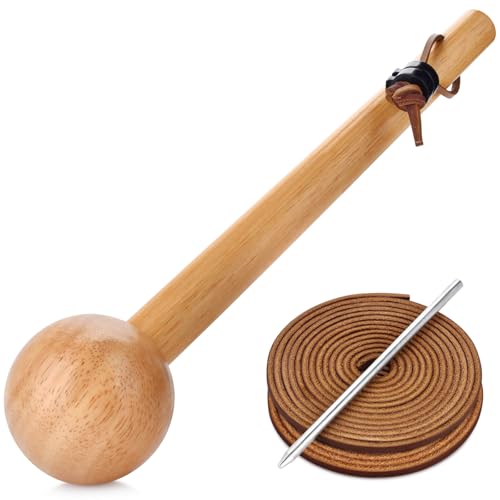
Baseball Hammer, Baseball Softball Golve Mallet, 2 Leather Lace and 1 Needle for Baseball Glove, 2Pcs Baseball Lock, Golve Mallet
【baseball hammer and 2 leather lace and 1 Relace needle】The baseball hammer is made of beech wood. The…
As an affiliate, we earn on qualifying purchases.
As an affiliate, we earn on qualifying purchases.
Risks of Damaging Your Glove During Break-In
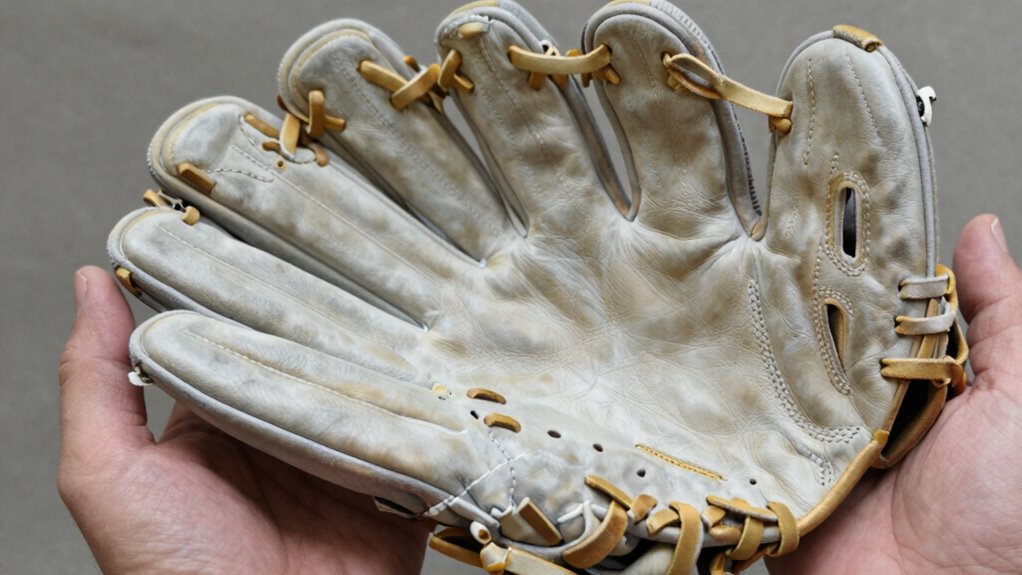
While breaking in your glove is essential for ideal performance, rushing the process or using improper techniques can cause serious damage. Different glove materials react uniquely to various break-in methods, and aggressive stretching or soaking can weaken the leather or synthetic parts. Using incorrect break-in techniques, like excessive force or heat, risks cracking or warping the glove’s pocket and structure. Over-softening the leather may lead to a loss of shape and durability, reducing its lifespan. If you try to speed up the process with harmful methods, you might end up with a glove that doesn’t perform as expected or needs costly repairs. Properly conditioning the leather helps maintain the glove’s integrity and prolongs its usefulness. Always follow proper break-in techniques suited for your glove’s materials to avoid damaging its integrity and guarantee desirable, long-lasting use.

Rhino Wax – Baseball Glove Ultimate Break-in Kit – Includes Premium Oil for Ball Gloves, Mitt Conditioner, Hardwood Mallet, Wrap, Brush, and Microfiber Cloth – This is How to Break in a Glove Fast
The Ultimate Glove BreakIn Kit Includes: Glove Oil (8 oz), Glove Rub Conditioner (2 oz), Baseball Glove Mallet,…
As an affiliate, we earn on qualifying purchases.
As an affiliate, we earn on qualifying purchases.
Preparing Your New Glove for Safe Break-In

Preparing Your New Glove for Safe Break-In
To guarantee your new glove breaks in safely and effectively, start by inspecting it thoroughly. Check the glove materials for any manufacturing flaws, loose stitches, or rough spots that could cause damage during break-in. Understanding the type of leather or synthetic materials helps you choose the right approach. Keep break-in tools like glove mallets, conditioning oils, or stretching aids ready to gently shape the pocket without overdoing it. Avoid rushing the process; proper preparation prevents tearing or misshaping. Make sure your glove is clean and dry before starting, and consider lightly conditioning it to soften the materials. By carefully assessing your glove and gathering the right tools, you set a solid foundation for a successful and damage-free break-in. Additionally, understanding the break-in process can help you anticipate the necessary steps and avoid common pitfalls. Proper glove maintenance is also essential to ensure longevity and optimal performance over time. Being familiar with leather conditioning techniques can also enhance your ability to soften and preserve the glove during the break-in period. Taking the time to prepare your glove properly and use appropriate tools can significantly improve its durability and functionality down the line.
How to Gently Break in Your Glove

Start by handling your glove gently to encourage a natural break-in. The glove material, whether leather or synthetic, responds best to light, careful treatment. Avoid aggressive breaking techniques that could damage the glove or ruin its shape. Instead, focus on softening the leather by gently working it with your hands, bending the fingers, and applying light pressure. Use a glove conditioner or oil sparingly to keep the material supple without over-softening. Consistency is key—repeating this process over several days helps the glove mold comfortably to your hand. Remember, patience pays off. Gentle handling and proper breaking techniques ensure your glove becomes game-ready without compromising its structure or integrity.
How to Mold the Pocket Using a Ball
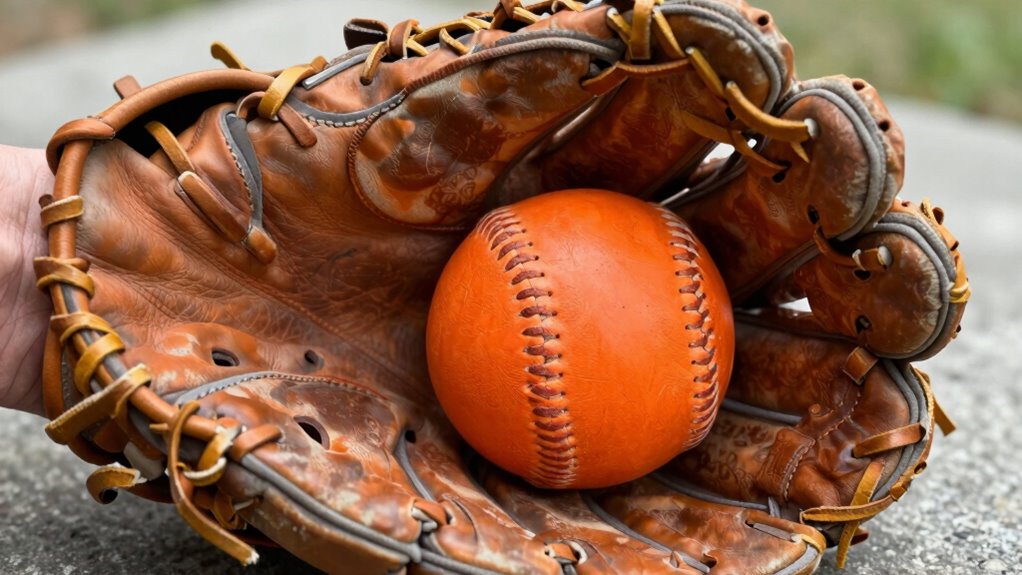
Molding the pocket using a ball is a straightforward way to shape your glove for ideal performance. It helps develop the pocket’s depth without damaging the tanning process or compromising stitch durability. Here’s how to do it:
- Place a baseball or softball in the glove’s pocket.
- Close the glove around the ball, pressing firmly to mold the shape.
- Wrap the glove with a belt or string to keep the ball secure overnight.
- Regularly check that the stitches stay intact and the leather maintains flexibility, avoiding over-tightening that could weaken the stitches or damage the tanning process.
This method ensures the pocket molds properly without wrecking the leather or stitching, leading to a durable, game-ready glove.
How to Use Leather Conditioners to Soften Your Glove
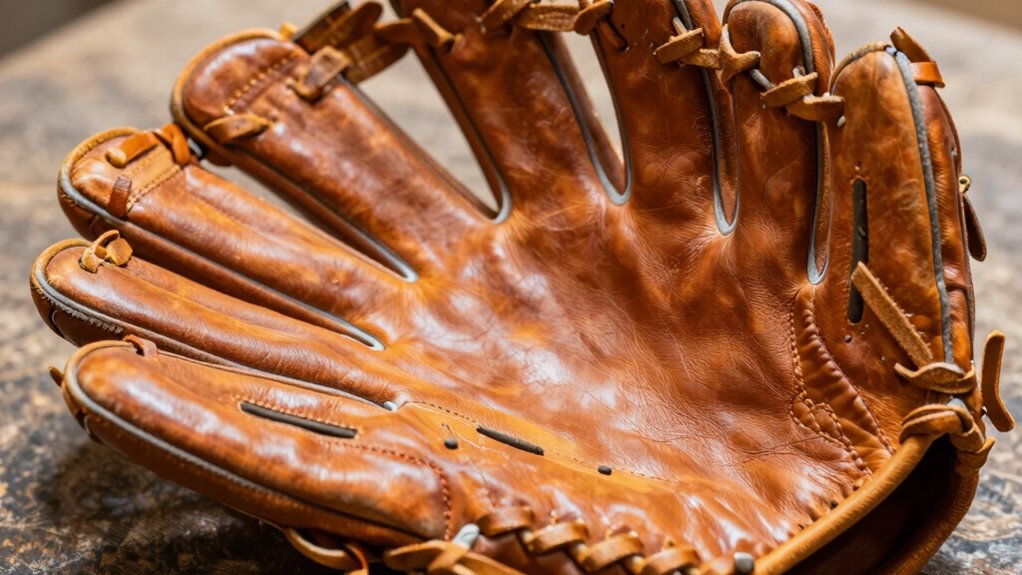
Using leather conditioners is an effective way to soften your glove and improve its flexibility. Glove conditioning helps maintain the leather’s suppleness while preventing it from drying out or cracking. To start, apply a small amount of conditioner evenly across the entire glove, focusing on stiff areas. Use a soft cloth or your fingers to work the product into the leather, ensuring thorough coverage. Let the conditioner sit for a few minutes to absorb, then gently buff away any excess. Regular conditioning supports leather preservation, keeping your glove soft and durable over time. Avoid over-applying, which can make the leather too greasy or heavy. Proper glove conditioning ensures your glove stays flexible, ready for game day, without compromising its integrity.
Hand-Softening Techniques to Break in Your Glove
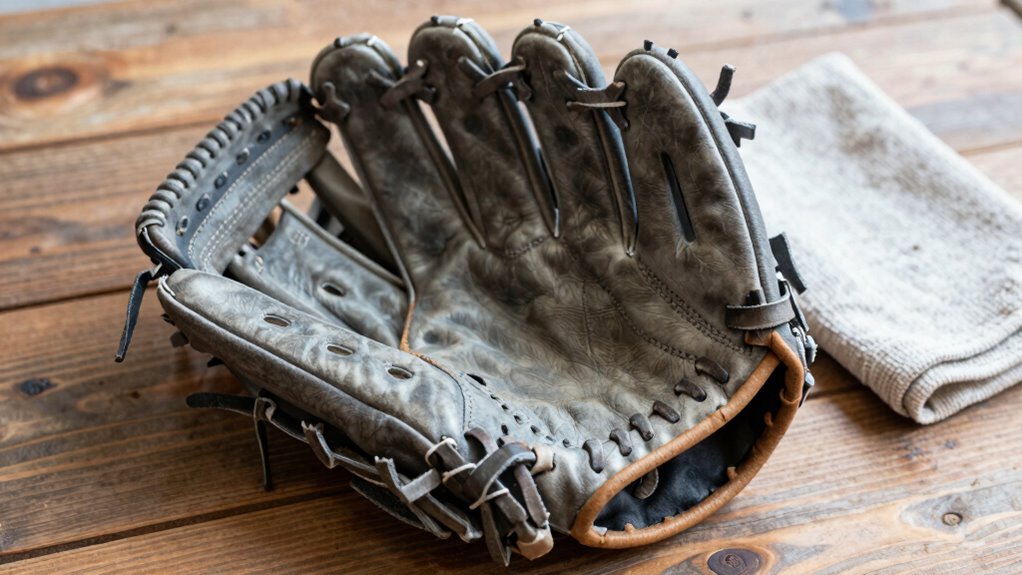
After applying leather conditioner to keep your glove soft and flexible, the next step is to manually work it in to speed up the break-in process. This hands-on approach allows you to customize the glove’s fit and feel, enhancing glove customization and leather restoration. Here are some effective hand-softening techniques:
- Squeeze the glove repeatedly to loosen the leather.
- Shape the pocket by pressing and molding with your hand.
- Use your fingers to stretch the leather around key areas.
- Wrap the glove in a ball and keep it in a secure spot overnight.
These methods help soften the leather naturally, ensuring your glove molds to your hand without wrecking the pocket, making it game-ready faster.
Signs Your Glove Is Ready for Play
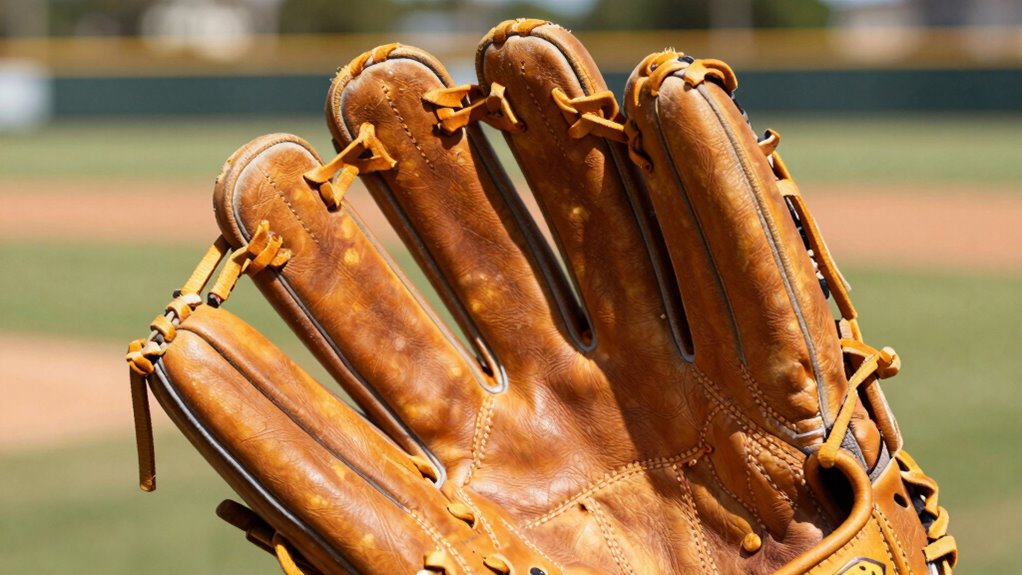
Knowing when your glove is ready for play is essential to guarantee peak performance and durability. One key sign is proper glove sizing; if the glove fits snugly but comfortably, with enough flexibility to close easily, it’s a good indicator it’s ready. Feel for a broken-in pocket that naturally contours to your hand and ball, showing it’s molded to your grip. Check the glove materials—leather gloves typically require some break-in, but if they feel soft and pliable, they’re ready. If the leather resists excessive stiffness and the pocket feels stable yet flexible, your glove is game-ready. Avoid using gloves that are too stiff or tight, as they can hinder performance and cause damage. When these signs align, your glove is primed for action.
Tips to Maintain Your Glove’s Shape and Pocket Over Time

To keep your glove performing at its best, maintaining its shape and pocket over time is essential. Proper glove maintenance ensures durability and peak performance. Here are four tips for pocket preservation and shape retention:
- Store your glove in a cool, dry place, avoiding direct sunlight that can weaken the leather.
- Use a ball or a glove shaper to maintain the pocket’s depth and prevent it from collapsing.
- Regularly apply leather conditioner to keep the material supple and prevent cracking.
- Avoid over-stuffing or squeezing the pocket when not in use, which can distort its form.
Following these simple steps will extend your glove’s lifespan and keep it game-ready, making sure your investment stays in top condition through consistent glove maintenance.
Frequently Asked Questions
Can I Break in My Glove Without Using a Ball?
Yes, you can break in your glove without using a ball by focusing on glove conditioning and leather softening. Apply a leather conditioner to keep the leather supple, then gently work the glove with your hands to mold and soften it. You can also store the glove with a ball or some paper inside to help shape it over time. This method softens the leather without damaging the pocket, making it game-ready.
How Long Does the Glove Break-In Process Typically Take?
The glove break-in process typically takes several days to a week, depending on how often you work with it. To speed things along, focus on flexible glove maintenance and leather conditioning, which softens the leather and helps it mold to your hand. Regularly applying conditioner and gently working the glove’s pocket guarantees faster, smoother shaping, so your glove becomes game-ready without unnecessary frustration or damage.
Is It Better to Break in a Glove Indoors or Outdoors?
It’s better to break in your glove indoors for comfort and control, where you can focus without weather worries. Indoor environments offer better indoor comfort, helping you mold the glove smoothly. However, for outdoor durability, gradually exposing your glove to outdoor conditions can strengthen the leather and improve its resilience. Balance indoor comfort with outdoor durability by starting indoors and then testing it outside for the best results.
What Are Common Mistakes to Avoid During Glove Break-In?
You should avoid common mistakes like overusing heat or harsh oils, which can damage your glove. Focus on proper tanning techniques and moisture control; don’t soak the glove in water or apply excessive lubricants. Instead, gently work the leather with your hands, keep it moisturized, and let it breathe. This careful approach helps break in your glove effectively without wrecking the pocket, ensuring a durable, game-ready fit.
Can I Use a Hairdryer or Heat to Speed up Breaking In?
Using a hairdryer or heat for glove conditioning can speed up break-in, but don’t rely on it too much. Heat application may seem quick, but it risks damaging the leather or ruining the pocket. Instead, gently warm the glove and work it with your hands to soften it naturally. This method preserves the glove’s integrity, ensuring it breaks in properly without compromising durability or fit.
Conclusion
Now that you know how to break in your glove without wrecking the pocket, you’ll keep it game-ready and durable for seasons to come. Remember, patience and gentle techniques are your best friends. Are you ready to trust your glove enough to give it the care it deserves? With the right approach, your glove will shape perfectly to your hand, ready to make those game-winning catches. Keep it soft, keep it strong, and let your glove perform at its best.