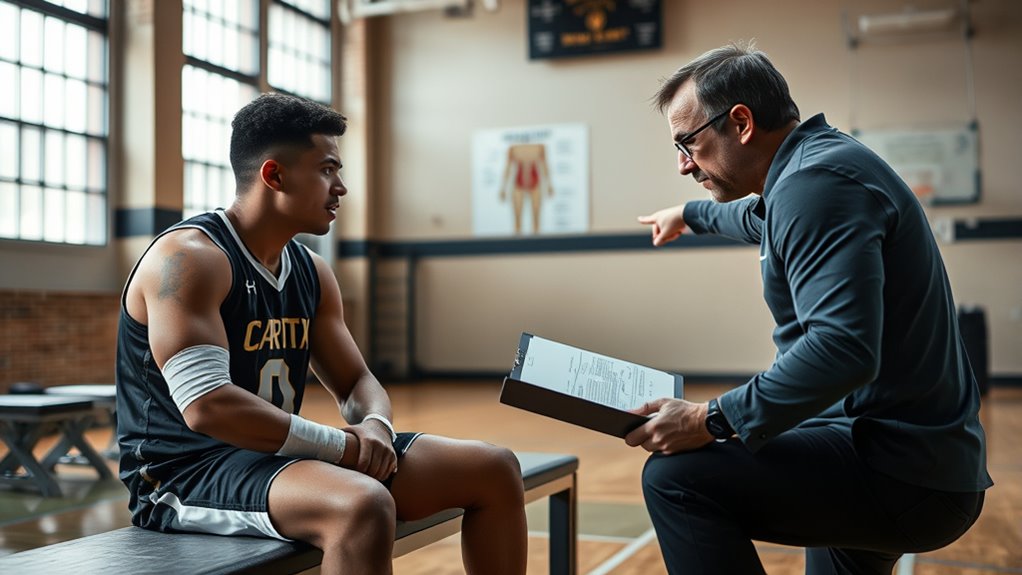

When managing injuries, it’s crucial to communicate openly and promptly with your coaches and trainers. Share details about your pain, how the injury happened, and any previous issues clearly. This helps them assess your condition accurately and suggest the right treatment or modifications to your activity. Asking questions and providing honest feedback support your recovery plan. Being proactive about communication ensures you get the proper care needed; keep exploring to learn more about effective injury management strategies.
Key Takeaways
- Report injuries promptly, sharing pain details, cause, and history for accurate assessment.
- Communicate clearly with coaches and trainers to facilitate tailored treatment and prevention strategies.
- Follow injury management instructions carefully and provide honest feedback during recovery.
- Ask questions to understand rehabilitation steps and ensure proper recovery protocols.
- Maintain open dialogue to prevent further injury and support a safe return to activity.
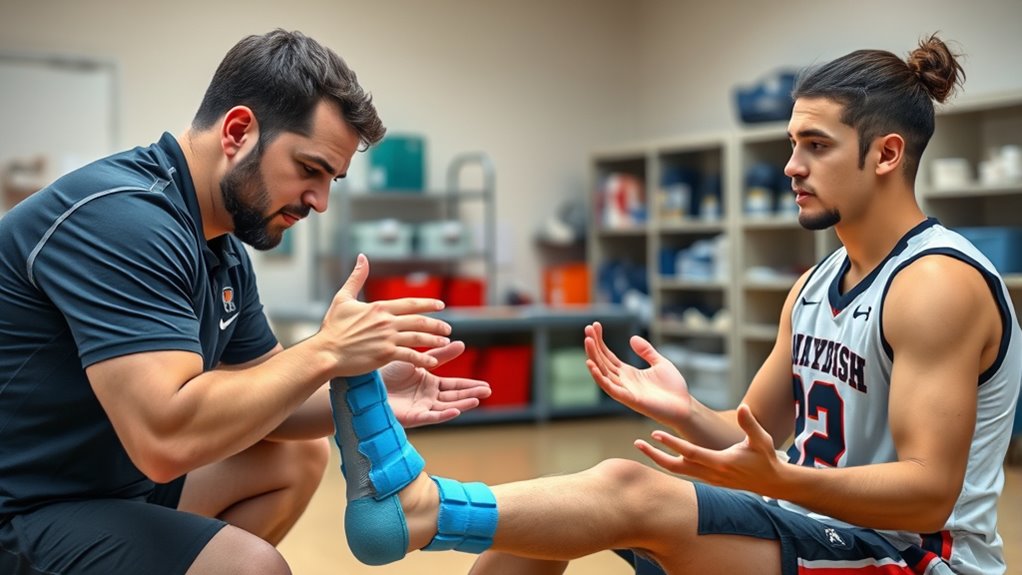
Have you ever wondered what to do immediately after sustaining an injury? The first step is to communicate effectively with your coaches and trainers. They’re your best allies in managing the injury and returning to activity safely. When you inform them promptly, they can assess the situation and recommend appropriate actions, including initial treatment and next steps. Clear communication ensures you receive tailored rehabilitation strategies that suit your specific condition, minimizing the risk of worsening the injury. Be honest about your pain levels, how the injury occurred, and any previous issues you’ve experienced. This information helps your trainers develop a personalized plan for recovery and helps prevent further damage.
Once you’ve communicated your injury, your coaches and trainers will likely focus on injury prevention techniques moving forward. They’ll emphasize proper warm-up routines, stretching, and strengthening exercises designed to protect your body from similar injuries in the future. These injury prevention techniques are essential to reducing the likelihood of setbacks during recovery and can also help you stay healthier overall. Don’t hesitate to ask questions about these strategies—they’re there to empower you and ensure you understand how to avoid injury recurrence. For example, proper biomechanics, correct equipment use, and adequate rest are all crucial elements your trainers might highlight to keep you safe. Additionally, understanding how tuning and maintenance can impact overall vehicle safety and performance can be analogous to ensuring your body is well-maintained and properly prepared to prevent injuries.
In addition to injury prevention, your trainers may suggest specific rehabilitation strategies tailored to your injury. This could include physical therapy, targeted exercises, or activity modifications during your recovery process. Staying engaged with these strategies and following their instructions closely is key to regaining strength and mobility. Regular updates and honest feedback about your progress enable your trainers to modify your plan as needed, ensuring a smooth and safe return to your sport or activity. Remember, effective communication isn’t just about reporting pain; it’s about actively participating in your recovery process, asking questions, and understanding the rationale behind each step.
Frequently Asked Questions
How Can I Effectively Communicate Pain Levels to My Coach?
You can effectively communicate pain levels to your coach by practicing clear pain articulation. Be honest and specific about what you’re feeling, describing the pain’s intensity, location, and how it affects your performance. Maintain injury transparency by sharing any discomfort or concerns promptly. This honesty helps your coach understand your condition better and make informed decisions about your training, ensuring your safety and recovery are prioritized.
What Should I Do if My Trainer Dismisses My Injury Concerns?
Imagine your injury concerns as fragile glass in your hands; dismissing them risks shattering your health. If your trainer dismisses your concerns, calmly insist on discussing your injury, emphasizing injury prevention and your well-being. Prioritize your mental health awareness by advocating for yourself. If needed, seek a second opinion or talk to a healthcare professional. Your health is essential, and your voice matters in protecting it.
How Do I Balance Honesty With My Injury to Avoid Losing Playing Time?
You should be honest about your injury while balancing honesty vs. strategy by sharing enough injury disclosure to protect your health without risking unnecessary playing time loss. Communicate clearly with your coach about your symptoms and limitations, emphasizing your commitment to recovery. Being transparent helps build trust, but also consider strategic timing for disclosure to avoid jeopardizing your spot on the team. Always prioritize your health while maintaining open, honest communication.
When Is the Right Time to Seek a Second Medical Opinion?
When injury persistence feels like a shadow haunting your recovery, it’s time to seek a second opinion. Don’t let doubts linger like storm clouds blocking your progress. If your symptoms worsen, don’t improve with treatment, or you’re unsure about the diagnosis, get that extra perspective. Trust your instincts—advocating for your health is essential. A second opinion can reveal what others might miss, guiding you toward proper healing and peace of mind.
How Can I Ensure My Injury Is Properly Documented and Understood?
To guarantee your injury is properly documented and understood, focus on thorough injury reporting. Clearly describe your symptoms, how the injury occurred, and any limitations you experience. Keep detailed injury documentation, including dates, treatments, and medical visits. Share this information with your coaches and trainers in writing, like emails or injury logs. Open communication helps them understand your condition and supports your recovery process effectively.
Conclusion
Remember, clear communication with your coaches and trainers is key to managing injuries effectively. By sharing how you feel and listening to their advice, you’ll recover faster—no need to call in a messenger! Think of it like updating your status on a modern social network; keeping everyone in the loop makes the healing process smoother. So stay proactive, honest, and engaged—your injury won’t be a “damsel in distress” for long!