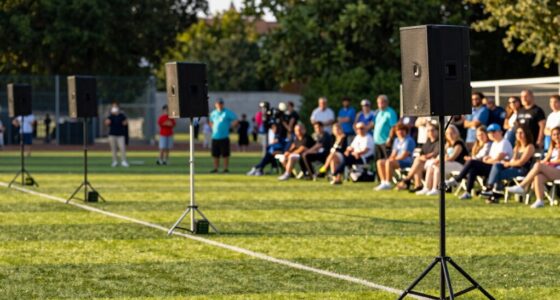

To encourage sportsmanship, focus on teaching respect for opponents, officials, and teammates. Encourage players to handle conflicts calmly and fairly, showing humility after wins and graciousness after losses. Promote positive actions like helping opponents and celebrating good plays, which sets a strong example for others. Emphasize the importance of accepting rules and authority gracefully. Continuing will help you discover more ways to foster a respectful, fun, and fair environment for everyone involved.
Key Takeaways
- Model respectful behavior by demonstrating fair play, humility, and graciousness in both victory and defeat.
- Teach conflict resolution skills to handle disagreements calmly and constructively on and off the field.
- Promote positive actions like congratulating opponents and helping others to foster a respectful sports environment.
- Emphasize accepting referee decisions gracefully to instill fairness and respect for authority.
- Highlight life lessons from sportsmanship that develop character, teamwork, and respectful social interactions.
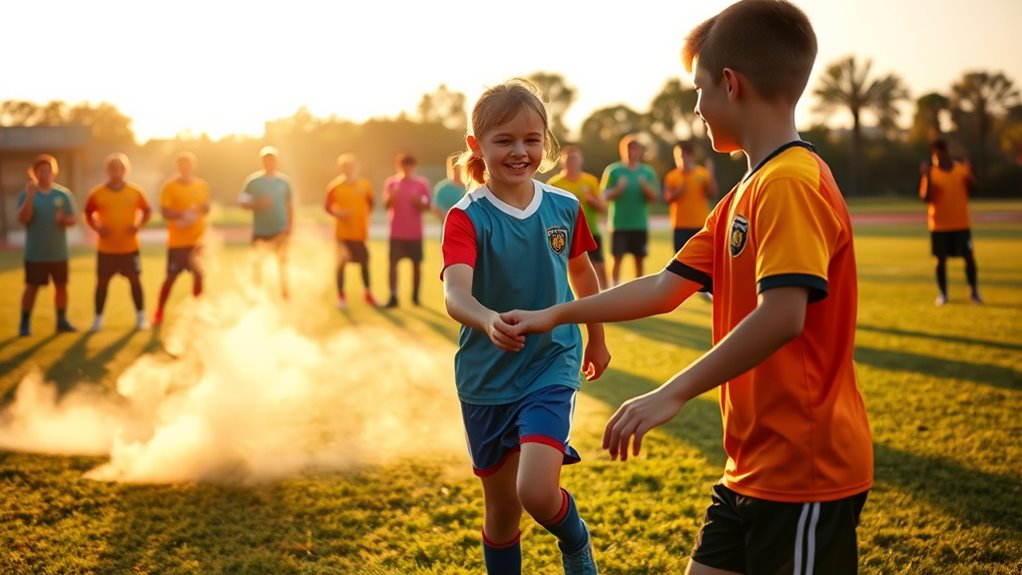
Sportsmanship is a crucial part of any sport, teaching players the importance of respect and fair play both on and off the field. When you embrace good sportsmanship, you foster team camaraderie, which strengthens the bonds between teammates and creates a more enjoyable playing environment. Respect for opponents, officials, and teammates is essential because it encourages positive interactions, even during intense moments. As you participate, you learn that winning isn’t everything; how you conduct yourself matters just as much. Displaying humility after a win and graciousness after a loss demonstrates maturity and helps maintain a healthy team dynamic.
Good sportsmanship fosters respect, teamwork, and character on and off the field.
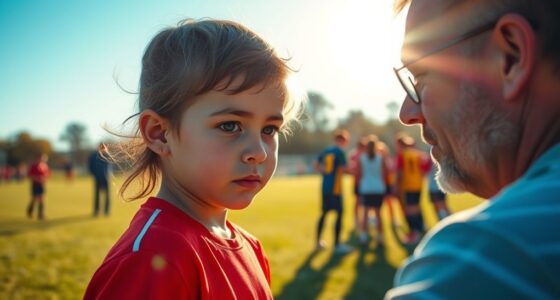
One of the key skills you develop through sportsmanship is conflict resolution. When disagreements or misunderstandings arise, instead of resorting to anger or blame, you learn to handle the situation calmly and constructively. This involves listening carefully to others’ perspectives, acknowledging their feelings, and working toward mutual understanding. Conflict resolution skills not only improve your sports experience but also translate into everyday life, making you better at *steering* disagreements in various settings. You realize that addressing issues diplomatically keeps the game fun and fair for everyone involved. Additionally, practicing mindfulness during competitions can help you stay focused and manage your emotions effectively.
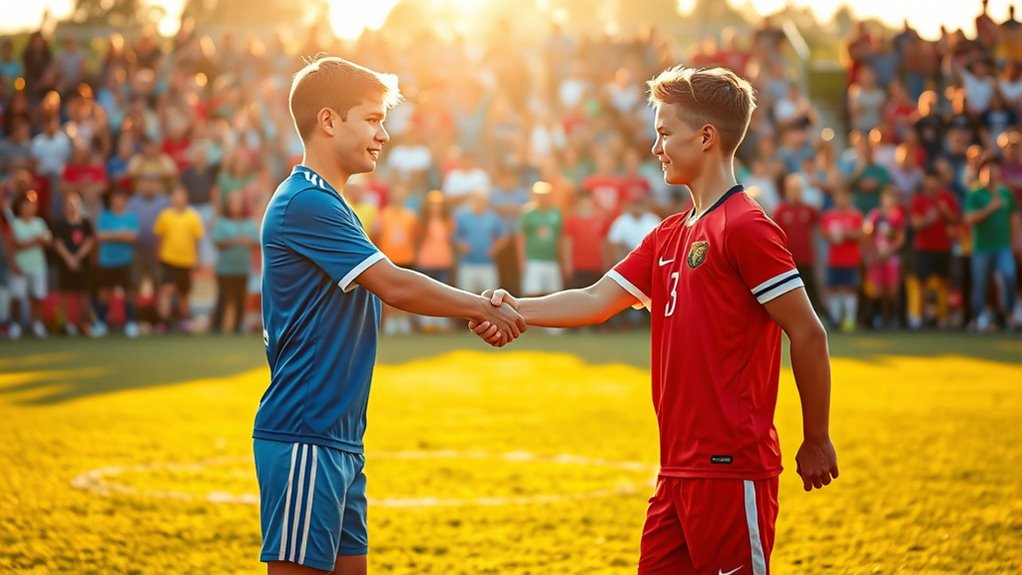
Encouraging sportsmanship also means setting a good example for others. As a player, your actions influence your teammates and even spectators. When you demonstrate respect, whether by helping an opponent up after a fall or congratulating a player on a good play, you promote a positive team culture. This behavior encourages others to follow suit, creating an environment where everyone feels valued and motivated to perform their best. *Furthermore*, embracing sportsmanship helps defuse tense situations before they escalate, keeping the focus on the game rather than personal disputes.
You also learn that good sportsmanship involves accepting referees’ decisions gracefully, even if you disagree. Instead of arguing or showing frustration, you accept the call and move on. This attitude fosters fairness and demonstrates that you respect the rules and authority involved in the sport. Over time, these habits become second nature, shaping you into a player who values integrity and fairness above all else.
Ultimately, encouraging sportsmanship teaches you that sport is about more than just competition. It’s about building character, respecting others, and developing essential life skills. By cultivating team camaraderie and mastering conflict resolution, you contribute to a positive, respectful environment that benefits everyone. These lessons stay with you long after the game ends, helping you become not just a better athlete but also a more respectful and fair-minded individual in all areas of life. Recognizing the importance of positive environment can further enhance your understanding of how sportsmanship impacts broader social interactions.
sportsmanship training guide
As an affiliate, we earn on qualifying purchases.
As an affiliate, we earn on qualifying purchases.
Frequently Asked Questions
How Can Coaches Effectively Model Sportsmanship?
You can effectively model sportsmanship by demonstrating strong leadership qualities and making ethical decisions consistently. Show respect to players, officials, and opponents, even in challenging situations. Your actions set the tone, so stay calm, fair, and positive, encouraging others to follow suit. By exemplifying integrity and humility, you inspire your team to adopt these same values, fostering a respectful, fair, and enjoyable sports environment.
What Are Common Challenges in Promoting Fair Play?
You face challenges like designing incentive structures that truly promote fair play instead of just winning. Peer influence can also undermine efforts if teammates celebrate unfair advantages or disrespect opponents. To overcome these issues, you need to set clear expectations, reward sportsmanship, and foster a team culture that values respect over competition. By actively addressing these challenges, you encourage players to prioritize fairness and develop lifelong values.
How Does Sportsmanship Impact Team Dynamics?
Your team’s sportsmanship directly influences team cohesion, as player respect fosters trust and positive interactions. When everyone demonstrates fair play, conflicts decrease, communication improves, and your team works more effectively together. Respectful behavior encourages players to support each other, boosting morale and collaboration. Ultimately, promoting sportsmanship creates a united environment where team members feel valued, which enhances overall performance and helps achieve shared goals.
What Role Do Parents Play in Teaching Respect?
As a parent, your influence is essential in shaping your child’s respect development. You model respectful behavior and reinforce the importance of fair play, teaching them that how they treat others matters. By demonstrating good sportsmanship yourself, you set a powerful example that encourages your child to follow suit. Your consistent support and guidance help instill values of respect, fostering positive interactions both on and off the field.
How Can Schools Measure Success in Sportsmanship Programs?
Measuring success in sportsmanship programs is like catching sunlight; it’s subtle yet impactful. You can do this by setting clear grading criteria that evaluate respectful behavior and teamwork, then using feedback strategies to gather input from students, coaches, and parents. Track improvements over time, observe sportsmanship during games, and assess how well students uphold fair play. These indicators help you understand if your program fosters lasting respect and integrity.
sportsmanship awards for kids
As an affiliate, we earn on qualifying purchases.
As an affiliate, we earn on qualifying purchases.
Conclusion
Just like a well-tended garden blooms with vibrant colors, fostering sportsmanship cultivates a respectful and fair environment. When you lead by example, you plant seeds of kindness and integrity that grow into strong roots within your team. Remember, every act of respect and fair play is a drop of water nourishing this garden. Together, you can create a landscape where everyone feels valued, and the spirit of sportsmanship flourishes, making the game truly beautiful.
conflict resolution sports coaching
As an affiliate, we earn on qualifying purchases.
As an affiliate, we earn on qualifying purchases.
sportsmanship medals and trophies
As an affiliate, we earn on qualifying purchases.
As an affiliate, we earn on qualifying purchases.