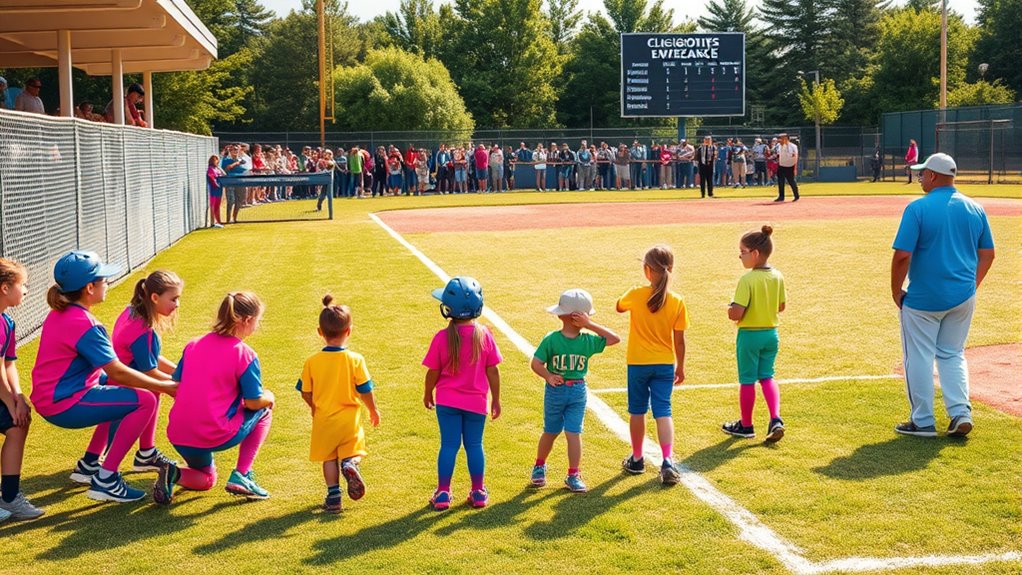

Understanding age divisions and eligibility rules in youth softball guarantees fair play, safety, and proper development. You need to verify players’ ages with official documents, assign them to appropriate divisions, and prevent older players from competing with younger ones. Equipment standards, field modifications, and game rules are tailored for safety at each level. Following these guidelines maintains trustworthy competition, minimizes injuries, and promotes positive experiences. Continue exploring to get detailed insights on how these rules shape a successful league.
Key Takeaways
- Age divisions ensure players compete against peers, promoting fair play and safe development.
- Eligibility rules require proof of age and restrict players to one team per season.
- Equipment standards mandate safety gear and approved bats to protect players during gameplay.
- Field and game regulations are tailored by age to reduce injury risks and ensure fairness.
- Overall, these rules uphold safety, fairness, and integrity within youth softball leagues.

Have you ever wondered what rules keep youth softball games fair and fun? One of the most important aspects is understanding how leagues determine age divisions and eligibility. These rules are designed not only to guarantee that players compete against others of similar age and skill levels but also to promote player safety and uphold equipment standards. When leagues set clear age categories, they help prevent mismatched teams that could lead to injuries or unfair advantages, making the game safer for everyone involved. Age divisions also allow players to develop their skills gradually and confidently, knowing they’re competing with peers at an appropriate level.
Understanding age divisions and eligibility rules promotes fair, safe, and skill-appropriate youth softball games.
Eligibility rules play a vital role in maintaining fairness. Typically, leagues require players to provide proof of age through birth certificates or official identification, guaranteeing that each participant is competing in the correct age group. This prevents older or more experienced players from dominating younger divisions and keeps competition balanced. Additionally, many leagues restrict players to a single team per season, avoiding conflicts of interest and ensuring that everyone has a fair chance to participate. These rules not only support fair play but also foster a sense of integrity and trust within the league.
Player safety is a top priority when establishing age and eligibility rules. Younger players are especially vulnerable to injuries, which is why leagues often have strict guidelines about the types of equipment that can be used. Equipment standards are in place to minimize risk, requiring players to wear appropriate protective gear such as helmets, face guards, and padding. The equipment must meet specific safety standards set by governing bodies, ensuring it provides adequate protection during gameplay. For example, bats must be approved for youth play, and cleats must have appropriate traction to prevent slips and falls. These standards help create a safer environment and give parents peace of mind knowing their kids are protected. Additionally, adherence to safety standards ensures consistent enforcement and accountability across leagues.
Leagues also enforce rules about field dimensions and game regulations that align with age groups, further supporting safety and fairness. For instance, bases are set closer for younger divisions, reducing the risk of collisions and making the game more manageable for smaller players. Overall, understanding how age divisions and eligibility rules are structured helps you appreciate the league’s commitment to fairness, safety, and a positive playing experience. When everyone plays by the same rules, it guarantees that the game remains enjoyable, competitive, and safe for all participants.
Frequently Asked Questions
How Are Tie-Breakers Handled in Age Division Standings?
When there’s a tie in age division standings, you should follow the league’s tiebreaker procedures. Usually, these involve comparing head-to-head records, run differential, or other criteria specified in the rules. You need to review the standings resolution process for your league, as it guides how to break ties fairly and determine playoff spots or standings placement. Always double-check league-specific guidelines to guarantee accuracy.
Can Players Switch Divisions Mid-Season?
You might wonder if players can switch divisions mid-season. Typically, division change policies are strict, often requiring approval and strict adherence to eligibility verification procedures. If you’re considering a switch, you’ll need to submit a formal request, and league officials will review eligibility criteria carefully. Be prepared for possible delays or restrictions, as the league prioritizes fairness and proper age verification to maintain competitive integrity.
Are There Specific Rules for Players With Birthdays Near Cutoff Dates?
Yes, there are specific rules for players with birthdays near cutoff dates. You’ll need to provide player birth date verification to confirm eligibility. Some leagues offer age cutoff flexibility, allowing a small window for players close to the age limit. Check your league’s policies to see if they accommodate this flexibility, ensuring your player qualifies without disrupting team placement or game schedules.
What Is the Process for Challenging an Age Eligibility Decision?
Think of challenging an age eligibility decision as steering a maze. You start by requesting an age verification procedure from league officials, then submit any supporting documents that prove your case. If unsatisfied, you can enter the eligibility appeal process, where your evidence is reviewed. Stay persistent, communicate clearly, and remember that the league’s goal is fair play, ensuring your voice is heard in the pursuit of justice.
How Are Exceptions Made for Players With Special Needs?
You can request special needs accommodations and eligibility exceptions by submitting a formal request to league officials. Provide documentation of your player’s specific needs and demonstrate how these accommodations support fair participation. League administrators will review your request, considering the player’s best interests while maintaining league integrity. If approved, adjustments are made to help your player participate comfortably and fairly, ensuring everyone has an equal opportunity to enjoy the game.
Conclusion
By understanding these age divisions and eligibility rules, you’re helping create a supportive, nurturing environment for young athletes to thrive. Your dedication guarantees that every player feels valued and encouraged to grow, both on and off the field. Remember, each rule is a gentle guiding hand, shaping memories and fostering confidence. With your care and attention, you’re helping young softball players blossom, cultivating not just skills, but lifelong love for the game.