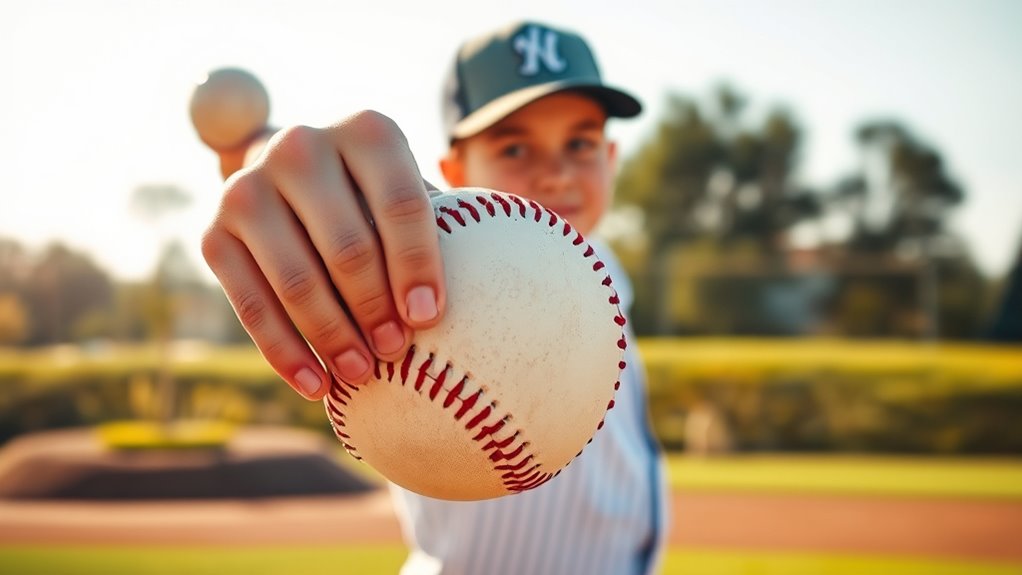

To start pitching, focus on your grip—keep it firm yet relaxed, with fingers on the seams and the thumb supporting underneath. Stand with feet shoulder-width, knees slightly bent, and maintain a natural arm angle around 90°, avoiding dropping or raising your elbow unnecessarily. As you stride forward, transfer your weight smoothly and keep your shoulders aligned, following through with a clean wrist roll and full arm extension. Mastering these basics sets a strong foundation, and continuing with these tips will help you improve further.
Key Takeaways
- Establish a comfortable, balanced stance with feet shoulder-width apart and knees slightly bent.
- Position your arm at a natural, moderate angle (~90° bend) during the wind-up for consistency.
- Grip the ball firmly yet relaxed, with fingers on seams and thumb supporting underneath.
- Transfer weight smoothly from back to front foot while keeping shoulders aligned and arm at the same angle.
- Focus on a natural wrist roll during release, extending your arm fully toward the target in follow-through.

Are you new to pitching and wondering where to start? The first step is establishing a proper stance. Your stance is the foundation of your delivery, so it’s vital to get it right. Stand comfortably with your feet shoulder-width apart, knees slightly bent, and weight evenly distributed. This balanced position helps you stay consistent and maintain control throughout your pitch. Keep your body relaxed; tension can hinder your movement and accuracy. Once you’re comfortable with your stance, focus on your arm angle. Your arm angle is how you position your throwing arm during your wind-up and delivery. For beginners, a natural, moderate arm angle tends to work best—usually around a 90-degree bend at the elbow. This position allows for a smooth, controlled motion and reduces strain on your shoulder. As you progress, you can experiment with slightly higher or lower arm angles, but starting with a comfortable, natural bend helps develop proper mechanics and prevents injury. Additionally, proper tuning of your pitching mechanics can lead to more consistent throws and reduce the risk of injury.
When you prepare to throw, keep your grip firm but not overly tight. Your grip should be secure enough to control the ball but relaxed enough to allow a fluid motion. Your fingers should rest comfortably on the seams, and your thumb should support the ball from underneath. As you bring your arm back during your wind-up, maintain your arm angle—avoid dropping your elbow too low or raising it excessively, as this can cause inconsistent throws and increase injury risk. A consistent arm angle creates a more reliable release point and helps you develop accuracy over time.
As you move into your stride and delivery, focus on maintaining your proper stance and arm angle. Keep your shoulders aligned with your target, and as you step forward, transfer your weight smoothly from your back foot to your front foot. Your arm should stay at the same arm angle during this transfer, allowing for a natural, fluid motion. When it’s time to release the ball, focus on following through by extending your arm toward your target, ensuring your wrist stays firm and your fingers roll off the ball cleanly.
baseball pitching grip training aid
As an affiliate, we earn on qualifying purchases.
As an affiliate, we earn on qualifying purchases.
Frequently Asked Questions
How Do I Improve My Pitching Accuracy?
To improve your pitching accuracy, focus on consistent mechanics and mental focus techniques. Use drill recommendations like target practice and slow-motion throws to refine your control. Maintain mental clarity by visualizing your pitch and staying relaxed under pressure. Concentrate on your target, breathe evenly, and avoid rushing your throws. Regular practice with these drills and mental strategies will help you develop precision and confidence in your pitching.
What Are Common Mistakes Beginners Make When Pitching?
Like Icarus soaring too close to the sun, beginners often overreach, leading to poor ball control and arm fatigue. You might push too hard or rush your delivery, sacrificing accuracy and risking injury. Focusing on proper mechanics, pacing yourself, and avoiding excessive force helps maintain control and reduces fatigue. Recognizing these tendencies early allows you to refine your technique, building a stronger, more consistent pitching foundation over time.
How Can I Increase My Pitching Velocity Safely?
To increase your pitching velocity safely, focus on building arm strength through proper strength training and conditioning. Additionally, master your mechanics by practicing proper posture, arm angle, and follow-through, which helps prevent injury and boosts speed. Avoid rushing your delivery, and listen to your body’s signals. Consistent practice, combined with proper technique and strength development, allows you to improve velocity without risking harm.
What Equipment Is Essential for Beginner Pitchers?
You need to gear up properly to get started. A good baseball glove is essential for comfort and control, helping you focus on your pitching. Pitching mats are also a must, protecting your arm and providing a consistent surface for practice. Don’t forget to wear comfortable sneakers and have a water bottle handy. These basics keep you safe and ready to improve, proving that preparation is half the battle.
How Should I Warm up Before Pitching?
Before pitching, you should do a proper warm-up to prevent injury and improve performance. Start with stretching routines to loosen up your muscles, focusing on your shoulders, arms, and legs. Incorporate arm circles to increase blood flow and flexibility in your shoulder joints. Jog lightly or do some dynamic movements to get your body ready. This preparation helps you pitch more effectively and reduces the risk of strains or injuries.
youth baseball pitching glove
As an affiliate, we earn on qualifying purchases.
As an affiliate, we earn on qualifying purchases.
Conclusion
Mastering the basics of pitching sets you up for success on the mound. Remember, consistency in your grip and release can boost your confidence and performance. Did you know that beginner pitchers who focus on proper technique improve their accuracy by 30% within just a few weeks? Keep practicing, stay patient, and enjoy every step of your journey. With dedication, you’ll soon see how those small adjustments make a big difference. Happy pitching!
baseball pitching mechanics training
As an affiliate, we earn on qualifying purchases.
As an affiliate, we earn on qualifying purchases.
softball pitching training equipment
As an affiliate, we earn on qualifying purchases.
As an affiliate, we earn on qualifying purchases.