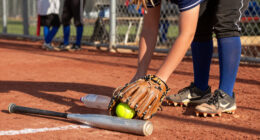
Choose softball training equipment that fits the player’s age, position, and current goals, then set it up for safe, focused practice. This guide is for players, parents, and coaches building a first kit or replacing mismatched gear. Allow 30-60 minutes to check existing equipment, compare sizes, and prepare a practice space. You will finish with a core kit, a few targeted training aids, and a plan for using them without overcrowding practice.

Get sports gear delivered free with Prime
- Fast, free delivery on millions of items
- Prime Video, Amazon Music and more included
- Member-only deals all year

BAGAIL 7×7 ft Baseball & Softball Training Net
- ✔ Net dimensions: 7 ft x 7 ft
- ✔ Net material: 7-ply knotless thickened polyester mesh
- ✔ Frame: Heavy-duty steel tubes with reinforced fiberglass poles
SKLZ Hurricane Baseball and Softball Swing Trainer
- ✔ Adjustable height: 23 to 38 inches
- ✔ Frame material: Aluminum
- ✔ Ball head: Anti-dent design

Bandit Sports Tee Popper – Durable Nylon Batting Tee with Popper Ball
- ✔ Dimensions: 11.57 x 5.39 x 5.31 inches
- ✔ Weight: 0.59 kg
- ✔ Material: Glass-infused nylon
Difficulty: Beginner | Time: 30-60 minutes to select and organize equipment
What You’ll Need
Tools & Materials:
- Player’s glove, bat, and helmet, if already owned
- Softballs in the correct size for the player’s league
- Measuring tape or access to manufacturer sizing charts
- Practice space with a safe hitting area
- Water and a basic first-aid kit
Knowledge:
- Player’s age group and league ball size
- Player’s primary position and one or two practice goals
- Basic awareness of safe spacing around bats and thrown balls
Check league rules before buying a bat, helmet, or protective equipment; approved models and required features vary. Inspect existing gear first, and use the player’s actual glove and bat where possible when checking fit. Avoid practicing live hitting in a shared or confined area.
BAGAIL 7×7 ft Baseball & Softball Training Net
The BAGAIL is our strongest all-around pick because it supports several softball hitting drills in a single station. Its 7-by-7-foot net provides a broad target for batting practice, while the included tee and two strike zone targets let players shift between contact work and aiming practice. Compared with the SKLZ Hurricane, it does not add resistance to a swing; instead, it gives players more ways to practice and keeps hit balls within a defined area.The 7-ply knotless polyester mesh, steel tubes and fiberglass poles are built for repeated impacts, and the product description specifies tool-free assembly in under two minutes. Ground stakes help secure the frame outdoors, though buyers practicing in strong wind should expect to stake it down. The frame is also described as heavy to carry, so the carry bag helps with transport but does not make it as convenient to move as the compact Bandit Popper.This makes the most sense for households or teams that want a reusable hitting area for tee drills and target practice. It is less suitable where a full 7-foot frame will not fit or where a player specifically wants resistance training or a rising-ball timing cue. We put it first for its breadth, not because it duplicates the specialized jobs of the other two picks.
Pros:
- Combines a large net, adjustable batting tee and two strike zone targets.
- 7-ply knotless mesh and a heavy-duty steel frame are designed for repeated impact.
- Tool-free setup and a carry bag support practice at different locations.
- Ground stakes help secure the net for outdoor sessions.
Cons:
- The 7-foot frame requires more space than the Bandit Tee Popper.
- The steel frame can be heavy to transport.
- Staking may be needed for stability in windy conditions.
Best for: Softball players and families who want one contained setup for tee work, target practice and general hitting drills.
Not ideal for: Players with very limited practice space, or those seeking resistance-based swings or a pop-up timing drill as their main training method.
Bottom line: We recommend the BAGAIL as the most adaptable choice for players who want a dedicated softball hitting area with several drill options.
“We recommend the BAGAIL as the most adaptable choice for players who want a dedicated softball hitting area with several drill options.”
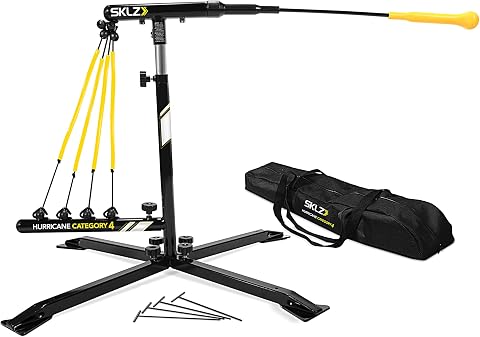
SKLZ Hurricane Baseball and Softball Swing Trainer
Where the BAGAIL catches balls and supports target work, the SKLZ Hurricane focuses on the swing itself. Its four interchangeable power bands let a player adjust resistance for repeated swings intended to build bat speed and power. The height range of 23 to 38 inches also gives younger players room to set the ball head to a more suitable level, making it a focused training tool for youth players up to age 14 as described.The anti-dent ball head and aluminum frame are intended for repeated contact, and the screw-in base legs and included ground stakes help anchor it on different surfaces. That setup is less immediate than the BAGAIL’s stated tool-free assembly, and the listed 34-pound item weight makes the Hurricane a poor fit for someone who will carry equipment to frequent sessions. A carry bag is included, but it cannot remove the effort of moving and anchoring the trainer.Compared with the Bandit Popper, this trainer prioritizes resistance and repeatability rather than a ball that pops upward. Choose it when the practice goal is consistent, forceful swings and the player has a stable place to train. Skip it if the priority is realistic ball flight, broad team use, or a lightweight setup; the Popper is simpler to move, while the BAGAIL supports more varied drills.
Pros:
- Four interchangeable power bands provide options for resistance and swing intensity.
- Adjustable 23-to-38-inch height can accommodate younger players.
- Anti-dent ball head and aluminum frame are designed for repeated impact.
- Carry bag and ground stakes are included.
Cons:
- The listed 34-pound weight makes it cumbersome to move often.
- Screw-in legs and metal stakes add setup steps.
- Its resistance drill is more specialized than the BAGAIL’s tee-and-target practice.
Best for: Youth softball players working on repeated, resistance-based swings in a home or team practice area.
Not ideal for: Players who need lightweight equipment for frequent transport, quick setup, or a moving-ball timing drill.
Bottom line: The SKLZ Hurricane is a focused choice for youth players seeking repeatable power-band swing work and willing to manage a heavier setup.
“The SKLZ Hurricane is a focused choice for youth players seeking repeatable power-band swing work and willing to manage a heavier setup.”
Bandit Sports Tee Popper – Durable Nylon Batting Tee with Popper Ball
The Bandit Sports Tee Popper offers the most distinct drill in this lineup: rather than hold a ball stationary like the BAGAIL’s tee or add resistance like the SKLZ, it pops a ball upward to give the hitter a timing cue. Its reinforced spring is described as producing a high arc up to 46 inches, which can help players practice tracking and meeting a rising ball. The glass-infused nylon construction is intended to handle impact in home or field sessions.Its compact dimensions and 0.59-kilogram listed weight make it easier to store and carry than either framed option. That portability comes with a notable limitation: the Popper is compatible only with its included popper balls, and the product information warns that standard baseballs may damage the holder. Buyers therefore have less freedom to use their existing practice balls than with a net-and-tee setup.We see this as a useful add-on for players who want a portable timing drill, rather than a complete practice station. It is not a substitute for the BAGAIL’s ball containment and targets, nor does it offer the Hurricane’s resistance bands. Choose it for its specific pop-up cue and small footprint; skip it if your priority is broad drill variety or using standard balls.
Pros:
- Reinforced spring produces a pop-up ball cue for timing practice.
- Glass-infused nylon construction is designed to resist impact damage.
- Compact dimensions and low listed weight make it easier to store and carry.
- Includes a dedicated popper ball.
Cons:
- Only compatible with the included type of popper balls.
- Standard baseballs may damage the holder.
- Offers a narrower range of practice drills than the BAGAIL net.
Best for: Players who want a compact, portable drill for tracking and timing a rising ball during solo or shared practice.
Not ideal for: Buyers looking for a complete hitting station, resistance training, or compatibility with standard baseballs and softballs.
Bottom line: The Bandit Tee Popper is a compact specialist for timing a rising ball, provided buyers accept its dedicated-ball requirement.
“The Bandit Tee Popper is a compact specialist for timing a rising ball, provided buyers accept its dedicated-ball requirement.”
As an Amazon Associate we earn from qualifying purchases.
Before You Start
Decide whether the main goal is general skill practice, hitting, throwing, fielding, pitching, or catching. A useful starter kit covers safe basics before specialized aids. Buy for fit and league compatibility rather than appearance or the largest number of features. For young players, an adult should supervise bat use, pitching drills, and any practice involving hard balls.
Step-by-Step Instructions
Step 1: Set the player’s practice goals
Write down the player’s age group, position, experience level, and one or two skills to improve over the next month. Choose specific goals, such as catching ground balls cleanly or making balanced contact, instead of a broad goal like getting better. Use those goals to guide equipment choices.
Tip:Keep the first kit simple. Equipment that supports a regular practice habit is more useful than several aids that rarely leave the bag.
Check: You have one or two clear practice goals and know which skills the equipment needs to support.
Step 2: Check league and safety requirements
Review the current league rules for bat certification, softball size, helmet requirements, and any position-specific protective gear. Check the label or manufacturer information on equipment you already own. Replace gear that does not meet rules or has cracks, loose parts, damaged padding, or straps that will not stay secured.
Tip:Do not assume equipment approved for another league or age group is accepted in this one. Confirm the exact model or standard with the league if the label is unclear.
Check: You have a list of required equipment and have separated usable gear from items that need replacement.
Step 3: Fit the glove and protective gear
Have the player try on the glove and protective equipment they will use. Check that the glove closes around a ball without forcing the fingers, and that the wrist opening feels secure. Fit the helmet with the chin strap fastened; it should stay in place when the player moves their head. Try on any required face guard, chest protector, or shin guards and adjust the straps.
Tip:Glove sizing varies by position and brand. Use the manufacturer’s sizing chart as a starting point, then prioritize a secure, comfortable fit the player can control.
Check: The player can move freely, secure each item correctly, and use the glove without pain or struggling to close it.
Step 4: Choose a bat the player can control
Check league rules and the bat’s size, weight, and certification before purchasing. Let the player hold and swing the bat in a clear area under supervision. Select a bat they can move through a controlled swing without losing balance or letting the barrel drop. If comparing models, use manufacturer sizing guidance and ask a qualified coach or sporting-goods fitter for help.
Tip:A bat that is too heavy can make practice mechanics harder to maintain. Do not choose a heavier bat simply because the player is growing.
Check: The bat meets league rules, and the player can swing it with control through a full practice motion.
Step 5: Assemble the core practice kit
Pack the fitted glove, approved helmet, suitable bat, league-size softballs, water bottle, and any required protective gear. Add a ball bucket or small equipment bag to keep balls together. For throwing and fielding, begin with enough balls for steady repetitions without chasing balls into unsafe areas.
Tip:Use soft training balls only when the drill calls for them. They do not replace regulation balls for every skill, and they can behave differently when thrown or hit.
Check: The player has the equipment needed for a basic warm-up, throwing, fielding, and supervised hitting session.
Step 6: Add one training aid for a specific goal
Select one aid that supports the chosen goal: a batting tee for contact work, a net for contained hitting, cones for footwork or fielding routes, or a rebounder for controlled throwing and catching. Confirm that the aid fits the available space and is suitable for the player’s age and strength. Read its setup instructions before use.
Tip:Start with one aid and learn its drills before buying more. Extra equipment can distract from the skill the player is trying to improve.
Check: You can name the skill the aid supports and have a drill in mind that uses it safely.
Step 7: Prepare a safe practice area
Choose a level surface with enough room to swing, throw, and retrieve balls without crossing other activities. Place a net behind the hitter when available, and mark a clear no-entry area around the bat. Set cones or targets where players can see them without creating tripping hazards. Keep spectators and waiting players outside the hitting and throwing lanes.
Tip:Stop the drill if another person enters the active area. Resume only after the space is clear and everyone knows where to stand.
Check: The hitter, fielders, ball retriever, and spectators each have a clear, separate place to stand.
Step 8: Use equipment in a focused practice sequence
Begin with a light warm-up, then use the selected aid for short, controlled repetitions. For example, take tee swings toward a net, pause to check balance and contact, then retrieve balls only after the bat is set down. For throwing or fielding, give players enough space and use a pace they can handle. Finish by returning gear to the bag and checking for damage.
Tip:Follow a coach’s instruction for pitching drills and avoid high-volume throwing when the player reports pain or unusual fatigue.
Check: The player completes the planned drills with control, follows the safety boundaries, and leaves equipment ready for the next session.
Common Mistakes to Avoid
- Buying equipment before checking league rules. — Confirm ball size, bat certification, helmet requirements, and protective gear rules before ordering. Keep model labels or product details for verification.
- Choosing a glove or bat based on age alone. — Use sizing guidance, then have the player try the equipment. Select gear they can control comfortably.
- Buying several training aids at once. — Pick one aid tied to a specific goal, use it consistently, and add another only when the next need is clear.
- Setting up hitting practice where others may walk through. — Create a marked hitting zone, keep retrieval separate from swings, and stop whenever someone enters the active area.
Troubleshooting
Problem: The player cannot close the glove or hold it comfortably.
Solution: Check the glove size and wrist adjustment, and try a different model or fit. Do not force a glove that causes pain or prevents reliable control.
Problem: The player loses balance or slows down during swings.
Solution: Recheck bat weight and length against manufacturer guidance. Try a lighter or shorter option and ask a coach to observe controlled swings before practice continues.
Problem: A net or rebounder shifts during drills.
Solution: Stop use, move it to level ground, secure its anchors or supports as directed, and check for damaged joints or fabric. Do not continue if it cannot stay stable.
Problem: Practice balls keep leaving the area.
Solution: Reposition the net or use a more contained practice space. Set retrieval boundaries and pause between repetitions so nobody walks into an active hitting or throwing lane.
What Success Looks Like
The finished kit contains correctly sized, league-compliant basics that the player can use comfortably, plus no more than a few aids linked to specific goals. The practice space has clear hitting and throwing boundaries, gear is in sound condition, and the player can complete a short drill with control and no avoidable interruptions. Review the kit as the player grows or league requirements change.
Next Steps
Schedule two or three short practice sessions each week and record the drill, number of repetitions, and one observation about control or comfort. Check straps, seams, bat labels, and net supports before each session. Revisit sizing at the start of a season and whenever equipment begins to feel difficult to control. Ask a qualified coach for position-specific drills, and stop practice if the player has pain.
Frequently Asked Questions
What equipment should a new softball player buy first?
Start with a properly fitted glove, a league-approved helmet and bat if required for practice, league-size softballs, and any required protective gear. Add a tee or net only when it supports a specific practice goal and fits the available space.
Does a player need different equipment for each position?
Some gear is position-specific, especially catcher protection and some glove styles. Begin with the league’s required safety equipment, then ask the coach whether the player’s position calls for a particular glove or protective item.
Are soft training balls suitable for every drill?
No. They can help with certain indoor or beginner drills, but their weight and flight may differ from game balls. Follow the drill instructions and coach guidance, and use the correct ball for the skill being practiced.
How often should softball equipment be replaced?
Replace gear when it no longer fits, fails league requirements, or shows damage that affects protection or performance. Inspect helmets, straps, gloves, bats, nets, and rebounders regularly; follow manufacturer guidance for service life and replacement.