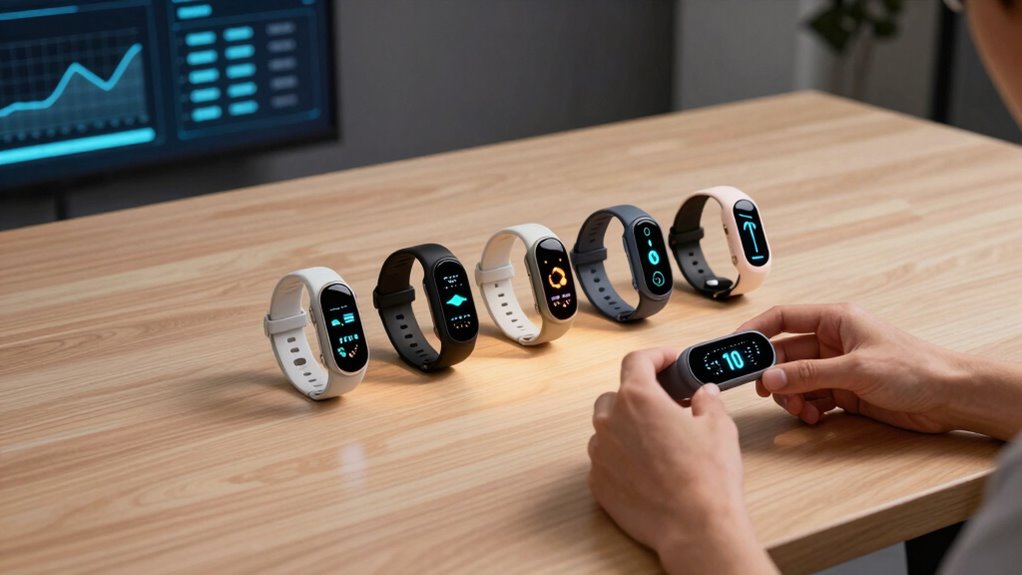

Athletes don’t just need sleep tracking — they need recovery insight that tells them when to push and when to back off. After comparing 13 options, the WHOOP 5.0/MG stands out as the best overall pick because its screenless, 24/7 design pairs sleep staging with strain and recovery scoring built specifically for training decisions. The Garmin Index Sleep Monitor is the strongest premium alternative for athletes who want clinical-grade sleep metrics without a subscription, while the Fitbit Inspire 3 delivers the best value with a proven sleep algorithm at an accessible price. The main tradeoff in this category is data depth versus cost and commitment: subscription-based recovery platforms offer the most actionable coaching but add ongoing expense, while one-time-purchase bands give you raw sleep data you interpret yourself. Screenless trackers, which make up nearly half of this lineup, offer distraction-free sleep capture but weaker daytime usability. Read on for the full breakdown of what each option does well, who it fits, and where it falls short.

Get sports gear delivered free with Prime
- Fast, free delivery on millions of items
- Prime Video, Amazon Music and more included
- Member-only deals all year
Complete the kit


Key Takeaways
- WHOOP 5.0 separated itself as the only tracker in this lineup that converts sleep data into a daily readiness score tied directly to training load — the single most useful output for athletes.
- The Garmin Index Sleep Monitor is the only dedicated bedside-style sleep monitor here, giving it the deepest sleep architecture detail, but it can’t track daytime activity or workouts.
- Seven of the 13 products are screenless bands, and they consistently offered longer battery life and more accurate overnight heart-rate capture than screen-based rivals at similar prices.
- Budget trackers like the BOYACARE and Zeacool bands estimate sleep stages, but their lack of HRV-based recovery scoring means athletes still have to interpret raw data themselves.
- The WHOOP 5.0 and EnergyPort tracker sit at opposite ends of the long-battery spectrum — both push past a week per charge, but only one backs that battery life with athlete-grade analytics.
| Google Fitbit Inspire 3 Health & Fitness Tracker – Midnight Zen/Black with Small and Large Bands |  | Best Overall for Everyday Training | Brand and model: Google Fitbit Inspire 3 | Band sizes: Small and large bands included | Sleep features: Automatic sleep tracking, Sleep Score, smart wake alarm | VIEW ON AMAZON | See Our Full Breakdown |
| BOYACARE Vitra Fitness Tracker with Sleep and Health Monitoring |  | Best for Long Battery Life | Brand and model: BOYACARE Vitra | Weight: 14 g | Sleep tracking: Light, deep, and REM stages; awake time | VIEW ON AMAZON | See Our Full Breakdown |
| Zeacool Fitness Tracker with Heart Rate, Blood Oxygen, Sleep Monitoring, 5 ATM Waterproofing, and 25 Sport Modes |  | Best for At-a-Glance Sleep Data | Brand: Zeacool | Display: 1.10-inch AMOLED HD touchscreen | Sleep tracking: Sleep stages and nightly score in the app | VIEW ON AMAZON | See Our Full Breakdown |
| Screenless Fitness Tracker Bracelet with Heart Rate, Sleep and Stress Monitoring |  | Best for Screen-Free Routine Tracking | Brand: qiunhang | Weight: 25 g | Sleep tracking: Sleep and daytime naps | VIEW ON AMAZON | See Our Full Breakdown |
| B8 Smart Bracelet with Health and Fitness Tracking |  | Best for Minimal Wrist Display | Model: B8 Smart Bracelet | Display: 0.4-inch digital display; time only | Sleep and health tracking: Sleep, heart rate, HRV, SpO2, stress, menstrual cycles | VIEW ON AMAZON | See Our Full Breakdown |
| Screenless Fitness Tracker for Men and Women, Compatible with iOS and Android, with Two Bands |  | Best Battery Life | Compatibility: iOS and Android | Display: Screenless | Battery Life: Up to 35 days | VIEW ON AMAZON | See Our Full Breakdown |
| EnergyPort Fitness Tracker Smart Bracelet with Blood Oxygen, Heart Rate, Sleep Monitor, 170+ Sport Modes, 60-Day Battery, 2 Bands |  | Best Rugged Build | Weight: 25g | Sport Modes: 170+ | Battery Life: 20-30 days regular; 45-60 days standby | VIEW ON AMAZON | See Our Full Breakdown |
| Smart Bracelet Health and Fitness Tracker, Black |  | Best Minimalist Option | Screen: None (screen-free design) | Water Resistance: IP68 | Battery Life: Up to 47 days standby | VIEW ON AMAZON | See Our Full Breakdown |
| Fitness Smart Bracelet – Screenless 24/7 Sleep & Health Tracker with 170+ Sport Modes |  | Best for Recovery Insights | Weight: 25g | Water Resistance: IP68, up to 10 meters | Battery Life: 20-30 days regular, 45-60 days standby | VIEW ON AMAZON | See Our Full Breakdown |
| SOUYIE Smart Bracelet Fitness Tracker with 24/7 Health Monitoring |  | Lightest Wear | Weight: 18.4g | Sport Modes: 170+ | GPS Modes: 3 (walking/running/cycling) | VIEW ON AMAZON | See Our Full Breakdown |
| Screenless Fitness Tracker Smart Band with Sleep, HRV, Heart Rate & SpO2 Monitoring | | Best Battery Life on a Budget | Weight: 25g | Battery Life: 20-30 days | Battery Capacity: 180mAh | VIEW ON AMAZON | See Our Full Breakdown |
| Garmin Index Sleep Monitor |  | Best for Garmin Ecosystem Athletes | Brand: Garmin | Model Number: 010-03024-00 | Size: L-XL | VIEW ON AMAZON | See Our Full Breakdown |
| WHOOP 5.0/MG Activity Tracker with 12-Month Membership |  | Best Premium Recovery System | Model: WHOOP 5.0/MG | Battery Life: 14+ days | Membership: 12 months included | VIEW ON AMAZON | See Our Full Breakdown |
| wearable sleep trackers for athlete | Battery life | Water resistance | Compatibility |
|---|---|---|---|
| Google Fitbit Inspire 3 Health | — | — | Apple iOS 16.4 or higher; Android OS 11.0 or higher |
| BOYACARE Vitra Fitness Tracker | Up to 30 days | IP68 | — |
| Zeacool Fitness Tracker with H | Up to 10–14 days regular use; up to 30 days standby | 5 ATM | iPhone and Android smartphones |
| Screenless Fitness Tracker Bra | 45–60 days regular use; 20–30 days continuous use claimed | 1ATM; described for splashes, sweat, and rain | iOS and Android |
| B8 Smart Bracelet with Health | Up to 7 days | IPX8 | — |
| Screenless Fitness Tracker for | Up to 35 days | IP68 | iOS and Android |
| EnergyPort Fitness Tracker Sma | 20-30 days regular; 45-60 days standby | 1ATM (10m) | — |
| Smart Bracelet Health and Fitn | Up to 47 days standby | IP68 | — |
| Fitness Smart Bracelet | 20-30 days regular, 45-60 days standby | IP68, up to 10 meters | Android 4.4+, iOS 9.0+ |
| SOUYIE Smart Bracelet Fitness | 20-30 days | 1 ATM | Android 5.0+ / iOS 10.0+ |
| Screenless Fitness Tracker Sma | 20-30 days | IP68 | Android 4.4+ / iOS 9.0+ |
| Garmin Index Sleep Monitor | Up to 7 nights | — | — |
| WHOOP 5.0/MG Activity Tracker | 14+ days | — | — |
More Details on Our Top Picks
Google Fitbit Inspire 3 Health & Fitness Tracker – Midnight Zen/Black with Small and Large Bands
I’d put the Fitbit Inspire 3 first for athletes who want sleep insights alongside familiar daily training and wellness measures. Its automatic sleep tracking, Sleep Score, and smart wake alarm make it easy to follow nightly patterns, while the Daily Readiness Score and 24/7 heart rate monitoring add daytime context. Compared with the screenless BOYACARE Vitra, the Inspire 3 offers a more established mix of exercise and sleep features, though Vitra lists more sports modes and a much longer claimed battery life. The Inspire 3’s main compromise for training is its lack of built-in GPS, so runners may need a phone for route tracking. Some health features may also require Fitbit Premium, which makes this a better fit for buyers comfortable with app-based extras.
Pros:- Automatic sleep tracking with a daily Sleep Score and smart wake alarm
- Daily Readiness Score pairs sleep and health tracking with training context
- 24/7 heart rate monitoring and more than 40 exercise modes
- Includes small and large bands and supports both iOS and Android
Cons:- No built-in GPS for tracking routes without a phone
- Some health features may require a Fitbit Premium subscription
Best for: Athletes who want sleep, readiness, and everyday heart rate tracking in a slim band that works with iPhone or Android
Not ideal for: Runners who want GPS route tracking from the wrist or buyers who want every health feature without a possible subscription
- Brand and model:Google Fitbit Inspire 3
- Band sizes:Small and large bands included
- Sleep features:Automatic sleep tracking, Sleep Score, smart wake alarm
- Exercise modes:40+
- Heart rate:24/7 monitoring
- Additional health features:Daily Readiness Score, Stress Management Score, SpO2, irregular heart rhythm notifications, menstrual health tracking
- Compatibility:Apple iOS 16.4 or higher; Android OS 11.0 or higher
- Color:Midnight Zen/Black
Our verdict“Choose the Inspire 3 for a balanced sleep and activity tracker with readiness features, provided you can train with your phone for GPS.”
BOYACARE Vitra Fitness Tracker with Sleep and Health Monitoring
The BOYACARE Vitra suits athletes who want detailed wellness trends without a display to check during the day. It tracks light, deep, and REM sleep, plus heart rate, HRV, blood oxygen, stress, and skin temperature; its up to 30-day battery claim can also mean fewer charging interruptions than the Fitbit Inspire 3. With more than 170 sports modes and GPS modes for running, cycling, and hiking, it covers a broad activity range, but the product description frames its measurements as wellness trends rather than professional-level precision. That makes it a less suitable tool for athletes making fine-grained training decisions from sensor data. Since the band is screenless, reviewing a night’s sleep or a workout means opening the app, unlike the Zeacool’s AMOLED display.
Pros:- Tracks light, deep, and REM sleep along with awake time
- Includes heart rate, HRV, blood oxygen, stress, and skin temperature tracking
- More than 170 sports modes and GPS modes for running, cycling, and hiking
- Light 14 g design, three included straps, and a claimed battery life of up to 30 days
Cons:- Measurements are intended for wellness trends, not professional-level precision
- Screenless design requires the app to view tracking data
Best for: Athletes who want broad sleep and wellness trend tracking, many activity modes, and fewer charging interruptions
Not ideal for: Athletes who need professional-level measurement precision or want to check sleep and workout data on the band itself
- Brand and model:BOYACARE Vitra
- Weight:14 g
- Sleep tracking:Light, deep, and REM stages; awake time
- Health tracking:Heart rate, blood oxygen, HRV, stress, skin temperature, menstrual cycle
- Sports modes:170+
- GPS modes:Running, cycling, hiking
- Water resistance:IP68
- Battery life:Up to 30 days
- Connectivity:Bluetooth 5.3
Our verdict“Pick the Vitra for broad wellness tracking and long claimed battery life if app-only access and trend-level measurements suit your training.”
Zeacool Fitness Tracker with Heart Rate, Blood Oxygen, Sleep Monitoring, 5 ATM Waterproofing, and 25 Sport Modes
The Zeacool Fitness Tracker is the clearest fit here for athletes who want a screen on the band as well as sleep tracking. Its app provides sleep stages and a nightly score, while the 1.10-inch AMOLED touchscreen gives it a more immediately viewable format than the screenless BOYACARE Vitra or qiunhang bracelet. Its 25 sport modes and 5 ATM water resistance cover a useful set of training situations, and the stated regular-use battery life is up to 10–14 days. That is less than Vitra’s claimed 30 days, so expect to charge more often. The product lists several health measurements, including blood pressure and temperature, but does not provide accuracy details. I’d treat those as general tracking information, rather than a basis for precise recovery decisions.
Pros:- AMOLED touchscreen makes everyday information accessible on the band
- App provides sleep stages and a nightly score
- 5 ATM water resistance and 25 sport modes
- Compatible with iPhone and Android
Cons:- Regular-use battery life is stated as up to 10–14 days, shorter than the BOYACARE Vitra’s claim
- Accuracy details for its health measurements are not provided
Best for: Athletes who want an on-wrist display for everyday checks plus app-based sleep stages and a nightly score
Not ideal for: Athletes who prioritize long intervals between charges or need documented measurement accuracy for training decisions
- Brand:Zeacool
- Display:1.10-inch AMOLED HD touchscreen
- Sleep tracking:Sleep stages and nightly score in the app
- Sport modes:25
- Water resistance:5 ATM
- Battery life:Up to 10–14 days regular use; up to 30 days standby
- Charging:Magnetic fast charging
- Compatibility:iPhone and Android smartphones
- Health tracking:Heart rate, blood oxygen, blood pressure, temperature, and sleep
Our verdict“Choose the Zeacool if you want a visible screen and sleep scoring, and can accept more frequent charging than with Vitra.”
Screenless Fitness Tracker Bracelet with Heart Rate, Sleep and Stress Monitoring
This qiunhang screenless bracelet is aimed at athletes who want sleep and daytime activity captured quietly, without checking a display. It tracks heart rate, HRV, stress, sleep, naps, and more than 170 activity types in the QRing app, with a claimed regular-use battery life of 45–60 days. Against the BOYACARE Vitra, it makes a more ambitious battery claim, but its 1ATM water resistance is a clear limitation for swimming and water-heavy training; Vitra lists IP68. The two interchangeable nylon bands help vary the fit, though the data remain app-dependent. This pick makes sense for trend tracking across sleep and daily workouts, not for athletes who need stronger water protection or frequent on-device feedback.
Pros:- Tracks sleep, daytime naps, heart rate, HRV, and stress
- Supports more than 170 activity types
- Two interchangeable nylon straps are included
- QRing app is described as free with no subscription fees
Cons:- 1ATM water resistance is limited to splashes, sweat, and rain
- Screenless design means data must be checked in the app
- Claimed battery life varies by usage and should not be treated as guaranteed
Best for: Athletes who prefer a screen-free band for sleep, naps, and activity trends and rarely train in water
Not ideal for: Swimmers or athletes who need more than splash, sweat, and rain protection, or want at-a-glance data
- Brand:qiunhang
- Weight:25 g
- Sleep tracking:Sleep and daytime naps
- Sports modes:170+
- Battery life:45–60 days regular use; 20–30 days continuous use claimed
- Water resistance:1ATM; described for splashes, sweat, and rain
- Connectivity and app:Bluetooth; QRing app
- Included bands:Two interchangeable nylon straps
- Compatibility:iOS and Android
Our verdict“Choose this bracelet for low-interruption sleep and activity trend tracking if its limited water resistance fits your routine.”
B8 Smart Bracelet with Health and Fitness Tracking
The B8 Smart Bracelet is the most minimal display option in this batch: its 0.4-inch screen shows the time, while sleep and health information lives in the NX Wear app. It tracks sleep, heart rate, HRV, SpO2, stress, menstrual cycles, and workouts, but its 12 sports modes are fewer than the 25 on the Zeacool or 170+ listed for Vitra. That makes the B8 better suited to routine wellness and a small set of regular activities than varied sport tracking. The listed IPX8 water resistance and up-to-seven-day battery support everyday wear, though that battery claim falls well short of the longer claims for the screenless bracelets. Interchangeable silicone and zinc alloy bands offer fit options, but app access is required for the metrics athletes are likely to use for sleep follow-up.
Pros:- Tracks sleep, heart rate, HRV, SpO2, and stress
- Includes 12 sports modes and outdoor activity tracking
- IPX8 water resistance is listed
- Interchangeable silicone and zinc alloy bands are included
Cons:- 0.4-inch display shows the time only, so health data requires the app
- Twelve sport modes are fewer than the Zeacool and BOYACARE Vitra offer
- Up to seven days of battery life is shorter than the screenless options listed here
Best for: Athletes who want a time-only wrist display, basic workout coverage, and sleep and health data in a companion app
Not ideal for: Athletes who want a detailed on-band display, a large library of sport modes, or long stretches between charges
- Model:B8 Smart Bracelet
- Display:0.4-inch digital display; time only
- Sleep and health tracking:Sleep, heart rate, HRV, SpO2, stress, menstrual cycles
- Sports modes:12
- Water resistance:IPX8
- Battery life:Up to 7 days
- Connectivity:Bluetooth 5.3
- App:NX Wear
- Band materials:Silicone and zinc alloy
Our verdict“Pick the B8 for a minimal time display and app-based sleep tracking if 12 sports modes and weekly charging fit your routine.”
Screenless Fitness Tracker for Men and Women, Compatible with iOS and Android, with Two Bands
Up to 35 days of battery life is what sets this screenless band apart in a category where most rivals, like the SOUYIE Smart Bracelet, top out at 20-30 days. For athletes who charge their gear infrequently or travel for races, that extra week matters more than any display — and the screenless design removes the temptation to scroll stats at 2 a.m., which genuinely improves sleep consistency. Sleep stages, HRV, and SpO2 coverage rivals the EnergyPort bracelet, and both bands (woven nylon and silicone) come included. The tradeoff: no on-wrist data at all, and IP68 rating means showers, saunas, and open-water swims are off limits — a real limitation for triathletes compared with the 5 ATM Zeacool tracker.
Pros:- Up to 35 days of battery life, the longest in this screenless group
- Two interchangeable bands included for training and recovery wear
- Tracks sleep stages, HRV, and SpO2 alongside 176 sport modes
- No monthly subscription for standard app data
Cons:- No display means all data lives in the smartphone app
- Not suitable for swimming, saunas, or deep-water activities
- Wellness readings are not medically validated
Best for: Runners and gym-focused athletes who want multi-week battery and set-and-forget sleep tracking without subscription fees
Not ideal for: Swimmers and triathletes — IP68 is not rated for swimming, diving, or hot showers
- Compatibility:iOS and Android
- Display:Screenless
- Battery Life:Up to 35 days
- Sport Modes:176
- Water Resistance:IP68
- Included Bands:Woven nylon and silicone
- Tracked Metrics:Heart rate, SpO2, HRV, sleep stages, steps, distance, calories
- Subscription:None required for standard data
Our verdict“This pick makes the most sense for athletes who prioritize the longest possible battery over water sports capability and on-wrist stats.”
EnergyPort Fitness Tracker Smart Bracelet with Blood Oxygen, Heart Rate, Sleep Monitor, 170+ Sport Modes, 60-Day Battery, 2 Bands
The military-grade metal casing gives this tracker a durability edge over plastic-bodied rivals like the Domhong screenless band, making it the better bet for athletes who train hard outdoors — trail runners, CrossFit regulars, and anyone who has cracked a cheap band on a barbell. Compared with the Screenless Fitness Tracker (B0GFVTZ8RV), you gain connected GPS route syncing and blood pressure and stress tracking, though its 20-30 day regular battery trails that model’s 35 days. The 25g weight is comfortable enough for 24/7 wear, but the band must sit snugly for credible sleep data, which some side-sleepers will find annoying. Setup friction from the unintuitive two-step Bluetooth wake is a small but real first-day frustration.
Pros:- Military-grade metal casing survives rough training environments
- GPS route syncing via smartphone for run and ride tracking
- 20-30 days of regular battery use with 45-60 days standby
- 3-year warranty with lifetime core feature access and no subscription
Cons:- Bluetooth wake-up setup requires two unintuitive long-press steps
- Band must be worn tightly for accurate sleep monitoring
- 1ATM rating excludes swimming and hot water exposure
Best for: Outdoor and high-impact athletes who need a tough metal-cased band with GPS route syncing and long battery
Not ideal for: Swimmers — 1ATM handles splashes and rain but not sustained water immersion
- Weight:25g
- Sport Modes:170+
- Battery Life:20-30 days regular; 45-60 days standby
- Water Resistance:1ATM (10m)
- Health Monitoring:Heart rate, SpO2, blood pressure, stress, sleep
- Casing:Military-grade metal
- Bands Included:2 (nylon sweat-proof + silicone hypoallergenic)
- Warranty:3-year warranty, lifetime support
Our verdict“This model is better suited to durability-minded athletes who want GPS logging and metal construction than to casual step-counters.”
Smart Bracelet Health and Fitness Tracker, Black
Of all the screenless bands in this roundup, this one leans furthest into simplicity: no display, no subscription, no extras — just continuous heart rate, HRV, blood oxygen, stress, and sleep tracking delivered to a free app. Compared with the busier EnergyPort bracelet, it drops GPS syncing and notification features in exchange for a cleaner experience and up to 47 days of standby battery on a single 2-hour charge. That standby figure is a lab-friendly number rather than a real training figure, so athletes should expect less with 24/7 monitoring enabled — a nuance the listing glosses over. With 100+ sport modes it covers the basics, but multi-sport athletes will find the Domhong band’s 170+ modes more accommodating.
Pros:- Completely free app with no subscription for any feature
- Up to 47 days of standby battery on a 2-hour charge
- Screen-free design removes nighttime distraction and battery drain
- Covers HRV and stress tracking that many budget bands omit
Cons:- No GPS route tracking or smart notifications
- All data requires opening the smartphone app
- 47-day figure is standby only; real battery is shorter with continuous monitoring
Best for: Athletes who want the simplest possible set-and-forget tracker with zero fees and distraction-free sleep
Not ideal for: Data-hungry athletes who want GPS routes, sport-specific tracking, or any on-wrist feedback
- Screen:None (screen-free design)
- Water Resistance:IP68
- Battery Life:Up to 47 days standby
- Charging Time:2 hours
- Sport Modes:100+
- Connectivity:Bluetooth
- Subscription:Not required
- Color:Black
Our verdict“This option stands out for recovery-focused athletes who want core sleep and HRV data with the least fuss and no recurring cost.”
Fitness Smart Bracelet – Screenless 24/7 Sleep & Health Tracker with 170+ Sport Modes
What separates this band from the otherwise similar SOUYIE Smart Bracelet is its AI-generated health analysis reports in the free Domhong app — raw HRV and sleep-stage numbers become plain-language recovery guidance, which is exactly what sleep-tracking athletes actually want at 6 a.m. The hardware itself is conventional: 25g, IP68 to 10 meters, 170+ sport modes with smartphone GPS, and a solid 20-30 day battery. Compared with the Screenless Fitness Tracker (B0GFVTZ8RV), you trade a few days of battery for smarter interpretation of your data. One caution: AI summaries are convenient but algorithmic, so athletes managing real overtraining issues should still track raw trends themselves rather than trusting the summaries alone.
Pros:- AI health analysis reports turn raw sleep and HRV data into readable insights
- 20-30 day battery with only a 2-hour recharge
- Free app with no subscription, including the AI features
- Broad compatibility back to Android 4.4 and iOS 9.0
Cons:- No screen — every data check requires the phone app
- AI summaries are algorithmic and can oversimplify recovery status
- Not suitable for saunas, hot baths, or diving
Best for: Athletes who want interpreted recovery and sleep reports rather than raw numbers they must decode themselves
Not ideal for: Athletes who want medically meaningful data — readings and AI reports are for reference only
- Weight:25g
- Water Resistance:IP68, up to 10 meters
- Battery Life:20-30 days regular, 45-60 days standby
- Charging Time:2 hours
- Compatibility:Android 4.4+, iOS 9.0+
- Sport Modes:170+
- GPS:Via smartphone
- Band Material:Nylon/Silicone
- Warranty:1-year, 30-day free returns
Our verdict“This pick makes the most sense for athletes who want their sleep data explained to them rather than just logged.”
SOUYIE Smart Bracelet Fitness Tracker with 24/7 Health Monitoring
At 18.4 grams, the SOUYIE is the lightest band in this lineup — noticeably lighter than the 25g Domhong and EnergyPort bracelets — and for sleep tracking that matters: the less you feel a device overnight, the less it interferes with the data you’re trying to collect. It matches the Domhong on metrics (HRV, stress, sleep stages, blood pressure) and adds three GPS route-mapping modes for walking, running, and cycling, which the minimalist Black Smart Bracelet (B0FR8RBM3R) lacks entirely. Its weak spot is water resistance: 1ATM is the lowest practical rating here, so pool swimmers should look at the 5 ATM Zeacool tracker instead. Battery life of 20-30 days is respectable but trails the 35-day screenless tracker above.
Pros:- Ultra-lightweight 18.4g body, the most comfortable overnight option here
- 3 GPS route-mapping modes for walking, running, and cycling
- Full 24/7 metric set including HRV, stress, and sleep stages
- Free subscription-less app with two included straps
Cons:- 1ATM rating is the weakest in the group — no swimming
- No display for on-wrist data checks
- Health readings are reference-only, not medically validated
Best for: Side-sleepers and weight-sensitive athletes who prioritize the most comfortable overnight wear
Not ideal for: Swimmers and sauna users — 1ATM water resistance excludes swimming, diving, and hot baths
- Weight:18.4g
- Sport Modes:170+
- GPS Modes:3 (walking/running/cycling)
- Battery Life:20-30 days
- Water Resistance:1 ATM
- Health Metrics:Heart rate, blood pressure, blood oxygen, HRV, stress, sleep stages
- Included Straps:Silicone and nylon
- Compatibility:Android 5.0+ / iOS 10.0+
- Warranty:1 year, 30-day returns
Our verdict“This model is better suited to comfort-first athletes tracking sleep and GPS-mapped runs than to anyone training in water.”
Screenless Fitness Tracker Smart Band with Sleep, HRV, Heart Rate & SpO2 Monitoring
For athletes who resent charging their tracker every few days, this screenless band makes a strong case with a 20-30 day battery life — roughly triple what the Garmin Index Sleep Monitor delivers and double the WHOOP 5.0. That endurance matters for sleep tracking specifically: you can wear it every night without ever breaking your data streak for a recharge. At 25g, it disappears on the wrist overnight, and the 22mm quick-release strap lets you swap to nylon for breathability during summer training blocks. The tradeoff is transparency — with no display at all, every sleep stage and HRV reading lives in the free QwatchPro app, and unlike the WHOOP, there’s no coaching layer to interpret what the numbers mean. Connected GPS also depends on your phone, so runners who leave it behind lose route data.
Pros:- 20-30 day battery life removes the biggest friction in continuous sleep tracking
- Free app with no subscription, unlike WHOOP’s recurring membership
- Featherweight 25g build with IP68 water resistance for swimming and sweaty overnight wear
- 170+ sport modes plus HRV, SpO2 and stress tracking cover training and recovery in one device
Cons:- Screenless design forces every data check through the smartphone app
- No built-in GPS — all route tracking depends on a paired phone
- Consumer-grade sensors mean readings are for reference only, not clinical-grade recovery analysis
Best for: Multi-sport athletes and swimmers who want zero-subscription 24/7 sleep and HRV data with minimal charging hassle
Not ideal for: Runners and cyclists who train phone-free — connected GPS means no mapping without your handset in range
- Weight:25g
- Battery Life:20-30 days
- Battery Capacity:180mAh
- Charging Time:~2 hours (magnetic charger)
- Water Resistance:IP68
- GPS:Connected GPS via smartphone
- Compatibility:Android 4.4+ / iOS 9.0+
- App:QwatchPro (free, no subscription)
Our verdict“This is the pick for athletes who want long-haul sleep and recovery data without subscription costs, as long as phone-dependent GPS isn’t a dealbreaker.”
Garmin Index Sleep Monitor
The Index takes a different approach than wrist-based rivals: it’s a breathable upper-arm band purpose-built for sleep, which means better sensor contact and no wrist bulk interfering with recovery. Unlike the screenless fitness smart band elsewhere in this roundup, it feeds data into Garmin Connect, where it combines with training load, body battery, and race predictions from a Forerunner or Fenix — giving serious athletes a single recovery picture rather than a fragmented one. The vibrating smart wake alarm is a genuine upgrade over phone alarms for early sessions, waking you without disturbing a partner. Be realistic about the limits though: seven nights of battery is a quarter of what budget bands offer, all metrics are estimates rather than clinical measurements, and the Pulse Ox features aren’t available in every region.
Pros:- Upper-arm placement improves sensor stability and comfort compared with wrist bands
- Deep Garmin Connect integration unifies sleep data with training load and recovery metrics
- Vibrating smart wake alarm enables silent wake-ups for pre-dawn sessions
- Breathable, lightweight band designed specifically for overnight wear
Cons:- Up to 7 nights of battery life is short next to 14-30 day rivals
- Some features depend on Pulse Ox, which is unavailable in certain countries
- Sleep metrics are estimates and not a medical or diagnostic tool
Best for: Garmin watch owners who want dedicated overnight sleep tracking that feeds into their existing training-load and recovery data
Not ideal for: Athletes outside the Garmin ecosystem — without a Garmin device or heavy Connect usage, the band’s value narrows sharply
- Brand:Garmin
- Model Number:010-03024-00
- Size:L-XL
- Dimensions:17.8 x 2.5 x 0.02 in (452 x 63.5 x 0.55 mm)
- Battery Life:Up to 7 nights
- App:Garmin Connect
- Warranty:1 year limited
Our verdict“If you already train with a Garmin watch, this arm band completes your recovery picture better than any generic wrist tracker — everyone else should look at standalone options.”
WHOOP 5.0/MG Activity Tracker with 12-Month Membership
WHOOP 5.0 sits at the opposite end of the spectrum from budget screenless bands: the hardware is just the entry point to a coaching platform that analyzes 140+ metrics into daily strain, recovery, and sleep scores athletes can actually act on. Compared with the screenless smart band in this roundup, which shows raw HRV and sleep data in a free app, WHOOP tells you whether to push a hard session or back off — that interpretive layer is what you’re paying for. Hardware-wise it holds its own: 14+ days of battery, fully waterproof, and the wireless PowerPack charges on-wrist so tracking never pauses. The Pace of Aging and Healthspan insights go beyond sleep into long-term health. The catch is the business model — after the included 12-month membership, continued insights require an ongoing fee, and the platform leans heavily on consistent daily habit logging to work well.
Pros:- 140+ metrics turned into actionable daily recovery and strain guidance, not just raw numbers
- 14+ day battery with on-wrist wireless charging means zero data gaps
- Fully waterproof, screenless design built for continuous 24/7 wear
- HSA/FSA eligible with integrations into Apple Health, Strava, and Natural Cycles
Cons:- Requires a paid membership after the first 12 months to keep most insights functioning
- Many personalized recommendations depend on consistent daily habit logging
- No screen — all feedback lives in the smartphone app, which interrupts mid-training checks
Best for: Data-driven endurance athletes who want recovery, strain and sleep guidance in one coaching platform and will commit to daily logging
Not ideal for: Athletes who dislike recurring fees or intermittent tracking habits — the value collapses without an active membership and consistent input
- Model:WHOOP 5.0/MG
- Battery Life:14+ days
- Membership:12 months included
- HSA/FSA Eligible:Yes
- Display:Screenless
- Waterproof:Yes
- Metrics Analyzed:140+
- Integrations:Apple Health, Google Health Connect, Strava, Natural Cycles
- Included Accessories:SuperKnit band, waterproof Wireless PowerPack
Our verdict“This is the strongest choice for athletes who want a coach, not a tracker — provided the annual membership cost fits your budget.”

How We Picked
I judged every tracker against what athletes actually need from sleep data: accuracy of overnight capture (continuous heart rate, HRV, and sleep staging), battery life long enough to survive a full night without mid-week charging, comfort during sleep, and whether the device turns raw metrics into something actionable like a recovery or readiness score. A tracker that logs eight hours of light sleep but never tells you whether to schedule a hard session or an easy one scores poorly on that last point, no matter how polished its app is. I also weighed subscription requirements, since recurring costs change the real price of ownership, and durability for training environments — swim-proofing, sweat resistance, and band security during workouts.
The ranking reflects a clear hierarchy: recovery-focused platforms that serve training decisions directly sit at the top, dedicated sleep monitors with deep data fill the premium tier, and general fitness bands with solid sleep tracking fill out the value tier. Screenless trackers earned bonus consideration for sleep specifically because removing the display improves both comfort and battery life overnight, but they were marked down where daytime usability suffered. Products are ordered by how well they answer the athlete’s core question — how recovered am I today? — rather than by feature count alone.
| wearable sleep trackers for athlete | Compatibility |
|---|---|
| Google Fitbit Inspire 3 Health | Apple iOS 16.4 or higher; Android OS 11.0 or higher |
| BOYACARE Vitra Fitness Tracker | — |
| Zeacool Fitness Tracker with H | iPhone and Android smartphones |
| Screenless Fitness Tracker Bra | iOS and Android |
| B8 Smart Bracelet with Health | — |
| Screenless Fitness Tracker for | iOS and Android |
| EnergyPort Fitness Tracker Sma | — |
| Smart Bracelet Health and Fitn | — |
| Fitness Smart Bracelet | Android 4.4+, iOS 9.0+ |
| SOUYIE Smart Bracelet Fitness | Android 5.0+ / iOS 10.0+ |
| Screenless Fitness Tracker Sma | Android 4.4+ / iOS 9.0+ |
| Garmin Index Sleep Monitor | — |
| WHOOP 5.0/MG Activity Tracker | — |
Factors to Consider When Choosing Wearable Sleep Trackers For Athletes
Choosing a sleep tracker as an athlete involves different priorities than casual buyers face. These are the factors that actually change what you’ll get out of the device six months from now.
Recovery Scoring Versus Raw Sleep Data
The biggest mistake athletes make is buying a tracker that outputs data without interpretation. A device that shows sleep stages, heart rate, and SpO2 leaves you guessing whether last night’s 7.5 hours was enough for tomorrow’s interval session. Recovery-based systems instead weigh HRV, resting heart rate, and sleep consistency into a single readiness number that maps onto training intensity. The common trap is assuming more metrics equal better guidance — a tracker with fifteen graphs but no synthesis creates analysis paralysis. Decide upfront whether you want to be your own sleep scientist or want the device to make the call for you. Athletes with coaches may prefer raw data exports, while self-coached athletes usually benefit more from a readiness score they can act on immediately.
Battery Life and Overnight Charging Conflicts
Sleep tracking dies the moment your tracker spends the night on a charger. Many general fitness watches need charging every few days, which forces athletes to choose between daytime workout tracking and overnight sleep capture — a conflict that defeats the purpose entirely. Look for a device that runs at least five to seven days per charge, which lets you drain it during the day and still capture a full night. Screenless bands dominate here because displays are the single biggest battery drain. Also check whether the charger is proprietary; losing a unique magnetic clip mid-travel-season is a real problem for athletes who compete away from home. A tracker you forget you’re wearing is the one that captures consistent data.
Subscription Costs and Total Ownership Price
The sticker price rarely tells the whole story. Subscription-based trackers like WHOOP lock their best analytics behind a recurring fee, meaning a device that looks affordable can cost several times its purchase price over two years of use. The counterargument: those subscriptions often fund genuinely better algorithms, coaching features, and regular platform updates that one-time-purchase devices never receive. Athletes should calculate a two-year cost for every option before comparing. If you’re on a tight budget or dislike recurring charges, a flat-price tracker with solid native sleep staging is the safer path. If you’ll actually use the recovery coaching daily, the subscription usually earns its cost back in smarter training decisions.
Comfort and Form Factor for Side Sleepers
Comfort is the most underestimated factor because an uncomfortable tracker gets removed at 2 a.m., and removed trackers record nothing. Bulky screen-based watches with rigid cases press into the wrist for side sleepers, while slim fabric or silicone bands sit flat and disappear. Band material matters too: fabric bands breathe better for athletes who run hot, and adjustable sizing prevents the tightness that skews overnight heart-rate readings. Placement also affects accuracy — a loose band reads motion artifacts as wakefulness, inflating your perceived sleep quality. If you’ve abandoned trackers before because you couldn’t sleep with them on, a screenless low-profile band is almost always the fix.
Ecosystem Compatibility and Data Portability
Your sleep tracker doesn’t live in isolation — it needs to feed whatever training platform you already use. Garmin users get the most from Garmin devices because sleep, training load, and race prediction live in one ecosystem; Apple Health users should verify third-party integration before buying. Athletes working with coaches should prioritize devices that export clean data, since many budget trackers trap metrics inside closed apps with no export function. Also consider whether family or training partners use the same platform, because shared ecosystems enable accountability. A brilliant tracker that silos its data is worth less than a decent one that plugs into your existing workflow.
Water Resistance for Multi-Sport Athletes
Triathletes, swimmers, and anyone who showers after morning training need real water resistance, not a splash-proof claim. Look for 5 ATM ratings or explicit swim-proofing — many budget trackers advertise water resistance but fail under sustained pool pressure, and a fried tracker can’t track sleep that night. Saltwater athletes face an additional issue: corrosion on charging contacts, which requires rinsing habits that cheaper bands don’t tolerate well. The practical takeaway is that water resistance rating correlates with overall build durability, so it’s a useful proxy for longevity even if you never swim. Choose a device rated beyond your actual needs, because sweat plus rain plus accidental dunks add up over a season.
Frequently Asked Questions
Do screenless sleep trackers actually work better for sleep tracking than smartwatches?
For pure sleep capture, screenless trackers often outperform smartwatches for three reasons. Removing the display extends battery life dramatically, which means the device never gets pulled off overnight for charging — the most common cause of missing sleep data. Screenless bands also tend to be lighter and thinner, so side sleepers keep them on instead of removing them unconsciously during the night. The tradeoff is real, though: you lose glanceable daytime feedback, workout displays, and notification functions, so you’re committing to checking everything in the companion app. Athletes who already train with a GPS watch often use a screenless band purely for sleep and recovery, then take the watch off at night. That two-device approach costs more but gets the best of both worlds.
Is a WHOOP-style subscription worth it compared to a one-time purchase tracker?
It depends entirely on whether you’ll use the recovery coaching, not the hardware. WHOOP’s physical band is fairly basic on its own — the value is in the algorithm that converts HRV, resting heart rate, and sleep consistency into daily strain and recovery scores. If you adjust your training based on those numbers even twice a week, the subscription pays for itself in better-managed training blocks and fewer overreaching injuries. If you mostly want to see how many hours you slept, a flat-price tracker like the Fitbit Inspire 3 gives you credible sleep staging for a fraction of the total cost. Self-coached athletes benefit most from subscriptions; coached athletes who already have someone interpreting their data often don’t. Calculate a two-year total for both paths before deciding — that’s usually where the answer becomes obvious.
Can a bedside sleep monitor like the Garmin Index replace a wrist tracker for athletes?
It can replace the sleep portion but not the fitness portion, and that distinction matters for athletes. A dedicated bedside monitor captures richer sleep architecture — breathing, movement, and sleep stages — without wearing anything at all, which is a genuine plus for people who hate wrist devices at night. However, it sits inert during the day: no heart rate during workouts, no step count, no training load data. The strongest setup for serious athletes is often a bedside monitor paired with a sports watch, while a single wearable covers both needs at lower fidelity. Bedside monitors also depend on you sleeping in the same bed every night, which breaks down for athletes who travel to races. Choose a bedside unit only if sleep analysis itself is your priority rather than all-day tracking.
How accurate are budget fitness trackers for sleep staging compared to premium options?
Budget trackers have gotten noticeably better at basic sleep detection — total sleep time and wake windows are usually within a reasonable margin of premium devices. Where they diverge is stage classification, particularly deep sleep and REM estimates, which rely on heart-rate variability algorithms that cheaper sensors and less refined software approximate roughly. For most athletes, knowing total duration and consistency night to night is more actionable than precise stage percentages anyway, since nightly stage variation is normal. The bigger gap is interpretation: budget trackers show you the stages but rarely tell you what to do with them, while premium platforms tie the same data to readiness guidance. If you track trends over weeks rather than obsessing over single nights, budget accuracy is generally good enough to inform training.
Which metrics matter most for athletes choosing a sleep tracker?
HRV — heart rate variability — is the single most valuable metric for athletes because it reflects autonomic recovery and responds to training load in a way total sleep time doesn’t. Resting heart rate is the second priority, since an elevated overnight baseline is one of the earliest signs of overtraining or incoming illness. Sleep duration and consistency matter more than stage percentages, which is worth remembering when marketing leans heavily on REM and deep-sleep claims. SpO2 monitoring adds value for altitude training and illness detection but isn’t a daily driver for most athletes. Prioritize a tracker that measures these continuously and trends them over time, rather than one that reports a single nightly snapshot you can’t contextualize.
Conclusion
The right choice comes down to what kind of athlete you are. For best overall, the WHOOP 5.0/MG is the clear pick — no other device here converts sleep data into training decisions as directly, and its screenless build is ideal for overnight wear, provided you accept the membership requirement. For best premium, the Garmin Index Sleep Monitor offers the deepest sleep analysis in the lineup with no subscription, making it the choice for data-driven athletes who pair it with a separate sports watch. For best value, the Fitbit Inspire 3 delivers proven sleep staging and a mature app at the lowest long-term cost of the top-tier options. For beginners, the SOUYIE Smart Bracelet or Zeacool Fitness Tracker offer an easy, low-commitment entry point with solid basic sleep monitoring. And for specific needs: multi-sport athletes who need swim-proofing and marathon battery life should look at the EnergyPort tracker, while athletes who simply cannot sleep with a device on their wrist should choose the bedside Garmin Index. Match the tracker to the decision you want it to help you make — that’s the whole game.