
Softball training equipment spans everything from batting tees and swing trainers to fielding rebounders and practice nets, and the right pick depends on which skill you’re trying to sharpen and how much space you have. My top overall choice is the PowerNet 7×7 Practice Net with Accessories, because it bundles a net, tee attachment, and strike zone target into one package that covers hitting and pitching practice for players at nearly any level. If hitting mechanics are your focus, the SKLZ Hurricane Swing Trainer stands out for solo swing work without chasing balls, while the Tanner Tee The Original is the premium pick for hitters who want the most realistic contact feel off a tee. The main tradeoffs in this category come down to versatility versus specialization, portability versus stability, and budget sets versus gear built to survive seasons of daily reps. Keep reading for the full breakdown of how these seven options compare.

Get sports gear delivered free with Prime
- Fast, free delivery on millions of items
- Prime Video, Amazon Music and more included
- Member-only deals all year
Complete the kit


Key Takeaways
- The PowerNet 7×7 with Accessories took the top spot because it is the only option in this lineup that supports hitting, pitching, and catching drills in one setup — every other pick here specializes in a single skill.
- A clear price-performance split emerged: the BAGAIL 7×7 net undercuts the PowerNet on price, but the missing accessories and lighter frame explain why it ranks lower for players who want an all-in-one training station.
- Two batting tees made the list, and they serve opposite buyers: the Tanner Tee delivers a pro-grade contact feel for serious hitters, while the Bandit Sports Tee Popper wins on value and portability for young players and backyard reps.
- Solo-training capability separated the mid-tier picks — the SKLZ Hurricane and GoSports Rebounder both let one player get real reps without a partner, which the tees and nets only partially address.
- The SKLZ SoftHands trainer is the cheapest item here by a wide margin, but it is also the most specialized: it earned its spot as a skills add-on rather than a standalone training solution.
| SKLZ Hurricane Baseball and Softball Swing Trainer with Adjustable Power Bands | 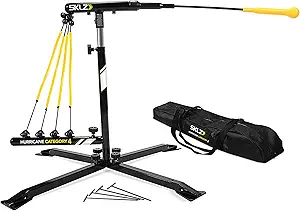 | Best Solo Hitting Station | Height Range: 23 to 38 inches | Weight: 37 lbs | Frame Material: Steel | VIEW LATEST PRICE | See Our Full Breakdown |
| Bandit Sports Tee Popper – Durable Nylon Batting Tee for Baseball & Softball Practice with Popper Ball Included |  | Best Budget Solo Hitting Tool | Pop Height: Up to 46 inches | Material: Nylon-reinforced plastic | Color: Blue | VIEW LATEST PRICE | See Our Full Breakdown |
| GoSports Baseball & Softball Pitching and Fielding Rebounder |  | Best for Defensive Skills | Rebound Surface: 57 x 34 inches | Frame Material: Powder-coated steel | Anchoring: 4 U-stakes included | VIEW LATEST PRICE | See Our Full Breakdown |
| BAGAIL 7×7 ft Baseball & Softball Training Net |  | Best All-Around Value Bundle | Net Size: 7 x 7 ft | Net Material: 7-ply knotless polyester mesh | Frame: Heavy-duty steel, fiberglass, nylon | VIEW LATEST PRICE | See Our Full Breakdown |
| SKLZ SoftHands Baseball and Softball Fielding Trainer |  | Best Technique Corrector | Material: Lightweight foam | Hand Fit: Fits either hand | Skill Focus: Soft receiving, two-hand fielding | VIEW LATEST PRICE | See Our Full Breakdown |
| PowerNet 7×7 Baseball Softball Practice Net with Accessories |  | Best Complete Training Bundle | Net Size: 7 x 7 ft | Hitting Surface: 49 sq. ft | Frame Material: Steel and fiberglass | VIEW LATEST PRICE | See Our Full Breakdown |
| Tanner Tee The Original Batting Tee – Adjustable Pro Hitting Tee for Baseball & Softball |  | Best Premium Batting Tee | Height Range: 26 to 43 inches | Shaft Material: Steel | Base Material: Composite | VIEW LATEST PRICE | See Our Full Breakdown |
More Details on Our Top Picks
SKLZ Hurricane Baseball and Softball Swing Trainer with Adjustable Power Bands
Of everything in this lineup, the SKLZ Hurricane comes closest to a complete hitting workout in one piece of gear. Because the ball is attached to a rebounding arm with adjustable power bands, a player can take hundreds of cuts without chasing balls or needing a pitcher — something neither the Bandit Sports Tee Popper nor the BAGAIL net can match, since both still require the hitter to retrieve or reload. Height adjusts from 23 to 38 inches, so the same station works for a 7-year-old and a 13-year-old. The tradeoff is footprint: at 37 pounds of steel, it is the least portable option here and needs a flat, anchored surface. Compared with the Tanner Tee, you give up the realistic ball flight of a traditional tee in exchange for instant feedback on contact quality.
Pros:- Allows unlimited solo swing reps with no ball retrieval
- Adjustable height spans youth age ranges, so it grows with the player
- Anti-dent ball head survives mishits that would wreck a plastic tee
- Adjustable power bands let you tune resistance as swing strength improves
Cons:- At 37 lbs with required staking, it is far less portable than net-based trainers
- Attached-ball design does not replicate live pitch trajectory or timing
Best for: Families with youth players (14 and under) who want daily swing reps in a backyard without a partner or a bucket of balls
Not ideal for: Players with limited yard space or anyone who needs to drag equipment to a shared field — the weight and staking requirements make frequent moves a chore
- Height Range:23 to 38 inches
- Weight:37 lbs
- Frame Material:Steel
- Ball Head:Anti-dent design
- Resistance:Adjustable power bands
- Includes:Carry bag, metal stakes
- Recommended Age:Youth, 14 and under
Our verdict“This is the pick for a dedicated backyard swing station where a young hitter can take daily reps alone, not for anyone practicing on the go.”
Bandit Sports Tee Popper – Durable Nylon Batting Tee for Baseball & Softball Practice with Popper Ball Included
The Bandit Sports Tee Popper attacks the same solo-hitting problem as the SKLZ Hurricane — how to practice without a partner — but at a fraction of the price and weight. Instead of a stationary ball on an arm, it launches a popper ball up to 46 inches in the air, which adds a timing element the Hurricane cannot offer. That makes it a genuinely useful bridge between tee work and live pitching for a beginner. The catch is specificity: it performs best with the included popper balls, and real baseballs or softballs can damage the holder. Compared with the Tanner Tee, you sacrifice the durability and pro-level feel of a traditional tee, but you gain self-toss functionality for under the cost of most accessories. Skill-wise, very young kids may struggle with the pop height.
Pros:- Mechanical pop action creates timing practice a static tee cannot
- Extremely light and compact at under 1.5 lbs packaged
- Reinforced nylon and spring construction holds up to repeated solo sessions
- Ready to use immediately with the included popper ball
Cons:- Real baseballs and softballs can damage the ball holder, limiting it to popper balls
- Pop height and size may be awkward for very young children
- Only a 30-day warranty
Best for: Budget-conscious parents of young hitters who want soft-toss style practice at home without buying a full net-and-tee setup
Not ideal for: Travel or high school players who hit real softballs at full speed — the plastic construction and ball-holder design will not hold up
- Pop Height:Up to 46 inches
- Material:Nylon-reinforced plastic
- Color:Blue
- Package Dimensions:11.57 x 5.39 x 5.31 inches
- Package Weight:0.59 kg (1.3 lbs)
- Included:Tee Popper, 1 popper ball
- Warranty:30 days
- Skill Level:All levels
Our verdict“A low-cost entry point for solo batting reps at home, best bought as a starter tool rather than a long-term training centerpiece.”
GoSports Baseball & Softball Pitching and Fielding Rebounder
Most items in this roundup sharpen the bat; the GoSports Rebounder is the one that builds a better glove. Throw a ball into the 57 x 34 inch net and it comes back at varying angles, forcing reaction, footwork, and catching reps with no partner needed — a niche the hitting-focused SKLZ Hurricane and Bandit Tee Popper simply do not cover. The powder-coated steel frame and four U-stakes keep it steady through hard throws, and the included strike zone attachment doubles it as a pitching accuracy target. Pairing it with the SKLZ SoftHands Trainer is a natural combo: the rebounder supplies the reps while SoftHands enforces the receiving technique. Its limits are real, though — it needs a flat surface, and the netting will wear over seasons of hard use, so it is a complement to, not a replacement for, live fielding practice.
Pros:- Delivers solo fielding and reaction reps no other product in this roundup provides
- Strike zone attachment turns it into a pitching accuracy trainer
- Powder-coated steel frame with U-stakes stays planted during hard throws
- Breaks down for transport to fields and practices
Cons:- Performance depends on a flat, level surface
- Netting shows wear after extended heavy use
- Some assembly steps may need tools beyond what is included
Best for: Infielders, pitchers, and catchers who want to log solo defensive reps — ground balls, returns, and accuracy work — without a throwing partner
Not ideal for: Hitters looking for swing training — this does nothing for the bat, and players on sloped or uneven practice areas will fight the flat-surface requirement
- Rebound Surface:57 x 34 inches
- Frame Material:Powder-coated steel
- Anchoring:4 U-stakes included
- Attachments:Strike zone target
- Training Use:Pitching, throwing, fielding
- Ball Compatibility:Baseballs and softballs
- Skill Level:All levels
Our verdict“The clear choice for the defensive-minded player who already owns hitting gear and needs glove-side reps on their own schedule.”
BAGAIL 7×7 ft Baseball & Softball Training Net
The BAGAIL 7×7 wins on sheer completeness: net, adjustable batting tee, two strike zone targets, a ball, stakes, and a carry bag in one package. Where the SKLZ Hurricane covers only swing mechanics and the GoSports Rebounder only defense, this setup handles hitting, throwing, and target work across softball, baseball, and even cricket. The 7-ply knotless polyester mesh over a steel-and-fiberglass frame is the same class of construction as the category-leading PowerNet 7×7, and setup is tool-free and quick enough for a weekday backyard session. The compromises are environmental: in wind, the big net catches air and wants extra anchoring beyond the included stakes, and a 7-foot footprint rules out small patios or cramped garages. The bundled tee also will not match a Tanner Tee for advanced hitters, but for building a full practice station on a budget, it is hard to beat.
Pros:- Complete bundle — net, tee, targets, ball, stakes, and bag — at a strong price per component
- Tool-free setup works indoors and outdoors
- 7-ply knotless mesh and steel/fiberglass frame handle repeated hard hits
- Multi-sport versatility beyond softball and baseball
Cons:- Large footprint needs a spacious, level practice area
- Included tee is serviceable but not comparable to a premium tee like the Tanner Tee
Best for: Coaches and multi-sport families who want one affordable package covering hitting, throwing, and target practice for several players
Not ideal for: Anyone with a small practice area or a windy backyard — the 7×7 footprint demands open space and firm anchoring
- Net Size:7 x 7 ft
- Net Material:7-ply knotless polyester mesh
- Frame:Heavy-duty steel, fiberglass, nylon
- Setup:Tool-free, indoor/outdoor
- Targets:2 strike zone targets
- Tee:Adjustable batting tee
- Includes:Net, tee, frame tubes, baseball, 2 targets, ground stakes, carry bag
Our verdict“The best single purchase for a family or coach building a do-everything backyard practice station without buying pieces separately.”
SKLZ SoftHands Baseball and Softball Fielding Trainer
Cheapest item in this roundup, and the most focused. The SKLZ SoftHands Trainer is a lightweight foam pad that replaces a glove and forces the player to receive with two hands and a soft pocket — the exact fundamentals a rebounder like the GoSports Pitch Back lets a player cheat around. Where the GoSports builds volume, this builds technique: if the hands are stiff or the body is not behind the ball, the pad punishes it immediately. It fits either hand, works for all ages, and slips into any equipment bag, making it the easiest item here to bring to every practice. The flip side of that simplicity is limits — it is a corrective tool, not a training system, and it does nothing for hitting. Think of it as the coaching aid a parent or volunteer instructor keeps in a back pocket, not a standalone gift.
Pros:- Instantly reinforces two-hand receiving and soft hands
- Lightweight foam fits either hand and any age player
- Costs less than a bucket of balls — easiest add-on in the roundup
- Travels anywhere, from backyard drills to team practice
Cons:- Covers one narrow skill and needs to be paired with other gear for real reps
- Minimal published specifications make sizing expectations vague before purchase
Best for: Coaches and parents of young infielders who scoop with one hand or trap balls stiffly and need a cheap way to force proper receiving mechanics
Not ideal for: Players (or gift-buyers) expecting a full training setup — this is a single-skill corrective pad, and advanced players with sound fundamentals will outgrow its usefulness
- Material:Lightweight foam
- Hand Fit:Fits either hand
- Skill Focus:Soft receiving, two-hand fielding
- Skill Level:All levels
- Sport:Baseball and softball
- Use Context:Team practice or backyard drills
Our verdict“A five-dollar-feeling fix for a common fielding flaw — buy it alongside other equipment, not as your only training purchase.”
PowerNet 7×7 Baseball Softball Practice Net with Accessories
Most practice nets in this category — like the BAGAIL 7×7 Training Net — ship as a bare frame and net, leaving you to source targets and balls separately. The PowerNet stands out for bundling a ball caddy, weighted baseballs, and ground stakes into one package, which turns a single net into a full hitting and pitching station on day one. Compared with the GoSports Pitching and Fielding Rebounder, this setup favors batters and pitchers over fielding work, since the net absorbs hits rather than returning them.
The tradeoff is one of coverage and stability. The 49 sq. ft. hitting surface forgives mishits from younger players, but travel-level hitters working on pull-side drives may find the 7×7 footprint confining. In gusty weather, the included stakes may not be enough — plan to add sandbags or reposition it against a fence.
Pros:- Bundled accessories (ball caddy, weighted balls) save separate purchases
- Tool-free setup that one person can handle in minutes
- Knotless polyester net and steel-fiberglass frame absorb hard-hit balls without tearing
- Folds into a carry bag for transport to fields and cages
Cons:- Needs extra anchoring in windy conditions beyond the included stakes
- 7×7 ft surface is small for advanced hitters or multi-station team drills
Best for: Players and families building a complete backyard hitting station without buying accessories piecemeal
Not ideal for: Coaches running team fielding drills — a rebounder like the GoSports returns balls, while this net just catches them
- Net Size:7 x 7 ft
- Hitting Surface:49 sq. ft
- Frame Material:Steel and fiberglass
- Net Material:Knotless polyester
- Setup:Tool-free, quick assembly
- Included Accessories:Ball caddy, weighted baseballs, ground stakes, carry bag
- Training Uses:Batting, pitching, soft toss
Our verdict“If you want one purchase that covers hitting, pitching, and tee work out of the box, this bundle makes more sense than a bare net — but fielding-focused players should look at a rebounder instead.”
Tanner Tee The Original Batting Tee – Adjustable Pro Hitting Tee for Baseball & Softball
A batting tee is only as good as its feel at contact, and this is where the Tanner Tee separates itself from cheaper options like the Bandit Sports Tee Popper. The hand-rolled rubber flex top lets the barrel pass through the ball cleanly instead of bouncing off rigid plastic, which trains a true swing path rather than one that avoids the tee. Its 26-to-43-inch height range covers everyone from young softball players to adults working the top of the zone.
Compared with the SKLZ Hurricane Swing Trainer, this is the quieter, simpler choice: no power bands to adjust, just ball-after-ball repetition. The cost is portability — the steel shaft and composite base that keep it planted during aggressive cuts also make it heavier than plastic tees, so it is a piece of equipment you carry deliberately rather than toss in a backpack.
Pros:- Flexible rubber top allows clean barrel-through-ball contact
- Steel shaft and weighted composite base stay stable on hard swings
- Wide height adjustment suits youth through adult players
- Weather-resistant build holds up to outdoor daily use
Cons:- Heavier and less grab-and-go portable than plastic tees
- Rubber top is a wear item that will eventually need replacing with heavy use
Best for: Serious hitters who take daily tee work and want a true-to-life contact feel that lasts for years
Not ideal for: Casual backyard play with young kids — the price and weight are overkill compared with a basic plastic tee
- Height Range:26 to 43 inches
- Shaft Material:Steel
- Base Material:Composite
- Top Material:Hand-rolled flexible rubber
- Adjustability:Yes, telescoping shaft
- Sport Compatibility:Baseball and softball
- Weather Resistance:Yes, suited for outdoor use
Our verdict“For hitters who log hundreds of tee swings a week, this is the tee worth paying for — casual players can stick with a budget plastic model.”

How We Picked
My ranking logic starts with one question: how many quality reps can a player get from this equipment without extra help? Softball practice gear lives or dies on whether it actually gets used, so I weighted solo-training capability, setup time, and versatility more heavily than raw specs. Products that cover multiple skills — hitting, pitching, and fielding — ranked higher than single-purpose tools, unless that single purpose is executed at an elite level, as with the Tanner Tee.
From there, I compared build quality versus price, stability during real use, portability for players who train at fields rather than at home, and how forgiving each product is for beginners. Durability claims only counted when the materials and design backed them up, because replacement costs quietly erase a low sticker price. Finally, I factored in who each product realistically serves — a 10-year-old building fundamentals needs different gear than a high school varsity player — so every pick has a defined buyer and an honest list of who should skip it.
Factors to Consider When Choosing Softball Training Equipment
Before spending money on softball training equipment, it helps to understand what actually drives improvement — and where buyers commonly waste their budget.Match the Equipment to the Skill Gap
The most common mistake I see is buying gear based on what looks fun rather than what the player actually needs to fix. A hitter struggling with contact points needs a tee long before she needs a swing trainer with resistance bands, while a fielder with sloppy glove work benefits from a rebounder or SoftHands trainer more than any net. Watch a few games or practices and identify the one or two skills causing the most outs or errors, then buy for those gaps first. Players who plateau usually own great equipment aimed at the wrong problem. Parents especially should resist buying the full toolkit at once — skill gaps evolve each season, and equipment bought for today’s weakness may sit unused by next year. One well-chosen piece beats three impulse purchases every time.
Solo Training Capability
Not all equipment works without a partner, and this shapes how often it actually gets used. A traditional batting tee requires someone to shag balls unless it’s paired with a net, while self-returning tools like the SKLZ Hurricane or a pitchback rebounder let a player train entirely alone. If the athlete in your household practices when nobody else is available, prioritize closed-loop equipment that returns the ball or holds it in place. This single factor often matters more than build quality, because unused equipment provides zero development no matter how well it’s made. Also consider ball supply — solo training burns through balls quickly, so factor in whether you own a bucket or bucket plus the gear itself.
Space, Storage, and Portability
A 7×7 net needs a genuinely open backyard or a trip to a field, and not every family has either. Measure your available space before ordering anything with a footprint, and think vertically too — net setups need clearance for pop-ups and missed swings, not just ground area. Portability splits into two types: equipment that folds flat for car transport, and equipment light enough for a kid to carry alone. The second type matters more than parents expect, because young players who can carry their own gear practice more often. Also check whether assembly is tool-free; a net that takes twenty minutes and a mallet to set up will be used far less than one that clicks together in five.
Build Quality and the Real Cost of Cheap Gear
Softball equipment absorbs real abuse — steel spikes near the base, balls at 60 mph, UV exposure, and being dragged in and out of cars. Budget nets and tees often fail at the joints and connection points rather than the visible parts, which is why two similar-looking products can differ by fifty dollars and still represent fair pricing. That said, cheap gear isn’t always a bad buy: a beginner who may quit in a season loses less on a budget tee than a premium one. The smart rule is to spend up where failure is dangerous or permanently ruins reps — a tee that tips over mid-swing teaches bad habits — and save where the cheap version merely wears out faster. Check replacement parts availability too, since a replaceable net panel extends a frame’s life by years.
Age and Skill Level Realism
Equipment sized or designed for older players can actively harm a younger athlete’s development. Resistance-based swing trainers with heavy bands can wreck a 9-year-old’s swing sequence, while a too-tall tee forces awkward posture even when adjustable ranges technically cover her height. Beginners benefit most from forgiving, feedback-heavy tools — soft balls, large targets, and instant ball return — that keep reps fun and frequent. Travel and high school players need gear that mirrors game conditions closely, which is where pro-style tees and realistic rebounder angles justify their cost. When in doubt, buy for the player’s current level with a little headroom, not for the player you hope exists in three years.
Accessories and Bundles: Real Value or Filler?
Many nets and trainers ship in bundles with tees, strike-zone targets, weighted balls, or carry bags, and the value of those bundles varies enormously. A genuine accessory that replaces a separate purchase — like an attachable tee or a target zone that improves pitching accuracy — can make a bundle the best deal on the market. But filler accessories, such as low-quality balls that lose shape in a month or flimsy bags that rip, inflate the perceived value without adding anything. Compare the bundle price against buying the core item alone plus quality accessories separately. A useful test: if you’d buy each included accessory on its own, the bundle is worth it; if you’d toss half the box in the garage, buy the standalone version.
Frequently Asked Questions
Should I buy a practice net or a swing trainer like the SKLZ Hurricane?
These solve different problems, and the right answer depends on what your hitter needs. A net-and-tee setup lets the player hit real balls with real results, which builds timing, contact feel, and confidence transferring to live pitching — but it needs space and ideally a ball supply. The Hurricane trainer focuses purely on swing mechanics and bat-path feedback, with no ball chasing, making it better for daily quick reps in a small yard or garage. If mechanics are the weak link — casting, dropping the hands, slow bat speed — the Hurricane targets that directly. If the player swings fine but struggles to square up moving balls, the net setup does more. Many serious players eventually own both, but start with whichever addresses the actual weakness.
Is a premium tee like the Tanner Tee actually worth the extra money over a budget tee?
For a recreational or young player, probably not — a basic tee like the Bandit Sports Tee Popper delivers the core function at a fraction of the price, and beginners won’t feel the difference. The Tanner Tee earns its cost for players who take hundreds of tee reps weekly, because the flexible top and stable base produce a consistent contact experience that cheaper tees can’t match over time. Budget tees tend to develop wobble, tip on off-center contact, and wear at the cup, all of which subtly alter swing paths during long sessions. There’s also a resale angle: quality tees hold value for years and can be handed down or sold. My rule is that once a player is doing structured tee work multiple times per week, the premium tee pays for itself; before that, save the money.
What size practice net do I need for softball training?
The 7×7 foot size that dominates this category is the sweet spot for softball, and I’d treat it as the practical minimum for hitting practice rather than a luxury. Smaller nets save money and space, but they punish slightly mistimed swings by bouncing balls back at the hitter, which breaks session flow and can create hesitation. A 7×7 also accommodates pitching work with a target attachment, which smaller nets can’t do reliably. If your space genuinely can’t fit 7×7, drop to a smaller net for pitching-only use rather than hitting, since pitching accuracy needs less width than swing forgiveness. Also verify ceiling height if training indoors — a full swing arc needs more vertical room than most garages’ low beams allow.
Can one player realistically improve using training equipment alone, without a coach or partner?
Yes, but the equipment choice determines how productive those solo sessions are. Self-feedback tools — rebounders that return the ball, swing trainers with visible contact points, and strike-zone targets — let a player self-correct without anyone watching. A plain tee and a bucket of balls works solo too, but progress depends on the player’s discipline and self-awareness about her own swing. What equipment cannot replace is judgment about what to fix, so pair solo training with video of the player’s reps compared against quality technique references. The players who improve most alone use structured drills with measurable outcomes — ten hits to a target zone, twenty clean contacts — rather than just swinging until tired. Solo training builds reps; a coach or good video feedback builds direction.
Do I need separate equipment for softball versus baseball training?
Most of the equipment in this roundup is dual-marketed and genuinely works for both sports, since the mechanics of swinging, fielding grounders, and throwing are similar. The differences that matter are ball size and pitching style: softballs are larger and heavier, so nets and rebounders take slightly more impact stress, and any weighted-ball accessories should match the sport. Pitching-specific training differs the most — softball’s underhand motion needs different targets and rebounder angles than baseball pitching, so check that any pitching attachment suits your sport before buying. Hitting tees and fielding trainers are effectively sport-agnostic. If a household has both softball and baseball players, prioritize the dual-sport gear and accept that pitching-specific tools will need sport-specific versions.
Conclusion
The right pick here depends less on which product is objectively best and more on who is doing the training. Best overall goes to the PowerNet 7×7 with Accessories — its all-in-one coverage of hitting and pitching, plus included accessories that would cost extra separately, makes it the most complete training station for the widest range of players. Best value belongs to the BAGAIL 7×7 net, which delivers the core net experience at a lower price if you already own a tee and don’t need the add-ons. For best premium, the Tanner Tee The Original is the standout — serious hitters who live on tee work get a contact feel and stability that cheaper tees can’t replicate.
For beginners and young players, the Bandit Sports Tee Popper keeps the entry cost low and the frustration minimal, and the SKLZ SoftHands trainer is a smart, inexpensive add-on for anyone developing glove skills. For specific needs: choose the SKLZ Hurricane if swing mechanics are the priority and space is tight, and pick the GoSports Rebounder if fielding and throwing reps are the real gap. Whatever you choose, buy for the skill that needs fixing first — the equipment that addresses the actual weakness is always the best value.
Columbus Day / Indigenous Peoples' Day Picks
long weekend sales
As an affiliate, we earn on qualifying purchases.