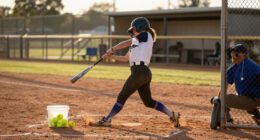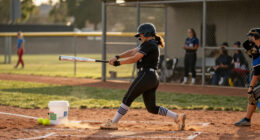
Softball pitching machines range from simple hand-fed trainers to powered machines built for repeated, realistic batting practice. My best overall pick is the Sports Attack Junior Hack Attack for its practice-focused design, while the JUGS Mini3 stands out for dedicated softball training and the Louisville Slugger Blue Flame for a manual, low-complexity setup. The biggest tradeoffs are realism versus ease of setup, powered repetition versus manual control, and machine capability versus the balls it can safely use. A machine that suits a youth player working on contact may not fit a team seeking faster, more varied pitches. Read on for the full breakdown and help matching a machine to your practice space, players, and training goals.

Get sports gear delivered free with Prime
- Fast, free delivery on millions of items
- Prime Video, Amazon Music and more included
- Member-only deals all year
Complete the kit


Key Takeaways
- The Sports Attack Junior Hack Attack is the strongest all-around team-practice choice in this lineup, while the full-size Hack Attack is the premium step-up for buyers prioritizing a more advanced training setup.
- JUGS Mini3 and Lite-Flite serve different softball needs: the Mini3 is a dedicated softball option, while Lite-Flite is oriented toward lighter practice balls rather than conventional hard-ball batting.
- Manual models such as the Louisville Slugger Blue Flame and MOXOW Sagitta trade automated repetition for simpler operation and less dependence on powered equipment.
- Portability and feeding style separate many of these choices: compact toss machines suit solo or small-space practice, while feeder-equipped and team-oriented machines make repeated group drills easier.
- Ball compatibility matters as much as machine capability. Buyers should confirm the approved ball type and size before choosing a machine, especially when comparing practice-ball models with machines meant for softball training.
| Mound Yeti Two-Wheel Baseball and Softball Pitching Machine |  | Best for Advanced Pitch Variety | Ball types: Baseballs and softballs | Speed range: 45–95 mph | Pitch types: Breaking balls, fastballs, sliders, curveballs, knuckleballs, pop flies, and grounders | VIEW LATEST PRICE | See Our Full Breakdown |
| PowerNet Launch F-Lite Baseball and Softball Pitching Machine |  | Best Starter Package | Sports: Baseball and softball | Included balls: 6 baseballs and 6 softballs | Pitch features: Interchangeable chutes and legs; left- or right-handed sweeper setting | VIEW LATEST PRICE | See Our Full Breakdown |
| Heater Sports BLAZE Baseball and Softball Pitching Machine, Up to 70 MPH |  | Best for Adjustable-Speed Training | Brand: Heater Sports | Model: BPM599C | Compatible balls: Lite and regulation baseballs and softballs | VIEW LATEST PRICE | See Our Full Breakdown |
| JUGS Lite-Flite Softball Pitching Machine with 12 Softballs |  | Best for Lightweight-Ball Practice | Compatible balls: Lite-Flite softballs, Lite-Flite baseballs, and JUGS Bulldog polyballs | Simulated speed: Up to 85 mph at 25 feet | Pitch types: Fastballs, left- and right-handed curveballs, and sliders | VIEW LATEST PRICE | See Our Full Breakdown |
| Louisville Slugger Blue Flame Pitching Machine |  | Best Manual, No-Power Pick | Ball types: Hard balls, fastpitch and slowpitch softballs, dimple balls, light-flight balls, plastic balls, soccer balls, and volleyballs | Hard-ball speed: 18–45 mph | Light-flight and plastic-ball speed: Up to 60 mph | VIEW LATEST PRICE | See Our Full Breakdown |
| PowerNet Launch F-Lite Baseball and Softball Pitching Machine with Practice Balls |  | Best for Mixed Baseball and Softball Drills | Sports: Baseball and softball | Speed settings: 4 | Simulated speed: 40–90 mph at 25 feet | VIEW LATEST PRICE | See Our Full Breakdown |
| Louisville Slugger Black Flame Pitching Machine |  | Best No-Power Option | Softball speed: Up to 44 mph | Baseball speed: Up to 50 mph | Settings: 3 adjustable speed and height settings | VIEW LATEST PRICE | See Our Full Breakdown |
| JUGS Mini3 Softball Pitching Machine |  | Best for Pitch Variety | Pitch selection: 7 pitches | Speed range: 30–70 mph | Weight: 95 lbs | VIEW LATEST PRICE | See Our Full Breakdown |
| Furlihong 6902BHA Rechargeable Baseball and Softball Toss Machine |  | Best for Portable Solo Practice | Battery: Rechargeable | Baseball toss height: 1.2–1.7 m | Softball toss height: 0.4–0.6 m | VIEW LATEST PRICE | See Our Full Breakdown |
| Sports Attack Junior Hack Attack Softball Pitching Machine |  | Best for Advanced Team Training | Sport: Softball | Maximum pitch speed: 60+ mph | Pitch types: Fastballs, risers, drops, and right- or left-handed screwballs | VIEW LATEST PRICE | See Our Full Breakdown |
| MOXOW Sagitta Manual Baseball and Softball Pitching Machine with Ball Caddy |  | Best for Manual, Multi-Drill Practice | Model: BP55 | Operation: Manual; no electricity required | Material: Steel | VIEW LATEST PRICE | See Our Full Breakdown |
| Heater Sports Power Alley Lite 360 12-Inch Softball Pitching Machine |  | Best for Lite-Ball, Multi-Angle Drills | Compatible balls: 12-inch lite softballs | Maximum speed: 50 MPH | Speed adjustment: 0–10 | VIEW LATEST PRICE | See Our Full Breakdown |
| Mound Yeti Single-Wheel Baseball and Softball Pitching Machine |  | Best for Shared Baseball and Softball Use | Pitching speed: 30–60 mph | Release height, baseball: 37.5 inches | Release height, softball: 27.5 inches | VIEW LATEST PRICE | See Our Full Breakdown |
| Heater Sports Combo Baseball and Softball Pitching Machine with Auto Ball Feeder |  | Best for Automatic, Multi-Ball-Type Practice | Ball compatibility: Regulation baseballs, 11-inch and 12-inch softballs, and lite-balls | Maximum baseball speed: 60 mph | Maximum softball speed: 56 mph | VIEW LATEST PRICE | See Our Full Breakdown |
| Sports Attack Hack Attack Softball Pitching Machine | 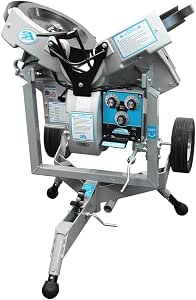 | Best for Advanced, High-Speed Softball Training | Model: Softball Hack Attack | Maximum pitch speed: 80+ mph | Pitch types: Fastballs, risers, drops, and right- or left-handed screwballs | VIEW LATEST PRICE | See Our Full Breakdown |
| softball pitching machine | Warranty | Item weight |
|---|---|---|
| Mound Yeti Two-Wheel Baseball | 2-year limited warranty | — |
| PowerNet Launch F-Lite Basebal | — | — |
| Heater Sports BLAZE Baseball a | 1 year | 55 pounds |
| JUGS Lite-Flite Softball Pitch | 2 years | — |
| Louisville Slugger Blue Flame | 60 days against defects | 11.9 pounds |
| PowerNet Launch F-Lite Basebal | 1-year limited warranty | 13 kg |
| Louisville Slugger Black Flame | 60 days against defects | 22 pounds |
| JUGS Mini3 Softball Pitching M | — | — |
| Furlihong 6902BHA Rechargeable | 180 days | 11.6 pounds |
| Sports Attack Junior Hack Atta | 2 years | 75 pounds |
| MOXOW Sagitta Manual Baseball | 90-day limited | — |
| Heater Sports Power Alley Lite | — | — |
| Mound Yeti Single-Wheel Baseba | 2-year limited | — |
| Heater Sports Combo Baseball a | — | 70 pounds |
| Sports Attack Hack Attack Soft | 2 years for wheels, controllers, and motors | 160 pounds |
More Details on Our Top Picks
Mound Yeti Two-Wheel Baseball and Softball Pitching Machine
I’d pick the Mound Yeti Two-Wheel for teams that need one machine to cover softball hitting practice and fielding work. Its 45–95 mph range and menu of fastballs, breaking pitches, pop flies, and grounders give coaches more drill options than the Louisville Slugger Blue Flame, which is lighter and manual but offers a simpler practice setup. Two chutes and both short and tall legs also help adapt the machine to different ball types and release heights.
The tradeoff is substantial: at 102 pounds, this is the heaviest pick here, so moving it between fields is a two-person task for many buyers despite the included transport kit. I’d favor the Heater Sports BLAZE for a lighter powered option, but it does not match the Yeti’s listed 95 mph ceiling or pitch variety.
Pros:- Handles both baseballs and softballs with separate chutes
- Broad listed speed range supports different practice levels
- Can throw breaking pitches as well as pop flies and grounders
- Includes short and tall legs plus a transport kit
Cons:- At 102 pounds, it is much harder to load and reposition than lighter options such as the Blue Flame
- Its broad feature set may be more machine than a beginner needs
Best for: School or club coaches who want one powered machine for varied softball pitches, baseball work, and defensive drills.
Not ideal for: Families or individual players who need frequent one-person transport; its 102-pound weight makes moving it cumbersome.
- Ball types:Baseballs and softballs
- Speed range:45–95 mph
- Pitch types:Breaking balls, fastballs, sliders, curveballs, knuckleballs, pop flies, and grounders
- Softball release height:30 inches
- Baseball release height:48 inches
- Weight:102 pounds
- Material:Steel
- Included components:Pitching machine, 2 chutes, short and tall legs, transport kit
- Warranty:2-year limited warranty
Our verdict“Choose the Mound Yeti Two-Wheel if pitch variety and multi-sport drills matter more than easy transport.”
PowerNet Launch F-Lite Baseball and Softball Pitching Machine
The PowerNet Launch F-Lite earns its place for buyers who want a ready-to-practice softball and baseball setup: the package includes six balls of each type, along with interchangeable chutes and tripod legs. Its breaking-ball bracket can be set for left- or right-handed sweeper pitches, and it also supports pop flies and line drives. That gives it a more complete field-practice role than the JUGS Lite-Flite, which focuses on compatible lightweight balls and a narrower set of listed drills.
The main catch is ball compatibility. PowerNet recommends its own Launch F-Lite balls, and using other brands may void the warranty, which limits flexibility when replacing or supplementing the included balls. A bucket is not included either. I’d choose the Heater Sports BLAZE instead for a machine described as accepting regulation balls, but the F-Lite package is convenient for teams starting with matching practice balls.
Pros:- Includes six baseballs and six softballs
- Interchangeable chutes and tripod legs accommodate different ball sizes and pitch heights
- Breaking-ball bracket supports left- and right-handed sweeper pitches
- Can launch pop flies and line drives for fielding drills
Cons:- PowerNet Launch F-Lite balls are recommended; other brands may affect warranty coverage
- A bucket is sold separately
- The provided product data does not list a speed range
Best for: Youth teams or families beginning mixed baseball and softball practice who want included balls and interchangeable setups.
Not ideal for: Buyers who already own a large supply of other ball brands or want broad ball compatibility without warranty concerns.
- Sports:Baseball and softball
- Included balls:6 baseballs and 6 softballs
- Pitch features:Interchangeable chutes and legs; left- or right-handed sweeper setting
- Fielding drills:Pop flies and line drives
- Style:F-Lite Pro Pitching Machine
- Package dimensions:23.5 x 21.75 x 11.5 inches
- Package weight:13.45 kg
- Color:Black
Our verdict“Pick the PowerNet Launch F-Lite if you want a bundled practice setup and are comfortable sticking with its recommended balls.”
Heater Sports BLAZE Baseball and Softball Pitching Machine, Up to 70 MPH
I’d shortlist the Heater Sports BLAZE for players who want a powered machine that can start with slower tosses and build toward faster practice. Its 10–70 mph range and pitch angle adjustable up to 90 degrees support strikes, grounders, line drives, and pop flies; it also accepts lite and regulation baseballs and softballs. Compared with the Mound Yeti Two-Wheel, the BLAZE has a lower listed top speed and less extensive pitch variety, but at 55 pounds it is considerably easier to handle.
The heavy-duty motor and professional-grade tire suit repeated sessions, though the provided details do not mention an automatic feeder. That means buyers should plan for manual loading rather than assume continuous ball delivery. The JUGS Lite-Flite is lighter still, but it is limited to Lite-Flite and poly balls; the BLAZE is the more flexible choice for regulation-ball work.
Pros:- Adjustable 10–70 mph speed range supports a wide practice progression
- Accepts lite and regulation softballs as well as baseballs
- Pitch angle adjusts up to 90 degrees for hitting and fielding drills
- Heavy-duty motor and professional-grade tire are suited to repeated training
Cons:- At 55 pounds, it is heavier than the JUGS Lite-Flite
- No automatic ball feeder is listed
- Its 70 mph ceiling is below the Mound Yeti Two-Wheel’s listed maximum
Best for: Players and coaches who need a powered machine for gradual speed progression and both lite and regulation softball practice.
Not ideal for: Buyers seeking automatic ball feeding, the highest listed speed, or a very lightweight machine for frequent solo transport.
- Brand:Heater Sports
- Model:BPM599C
- Compatible balls:Lite and regulation baseballs and softballs
- Speed range:10–70 mph
- Pitch angle:Adjustable up to 90 degrees
- Item weight:55 pounds
- Item dimensions:19 x 19 x 21 inches
- Warranty:1 year
Our verdict“Choose the BLAZE for powered speed progression with regulation-ball compatibility, provided manual loading fits your practice routine.”
JUGS Lite-Flite Softball Pitching Machine with 12 Softballs
The JUGS Lite-Flite is the clear fit for players who train with lightweight balls in a backyard, gym, or field. It throws Lite-Flite softballs and baseballs, plus JUGS Bulldog polyballs, and offers fastballs, left- and right-handed curveballs, and sliders. The included dozen softballs make it easier to start a session than with the Heater Sports BLAZE, whose listed package does not include balls. At 35 pounds, it is also easier to move than the 55-pound BLAZE or 102-pound Mound Yeti.
That portability comes with a firm limitation: this machine is for Lite-Flite and poly balls, not regulation softballs. Its “up to 85 mph” figure is a simulated speed at 25 feet, so it should not be compared directly with a machine’s actual speed range. The optional battery pack also adds a separate power accessory to plan for when an outlet is unavailable.
Pros:- Throws fastballs, left- and right-handed curveballs, and sliders
- Compatible with Lite-Flite softballs, Lite-Flite baseballs, and JUGS Bulldog polyballs
- Includes 12 Lite-Flite softballs
- At 35 pounds, it is lighter than the BLAZE and Mound Yeti Two-Wheel
Cons:- Restricted to Lite-Flite balls and polyballs rather than regulation softballs
- Battery pack is optional
- The 85 mph figure is simulated at 25 feet, not a direct regulation-ball speed range
Best for: Youth players, families, and coaches who run indoor or backyard drills with Lite-Flite softballs and want several pitch types.
Not ideal for: Teams that need to practice with regulation softballs or want a battery included for field use.
- Compatible balls:Lite-Flite softballs, Lite-Flite baseballs, and JUGS Bulldog polyballs
- Simulated speed:Up to 85 mph at 25 feet
- Pitch types:Fastballs, left- and right-handed curveballs, and sliders
- Motor:1/8 HP, 1.3 amp
- Power:110V AC or optional JUGS Lite-Flite battery pack
- Weight:35 pounds
- Material:Cast aluminum
- Included:12 Lite-Flite softballs
- Warranty:2 years
Our verdict“Choose the JUGS Lite-Flite for portable, varied-pitch practice with lightweight balls, not regulation softball training.”
Louisville Slugger Blue Flame Pitching Machine
The Louisville Slugger Blue Flame makes sense for buyers who value easy transport and broad ball compatibility over powered, repeatable delivery. At 11.9 pounds, it is far easier to move than the Mound Yeti Two-Wheel or Heater Sports BLAZE, and its manual operation needs no electricity or batteries. It can throw fastpitch and slowpitch softballs as well as hard balls, dimple balls, light-flight balls, and more, with options for level pitches, fly balls, and grounders.
Its manual design is also the central tradeoff: compared with the powered BLAZE, it may take more effort to operate, and the provided data does not describe the same kind of powered speed adjustment. The listed speeds are 18–45 mph for hard balls and up to 60 mph for light-flight and plastic balls. Warranty coverage is only 60 days, shorter than the two-year coverage listed for the JUGS Lite-Flite and Mound Yeti.
Pros:- Accepts a broad range of ball types, including fastpitch and slowpitch softballs
- Manual operation requires no electricity or batteries
- At 11.9 pounds, it is much easier to transport than the powered machines here
- Supports level pitches, fly balls, grounders, and slowpitch arcs
Cons:- Manual operation can demand more effort than powered options such as the Heater Sports BLAZE
- Warranty coverage is limited to 60 days
- Hard-ball speed tops out at 45 mph, below the Mound Yeti Two-Wheel’s listed maximum
Best for: Coaches and families who need a lightweight machine for varied ball types, mobile practice, and locations without reliable power.
Not ideal for: Teams that want powered, repeatable delivery for high-volume sessions or longer warranty coverage.
- Ball types:Hard balls, fastpitch and slowpitch softballs, dimple balls, light-flight balls, plastic balls, soccer balls, and volleyballs
- Hard-ball speed:18–45 mph
- Light-flight and plastic-ball speed:Up to 60 mph
- Pitching style:Level pitches; slowpitch softballs with up to a 12-inch arc
- Power source:Manual; no electricity or batteries required
- Item weight:11.9 pounds
- Dimensions:32 x 14 x 6 inches
- Model:UPM 45
- Warranty:60 days against defects
Our verdict“Pick the Blue Flame for lightweight, power-free versatility, but choose a powered model for less labor-intensive repetition.”
PowerNet Launch F-Lite Baseball and Softball Pitching Machine with Practice Balls
I’d choose this PowerNet when a practice group needs one machine for both sports and wants to work on hitting and fielding. Its four speed settings simulate pitches from 40–90 mph at 25 feet, while interchangeable tripod legs adjust the pitch height. It can also send up pop flies and line drives, giving it a broader practice role than the Furlihong 6902BHA, which is built for recurring tosses rather than fielding drills. The included dozen Launch F-Lite balls—six for each sport—make setup easier, but the machine is optimized for those balls; using others may affect performance and warranty coverage. I’d skip it if you need a bucket included or want a softball-only machine with a wide range of pitch types.
Pros:- Interchangeable tripod legs adjust pitch height for baseball and softball practice.
- Four speed settings simulate 40–90 mph pitches at 25 feet.
- Can launch pop flies and line drives for fielding practice.
- Includes 12 compatible Launch F-Lite balls split between baseball and softball.
Cons:- Performance and warranty may be affected by using balls other than Launch F-Lite balls.
- A ball bucket is sold separately.
Best for: Mixed baseball and softball groups that want batting and fielding drills from one machine, with compatible practice balls included.
Not ideal for: Softball-only teams seeking specialized pitches, or buyers who want to use assorted balls and expect a bucket in the package.
- Sports:Baseball and softball
- Speed settings:4
- Simulated speed:40–90 mph at 25 feet
- Included balls:12 total: 6 baseballs and 6 softballs
- Item weight:13 kg
- Color:Black
- Warranty:1-year limited warranty
Our verdict“Pick this PowerNet for mixed-sport hitting and fielding sessions; choose the JUGS Mini3 instead if softball pitch variety matters more than baseball compatibility.”
Louisville Slugger Black Flame Pitching Machine
The Black Flame suits teams that practice away from outlets or want a machine that accepts more than one kind of ball. It runs without electricity or batteries, throws softballs up to 44 mph, and can deliver strikes, fly balls, and ground balls. Its compatibility with regulation, dimple, restricted-flight, plastic, and foam balls gives it more flexibility than the PowerNet Launch F-Lite, which is optimized for its own practice balls. That flexibility comes with a different tradeoff: this is a manually operated machine, so it won’t provide the steady automated feed of the Furlihong 6902BHA. Setup is described as taking under 10 minutes, but the arm pin must be secured through its bracket before use. I’d favor it for varied, hands-on practice, not for teams seeking automated repetition.
Pros:- Operates without electricity or batteries.
- Throws softballs up to 44 mph and baseballs up to 50 mph.
- Supports strikes, fly balls, and ground balls.
- Accepts regulation, dimple, restricted-flight, plastic, and foam balls.
Cons:- Manual operation limits its usefulness for repeated, unattended feeding.
- The arm pin must be secured through the bracket before use.
Best for: Coaches and families practicing in fields without power who want to use a range of ball types for hitting and fielding.
Not ideal for: Teams running high-repetition solo drills that need automated feeding, or buyers who prefer a machine without manual operation and setup steps.
- Softball speed:Up to 44 mph
- Baseball speed:Up to 50 mph
- Settings:3 adjustable speed and height settings
- Functions:Strikes, fly balls, and ground balls
- Compatible ball types:Regulation baseballs and softballs, dimple, restricted-flight, plastic, and foam balls
- Operation:Manual; no electricity or batteries
- Item weight:22 pounds
- Warranty:60 days against defects
Our verdict“Choose the Black Flame for flexible, no-power practice; choose the Furlihong if a repeatable automatic toss is more useful than broad ball compatibility.”
JUGS Mini3 Softball Pitching Machine
For hitters who need more than a straight pitch, the Mini3’s headline advantage is its seven selectable pitches and 30–70 mph range. That gives softball practices more room to work on varied deliveries than the PowerNet Launch F-Lite, whose four settings are framed around mixed baseball and softball use. Vertical micro-adjustment and 360-degree movement help coaches direct repetitions where they’re needed, while the visible ball chute makes loading easier to monitor. A transport cart is included, but at 95 pounds, this is not a lightweight machine to carry between fields; the cart helps with moving it, not with making the machine compact. I’d pick it for a dedicated softball setup focused on pitch recognition, and skip it if easy lifting or baseball versatility is a priority.
Pros:- Seven selectable pitches support varied softball hitting practice.
- 30–70 mph speed range serves a range of training needs.
- Vertical micro-adjustment and 360-degree movement allow flexible positioning.
- Includes a transport cart.
Cons:- At 95 pounds, it is heavy to lift and move between practice locations.
- Designed for softball practice rather than dual-sport use.
Best for: Softball coaches and serious hitters who want selectable pitch variety and adjustable positioning for focused practice.
Not ideal for: Buyers who need a lightweight machine to carry frequently or one designed for both baseball and softball practice.
- Pitch selection:7 pitches
- Speed range:30–70 mph
- Weight:95 lbs
- Movement:360-degree
- Vertical adjustment:Micro-adjustment
- Ball chute:Visible
- Included accessory:Transport cart
Our verdict“Choose the Mini3 for softball pitch variety and adjustable positioning, but favor the lighter Furlihong if portability matters more than pitch selection.”
Furlihong 6902BHA Rechargeable Baseball and Softball Toss Machine
The Furlihong is the most approachable choice here for portable, repetitive toss practice: it weighs 11.6 pounds, runs on a rechargeable battery, and sends a ball every six seconds. Adjustable toss heights and four speed settings let players work on baseball or softball without needing a full-size pitching machine. Compared with the Louisville Slugger Black Flame, it removes the need for manual operation, but its steady six-second interval is slower and less flexible than a coach feeding balls by hand. It also isn’t a substitute for the JUGS Mini3 when the goal is to train against selectable softball pitches. Two ball tunnels are included, but balls are not, so buyers need to supply their own before practice can start.
Pros:- Rechargeable power supports outdoor practice and easier transport.
- Adjustable toss heights accommodate baseball and softball drills.
- Four speed settings provide some control over practice intensity.
- Six-second toss cycle reduces the need to bend and reset after every ball.
Cons:- Balls are not included.
- The six-second interval may feel slow for players who want rapid repetitions.
Best for: Players and families who want a lightweight, rechargeable machine for repeated baseball or softball toss drills at home or outdoors.
Not ideal for: Teams training pitch recognition against varied softball deliveries, or buyers who expect balls to come with the machine.
- Battery:Rechargeable
- Baseball toss height:1.2–1.7 m
- Softball toss height:0.4–0.6 m
- Speed settings:1–4
- Toss interval:6 seconds
- Item weight:11.6 pounds
- Included components:2 ball tunnels, DC power, pitching machine
- Balls included:No
- Warranty:180 days
Our verdict“Pick the Furlihong for light, repeatable solo toss practice; choose the JUGS Mini3 if varied softball pitches are the training priority.”
Sports Attack Junior Hack Attack Softball Pitching Machine
For a softball program that needs hitters to handle breaking pitches as well as fastballs, the Junior Hack Attack offers the most specialized training in this group. It throws 60+ mph fastballs, risers, drops, and right- or left-handed screwballs, then pivots to serve ground balls, line drives, pop-ups, and fly balls up to 175 feet. That range makes it a different proposition from the JUGS Mini3: the Mini3 emphasizes seven selectable pitches and portability via its cart, while this model adds substantial fielding-drill capability. The tradeoff is a 75-pound softball-only machine, so moving it takes more planning than moving the 11.6-pound Furlihong. I’d reserve it for teams that can use its specialized pitches and fielding range, rather than casual practice that calls for a simpler toss machine.
Pros:- Throws fastballs, risers, drops, and right- or left-handed screwballs.
- Pivoting head delivers ground balls, line drives, pop-ups, and fly balls.
- Fly balls can travel up to 175 feet for fielding practice.
- Includes legs and has a two-year warranty.
Cons:- Weighs 75 pounds, making transport between fields difficult.
- Designed specifically for softball, limiting its fit for mixed-sport groups.
Best for: Youth, travel, and higher-level softball teams that need realistic pitch variety alongside batting and fielding drills.
Not ideal for: Casual players seeking a lightweight, low-effort toss machine, or mixed-sport groups that also need baseball practice.
- Sport:Softball
- Maximum pitch speed:60+ mph
- Pitch types:Fastballs, risers, drops, and right- or left-handed screwballs
- Fly ball distance:Up to 175 ft
- Item weight:75 pounds
- Package dimensions:35 x 23.5 x 21 inches
- Included components:Pitching machine and legs
- Warranty:2 years
Our verdict“Choose the Junior Hack Attack for team softball programs that will use its pitch and fielding range, not for lightweight or occasional practice.”
MOXOW Sagitta Manual Baseball and Softball Pitching Machine with Ball Caddy
The MOXOW Sagitta suits teams that want batting and fielding drills without a power source. Its manual setup supports strikes, ground balls, and fly balls, while color-coded settings make pitch and trajectory adjustments easier to follow. Compared with the Heater Sports Power Alley Lite 360, it does not depend on a motor or compatible lite softballs, but it also lacks automatic, repeatable delivery. The included caddy holds up to 30 softballs, which can keep a practice session organized; the balls themselves are not included. An anti-tilt bar and carrying handle help with stability and transport, though the 14.56 kg package weight makes it less appealing for frequent solo hauling. I’d choose it for flexible, hands-on drills, not for players who need consistent machine-fed batting reps.
Pros:- Supports strikes, ground balls, and fly-ball practice
- Manual operation needs no electricity, batteries, or charging
- Caddy holds up to 30 softballs
- Anti-tilt bar and carrying handle support stability and transport
Cons:- Manual operation does not provide automatic, consistent ball delivery
- Softballs are not included
- Package weight of 14.56 kg may make transport less convenient
Best for: Coaches and families seeking an electricity-free machine for mixed softball batting and fielding drills, with a caddy for practice balls.
Not ideal for: Hitters who need repeatable, machine-fed pitches or a lightweight setup they can carry frequently on their own.
- Model:BP55
- Operation:Manual; no electricity required
- Material:Steel
- Ball caddy capacity:30 softballs or 50 baseballs
- Included components:Pitching machine and ball caddy
- Package dimensions:34 × 13 × 7.5 inches
- Package weight:14.56 kg
- Warranty:90-day limited
Our verdict“Choose the MOXOW Sagitta for power-free, varied drills and skip it if your priority is automatic batting practice.”
Heater Sports Power Alley Lite 360 12-Inch Softball Pitching Machine
For players working with 12-inch lite softballs, the Power Alley Lite 360 combines adjustable speed and pitch height with a head that rotates through 360 degrees. That angle flexibility makes it more adaptable for grounders, fly balls, and varied approach work than the MOXOW Sagitta, which is manually operated. Its speed control reaches 50 MPH, giving developing hitters room to build up, while listed pitch options include fastballs, drops, curves, and sliders. The tradeoff is a narrow ball requirement: it is designed for lite softballs, not regulation balls. It runs from standard 110V power, but anyone planning to practice away from an outlet needs to buy the optional battery pack separately. At 13 pounds, it is a much more portable powered choice than the 50-pound Mound Yeti Single-Wheel.
Pros:- Adjustable speed up to 50 MPH
- 360-degree rotating head supports drills from multiple angles
- Pitch-height adjustment allows grounder and fly-ball practice
- Weighs 13 pounds and has steel legs with rubber tips
Cons:- Compatible with 12-inch lite softballs only
- Optional battery pack is sold separately
Best for: Youth players and coaches who practice with 12-inch lite softballs and want powered speed and angle adjustments in a portable unit.
Not ideal for: Teams using regulation softballs or buyers who need battery operation without purchasing an optional pack.
- Compatible balls:12-inch lite softballs
- Maximum speed:50 MPH
- Speed adjustment:0–10
- Pitch types:Fastballs, dropballs, curves, sliders, pop-ups, grounders, and fly balls
- Head rotation:360 degrees
- Power:110V AC or optional battery pack
- Motor:1/8 HP
- Weight:13 lbs
Our verdict“Pick the Power Alley Lite 360 for portable, angle-varied lite-ball practice, but choose a regulation-ball model for standard softball sessions.”
Mound Yeti Single-Wheel Baseball and Softball Pitching Machine
The Mound Yeti Single-Wheel is a practical shared-use pick for programs that need one machine for baseball and softball. Two chutes let coaches switch between ball types without relying on a softball-only setup such as the Heater Sports Power Alley Lite 360, which accepts 12-inch lite softballs. Adjustable speeds from 30 to 60 mph offer a range for different hitters, and reversible steel legs change the release height for each sport. That flexibility comes with a substantial portability cost: at 50 pounds, it is heavier than the 13-pound Power Alley Lite 360 and less suited to frequent moves between fields. The listed specs also do not provide a pitch menu or automatic feeder, so buyers wanting more specified pitch variation or hands-free repetition may prefer a different model. Its two-year limited warranty is a useful distinction in this group.
Pros:- Two chutes accommodate baseballs and softballs
- Adjustable pitching speed from 30 to 60 mph
- Reversible legs adjust release height
- Steel construction and a two-year limited warranty
Cons:- At 50 pounds, it is cumbersome to move frequently
- Product data does not specify pitch types or an automatic feeder
Best for: School or club programs that share equipment between baseball and softball players and need adjustable speed and release height.
Not ideal for: Families who frequently transport equipment alone or softball-only buyers who want a lighter, more specialized machine.
- Pitching speed:30–60 mph
- Release height, baseball:37.5 inches
- Release height, softball:27.5 inches
- Ball chutes:2
- Material:Steel
- Weight:50 lbs
- Warranty:2-year limited
Our verdict“Choose the Mound Yeti Single-Wheel when one durable machine must serve both sports, provided its 50-pound weight fits your setup.”
Heater Sports Combo Baseball and Softball Pitching Machine with Auto Ball Feeder
This Heater Sports Combo is the lineup’s automatic-feeder option for teams sharing a machine across ball types. It accepts regulation baseballs, 11- and 12-inch softballs, and lite-balls, making it more flexible about equipment than the softball-specific Power Alley Lite 360. Variable speed and adjustable pitch height support hitting as well as grounder and pop-fly work; maximum speeds are listed at 56 mph for softballs and 60 mph for baseballs. The automatic feeder can reduce interruptions during repeated drills, but the machine weighs 70 pounds, so it makes more sense for a semi-permanent practice area than frequent transport. By comparison, the Mound Yeti Single-Wheel is lighter at 50 pounds but does not list an automatic feeder. Balls are sold separately.
Pros:- Accepts regulation baseballs, 11- and 12-inch softballs, and lite-balls
- Automatic ball feeder supports repeated practice
- Variable speed control suits different drills and skill levels
- Adjustable pitch height supports grounder and pop-fly practice
Cons:- Weighs 70 pounds, limiting easy transport
- Balls are sold separately
Best for: Teams and family programs that use several ball types, want automatic feeding, and can leave the machine set up at a regular practice location.
Not ideal for: Buyers who need a lightweight portable machine or prefer a softball-only unit with a simpler ball setup.
- Ball compatibility:Regulation baseballs, 11-inch and 12-inch softballs, and lite-balls
- Maximum baseball speed:60 mph
- Maximum softball speed:56 mph
- Speed control:Variable
- Pitch height:Adjustable
- Feeder:Automatic ball feeder
- Item weight:70 pounds
- Dimensions:25 × 22 × 18 inches
Our verdict“Choose the Heater Combo for automatic practice across several ball types if its 70-pound frame can stay near your field.”
Sports Attack Hack Attack Softball Pitching Machine
The Sports Attack Hack Attack is the specialist choice for advanced softball sessions where high speed and varied breaking pitches matter more than easy transport. It throws fastballs at up to 80+ mph and lists risers, drops, and right- or left-handed screwballs, giving hitters a broader challenge than the 30–60 mph Mound Yeti Single-Wheel. Its pivoting head also adds fungo work, including fly balls, line drives, pop-ups, and grounders, so the machine can serve fielding practice as well as batting drills. That range comes with a major setup commitment: the machine weighs 160 pounds, far beyond the 50-pound Mound Yeti, and is not a casual carry-to-the-park option. The listed sport type says baseball despite the softball product name, so buyers should confirm compatibility details before purchase.
Pros:- Fastballs reach 80+ mph
- Offers risers, drops, and right- or left-handed screwballs
- Pivoting head supports fly-ball, line-drive, pop-up, and grounder practice
- Two-year warranty covers wheels, controllers, and motors
Cons:- At 160 pounds, it is difficult to transport and reposition
- Listed sport type is baseball despite the softball product name
- Product data does not specify compatible softball sizes
Best for: Advanced softball teams and dedicated training facilities that need high-speed pitches, multiple movement types, and fungo practice from a fixed setup.
Not ideal for: Youth families, casual players, or anyone who must move the machine between locations without dedicated transport help.
- Model:Softball Hack Attack
- Maximum pitch speed:80+ mph
- Pitch types:Fastballs, risers, drops, and right- or left-handed screwballs
- Item weight:160 pounds
- Package dimensions:39.5 × 38.5 × 31 inches
- Included components:Machine, motors, and legs
- Warranty:2 years for wheels, controllers, and motors
- Listed sport type:Baseball
Our verdict“Choose the Hack Attack for advanced, high-speed softball training at a fixed location, after confirming ball compatibility.”
How We Picked
I ranked these softball pitching machines by how well their design matches common practice needs: consistent delivery, useful softball-specific training, ease of adjustment and operation, portability, and suitability for individual or team use. I also considered the practical role of manual versus powered delivery, whether a machine is built around lighter practice balls, and whether a feeder or included accessories change the setup burden. A higher position reflects broader usefulness for softball practice, not simply a longer feature list.
The order separates versatile team machines from focused options for beginners, compact spaces, and specific ball types. Machines with specialized uses rank lower for general-purpose buyers, even when that specialization may make them the better fit for a particular player. Product names alone do not confirm every model’s speed range, ball compatibility, or included equipment, so buyers should check the manufacturer’s current specifications before use.
Factors to Consider When Choosing Softball Pitching Machines
Choosing a machine starts with the practice you actually want to run, not the most advanced-sounding model. These options span powered pitching, hand-operated delivery, lightweight practice-ball training, and compact toss machines, so a few practical checks can prevent a mismatch.
Match the machine to the ball you plan to hit
Softballs and lightweight practice balls place different demands on a machine, and a model designed for one type may not accept another safely or consistently. Check the manufacturer’s approved ball size, weight, and material before buying, then use only the listed types. A common mistake is assuming a machine described for both baseball and softball will handle every softball or training ball. If your players need to move from soft practice balls to regulation balls, verify that the model supports both rather than relying on the broad product name. Ball compatibility affects not just delivery but also the machine’s intended training use.
Choose delivery style for your practice routine
A powered machine can support repeated drills, while a manual machine gives the operator direct control over when each pitch arrives. That difference matters for solo practice, coach-led sessions, and groups rotating through a batting station. Buyers sometimes focus on maximum output and overlook who will feed the machine, retrieve balls, and supervise each hitter. If one coach is managing several players, a feeder or repeatable powered setup can reduce interruptions, but it also adds setup and operating requirements. For occasional lessons or a small number of swings, a simpler manual option may be easier to manage.
Prioritize the right level of pitch challenge
Choose a machine around the hitter’s current skill and the drills planned, rather than buying for a speed or difficulty level the player will not use soon. Beginners often benefit more from controlled, repeatable contact practice than from a machine chosen for advanced training. Teams with experienced hitters may need a machine that can support a broader range of sessions, but should check which pitch adjustments the manufacturer specifies. A frequent misstep is treating a single speed figure as a full measure of training value; delivery style, ball type, and setup all shape the challenge. Leave room for player development without making the first sessions frustrating or unsafe.
Measure portability and practice-space needs
Before choosing a machine, measure the available hitting area and think about where it will be stored and transported. A compact toss machine may fit a garage or backyard routine more easily than a larger team-oriented unit, while larger setups may suit organized field practice. Weight, carrying handles, folding parts, and the space needed to feed or retrieve balls can matter more than a small difference in advertised capability. Buyers often check the machine’s footprint but forget to allow room for the operator and safe ball retrieval. If practices move between locations, favor a design that the actual users can move and set up without strain.
Account for power, feeding, and upkeep
Powered models require a suitable power source or a charged battery, and that requirement can limit where a session takes place. A rechargeable unit may add flexibility, while a manual machine avoids dependence on electrical power but asks more of the operator. Automatic feeding can keep a drill moving, yet it may add components that need attention and careful setup. Ask who will maintain the machine, inspect it before sessions, and follow its operating instructions. A good fit is one your team can reliably set up and care for, not merely one with the most automated features.
Compare the complete practice setup, not just the machine
Accessories such as practice balls, a ball caddy, or a feeder can change how soon a machine is usable and how smoothly a drill runs. Confirm what is included, what must be purchased separately, and whether the included balls are suitable for your training goal. A machine bundled with practice balls may be convenient, but that does not make those balls appropriate for every hitter or every drill. Also account for a batting net, protective screens, and a safe operator position if your practice area needs them. When comparing models, weigh the cost and effort of the whole setup rather than judging the machine by its name or headline features alone.
Frequently Asked Questions
Can one machine work for both baseball and softball practice?
Some models are described for both sports, but that label does not mean they accept every baseball and softball size or weight. Check the manufacturer’s approved balls and any limits on ball material before using a machine across sports. Also ask whether changing the setup between ball types is practical for your practice schedule. If the main purpose is softball hitting, choose based on the softball configuration rather than assuming the baseball use makes it more versatile. The safest decision comes from matching the machine and ball to the instructions for that exact model.
Should I choose a manual machine or an automatic feeder?
Choose manual delivery when you want an operator to control the timing of each pitch and prefer a straightforward setup. An automatic feeder can support longer, more repetitive drills, especially when several players are sharing a batting station. It will not remove the need for supervision, safe spacing, and correct ball loading. Think about who will operate the machine and whether that person can manage feeding while watching the hitter. For a small group or occasional practice, manual control may be easier; for organized repetition, a feeder can reduce interruptions.
Are lightweight practice-ball machines suitable for regulation softball batting?
Not automatically. A machine intended for Lite-Flite or other lightweight balls may be useful for contact drills, confidence-building, or settings where a softer ball is preferred, but that does not establish that it can throw regulation softballs. Check the approved ball list and intended use before purchasing. If players need to prepare for standard softball, confirm that the machine can deliver the ball type they will face in games. A practice-ball option is best chosen for the drills it supports, not as a substitute for a regulation-ball machine without confirmation.
What should I check before using a pitching machine in a backyard or garage?
Start by checking that the space allows the machine, hitter, operator, and ball path to remain separated safely. Confirm that the surface is suitable for a stable setup and that there is enough room for balls to stop or be collected without striking people or property. Follow the manufacturer’s instructions for distance, protective equipment, and approved balls. In a garage, account for ceilings, doors, windows, and nearby objects that may affect the ball path. A smaller toss machine may suit a confined space better, but only when the setup follows its operating guidance.
How do I choose between the Junior Hack Attack and the full-size Hack Attack?
Start with the level of practice and the people who will operate the machine, rather than choosing by the word “full-size.” The Junior Hack Attack is the more sensible starting point for many teams seeking a dedicated training machine without immediately stepping up to the larger premium option. The Hack Attack makes more sense for buyers whose training demands justify a more advanced team setup and who can manage its space and operation. Check the exact model specifications, approved balls, adjustments, and setup needs before deciding. If those added capabilities will not be used regularly, the junior model may be the more practical fit.
Conclusion
For the broadest team-practice fit, I’d start with the Sports Attack Junior Hack Attack as my best overall pick; buyers seeking a more advanced premium setup can compare it with the Sports Attack Hack Attack. The Louisville Slugger Blue Flame is my best value-style choice for shoppers who prefer manual operation and a simpler routine, while the JUGS Lite-Flite is a better match for lightweight-ball drills than standard softball batting. For dedicated softball training, look closely at the JUGS Mini3; for compact solo practice, consider the Furlihong 6902BHA or another toss-focused option after confirming its ball compatibility. Beginners should favor controlled, easy-to-manage practice over maximum capability, while teams should prioritize repeatability, safe setup, and the ball types their players actually train with.