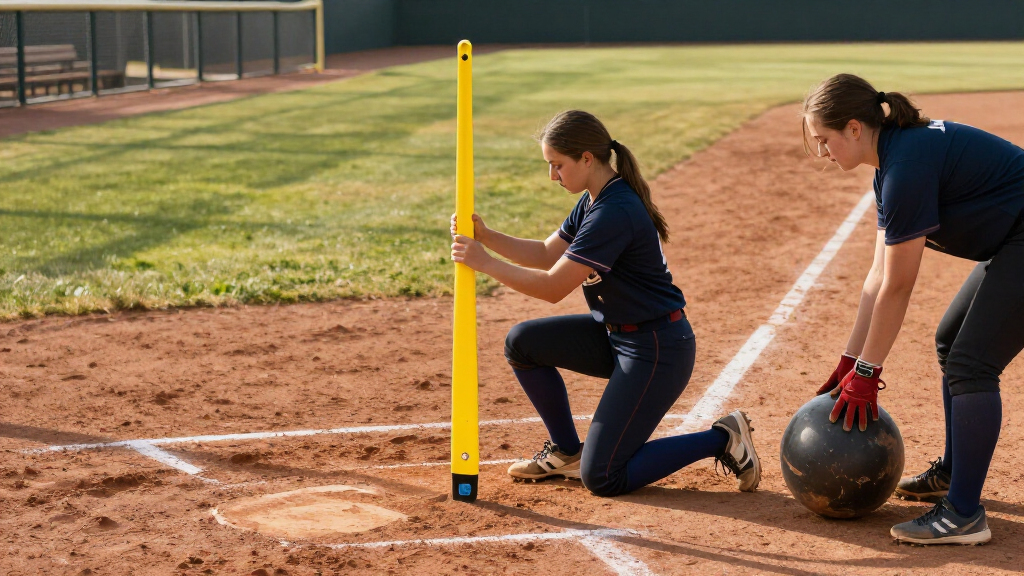

Softball training aids can target a specific skill or help build a complete practice station, and my best overall pick is the SKLZ Hurricane Swing Trainer for repeatable swing work without a live pitcher. The BAGAIL 7×7 ft Training Net stands out for players who need a flexible hitting target, while the Rawlings Great Hands Pancake Glove offers focused fielding feedback. The main tradeoff is between single-skill tools that give precise feedback and more versatile setups that take up more space or require extra equipment. I also compare pitching aids, weighted balls, and agility gear so you can match a purchase to your practice goals. Continue reading for the full breakdown and guidance on choosing the right aid for your player and setup.

Get sports gear delivered free — and shop member deals
- Fast, free delivery on millions of items
- Access to Prime Big Deal Days deals on October 6–7
- Prime Video, Amazon Music and more included
Complete the kit


Key Takeaways
- The Hurricane is the strongest all-around hitting pick for repeated swings, while the BAGAIL net is more useful when a player needs a target for multiple drills.
- Skill-specific feedback beats variety when a player has one clear weakness: the Pancake glove targets clean fielding, and the Perfect Circle aid focuses on pitching mechanics.
- Weighted equipment serves different purposes. The 12 oz and 16 oz bat-weight pair is for bat warmups, while the six weighted softballs are better suited to ball-based practice; neither replaces ordinary game-weight repetitions.
- Space changes the value of a training aid. The 10-by-3-foot pitching mat and 7-by-7-foot net need a more deliberate setup than cones, a swing aid, or a training glove.
- Some products need a partner or a specific routine. Tee Popper and rope-swing practice can add structure, but a simple tool used consistently may suit solo players better.
| GoSports Agility Training Cones with Tote, 20 Pack |  | Best for Marking Drill Space | Quantity: 20 cones | Material: Flexible plastic | Cone dimensions: 7.75 x 7.75 x 2 inches | VIEW LATEST PRICE | See Our Full Breakdown |
| GoSports Baseball and Softball Bat Weights, 2-Pack (12 oz and 16 oz) |  | Best for Progressive Swing Warm-Ups | Included weights: One 12 oz weight and one 16 oz weight | Material: Steel with PVC coating | Compatible barrel sizes: 2 1/4, 2 5/8, and 2 3/4 inches | VIEW LATEST PRICE | See Our Full Breakdown |
| Swingrail Baseball/Softball Hitting Trainer – Swing Trainer Aid for Batting & Hitting Practice – Improves Bat Speed, Swing Mechanics, Contact & Timing – Ages 9 and Up |  | Best for Guided Swing Mechanics | Age range: Ages 9 and up | Material: Foam | Weight: 3 ounces | VIEW LATEST PRICE | See Our Full Breakdown |
| Softball Pitching Mat with Pitcher Rubber – 10’x3′ |  | Best for Structured Pitching Footwork | Dimensions: 10 ft x 3 ft | Weight: 12 kg | Surface and backing: Baseball turf with TPR foam backing | VIEW LATEST PRICE | See Our Full Breakdown |
| Bandit Sports Tee Popper Batting Trainer with 1 Popper Ball |  | Best for Solo Contact Practice | Material: Glass-infused nylon and reinforced spring | Ball pop-up height: Up to 46 inches | Included components: Tee Popper and one Popper Ball | VIEW LATEST PRICE | See Our Full Breakdown |
| Perfect Circle Softball Pitching Training Aid |  | Best for Pitching Mechanics | Brand: Generic | Fit: Youth and adult | Suggested users: Unisex | VIEW LATEST PRICE | See Our Full Breakdown |
| Rawlings Great Hands Pancake Training Glove |  | Best for Soft-Handed Fielding | Material: Quality leather | Design: Zero pocket | Fit: Adult and youth | VIEW LATEST PRICE | See Our Full Breakdown |
| SKLZ Hurricane Baseball and Softball Swing Trainer |  | Best for Adjustable Swing Practice | Height: 23–38 inches | Power bands: 4 adjustable bands | Weight: 34 pounds | VIEW LATEST PRICE | See Our Full Breakdown |
| BAGAIL 7×7 ft Baseball and Softball Training Net |  | Best Multi-Skill Practice Setup | Dimensions: 7×7 ft | Net material: 7-ply knotless thickened polyester mesh | Frame: Heavy-duty steel tubes and flexible fiberglass poles | VIEW LATEST PRICE | See Our Full Breakdown |
| ZivPlay Baseball and Softball Hitting Trainer |  | Best for Repeated Contact Practice | Brand: ZivPlay | Material: Steel | Color: Black | VIEW LATEST PRICE | See Our Full Breakdown |
| SKLZ Softhands Baseball and Softball Fielding Trainer |  | Best for Infield Fielding Fundamentals | Brand: SKLZ | Model number: 0012 | Material: Foam | VIEW LATEST PRICE | See Our Full Breakdown |
| GoSports Baseball & Softball Rope Swing Trainer – Includes FLO BAT, 12 Foam Baseballs & Tote Bag |  | Best for Swing-Path Feedback | Brand: GoSports | Model name: Baseball & Softball Rope Swing Trainer | Material: Polyurethane | VIEW LATEST PRICE | See Our Full Breakdown |
| GoSports 16 oz Weighted Training Softballs – 6 Pack (Standard or Pro) |  | Best for Strength and Mechanics Drills | Brand: GoSports | Sport: Softball | Pack size: 6 | VIEW LATEST PRICE | See Our Full Breakdown |
| softball training aid | Material |
|---|---|
| GoSports Agility Training Cone | Flexible plastic |
| GoSports Baseball and Softball | Steel with PVC coating |
| Swingrail Baseball/Softball Hi | Foam |
| Softball Pitching Mat with Pit | — |
| Bandit Sports Tee Popper Batti | Glass-infused nylon and reinforced spring |
| Perfect Circle Softball Pitchi | — |
| Rawlings Great Hands Pancake T | Quality leather |
| SKLZ Hurricane Baseball and So | Aluminum |
| BAGAIL 7×7 ft Baseball and Sof | — |
| ZivPlay Baseball and Softball | Steel |
| SKLZ Softhands Baseball and So | Foam |
| GoSports Baseball & Softball R | Polyurethane |
| GoSports 16 oz Weighted Traini | Polyvinyl chloride (PVC) |
More Details on Our Top Picks
GoSports Agility Training Cones with Tote, 20 Pack
For softball players who need clear lanes for footwork, base-running, or fielding drills, these 20 low-profile cones offer a simple way to lay out a practice area. Their flexible plastic is designed to retain its shape when stepped on, while the shallow profile avoids the trip hazard of taller, pointed markers. Compared with the Softball Pitching Mat with Pitcher Rubber, the cones are lighter and more adaptable: you can shift the layout between drills instead of working from one fixed strip. The tradeoff is that they provide no pitching or hitting feedback; they only mark space, so players or coaches must supply the exercises. The single-color pack may also make it harder to assign different roles by color. The mesh tote helps keep the stack together between sessions.
Pros:- Twenty cones support multiple lanes or drill stations
- Flexible, low-profile construction is designed to retain its shape when stepped on
- Suitable for indoor and outdoor practice
- Stackable design and drawstring mesh tote simplify storage and transport
Cons:- Only one color is included, limiting color-coded drill layouts
- Requires a coach or player to create and run drills around the markers
- Does not provide technique feedback or ball-contact practice
Best for: Coaches and families who need portable markers for softball footwork, base-running, and fielding drills in changing spaces
Not ideal for: Players seeking a solo hitting or pitching aid, since these cones mark boundaries but do not train a specific skill
- Quantity:20 cones
- Material:Flexible plastic
- Cone dimensions:7.75 x 7.75 x 2 inches
- Storage:Mesh drawstring tote bag
- Design:Low-profile and stackable
- Use:Indoor and outdoor
Our verdict“Choose these cones for versatile, portable drill layouts, but pick a dedicated hitting or pitching aid if you need direct skill feedback.”
GoSports Baseball and Softball Bat Weights, 2-Pack (12 oz and 16 oz)
This pair suits hitters who want two levels of added resistance for warm-ups and swing-strength drills. The 12 oz and 16 oz weights give players a choice rather than locking them into one load, and the PVC coating is designed to grip standard bat barrels without scratching them. That makes this a more targeted swing-preparation tool than the GoSports Agility Training Cones, which organize movement drills but do not load the swing. The tradeoff is that weighted swings do not replace hitting off a tee or reading a pitch; this set offers no ball-contact practice. Added weight can also feel unsuitable for some players or warm-up routines, so it should not be treated as a fit for every hitter. Check barrel compatibility before buying, as the listed fit covers specific standard sizes.
Pros:- Includes 12 oz and 16 oz weights for two levels of resistance
- Fits listed 2 1/4, 2 5/8, and 2 3/4-inch bat barrels
- PVC coating is designed to reduce slipping and bat scratches
- Works with both baseball and softball bats within the compatible sizes
Cons:- Added bat weight may not suit every player or warm-up routine
- Does not provide ball contact or feedback on swing results
- Compatibility is limited to the specified barrel sizes
Best for: Softball hitters with compatible bats who want two resistance options for controlled warm-ups or swing-strength work
Not ideal for: Players who need contact, timing, or pitch-recognition practice, or whose bats have barrel sizes outside the listed compatibility range
- Included weights:One 12 oz weight and one 16 oz weight
- Material:Steel with PVC coating
- Compatible barrel sizes:2 1/4, 2 5/8, and 2 3/4 inches
- Colors:Yellow and green
- Package weight:0.83 kg
- Warranty:Six months
Our verdict“Pick this set for controlled, adjustable bat-weight warm-ups, not as a substitute for tee work or live-pitch practice.”
Swingrail Baseball/Softball Hitting Trainer – Swing Trainer Aid for Batting & Hitting Practice – Improves Bat Speed, Swing Mechanics, Contact & Timing – Ages 9 and Up
The Swingrail is the most technique-focused hitting aid in this group: its hand-guiding system and detachable Velcro strap give a player immediate feedback while rehearsing swing mechanics. It is designed for ages 9 and up and works best alongside a batting tee, with front toss also listed as an option. Compared with the Bandit Sports Tee Popper, which creates a self-serve ball-contact drill, Swingrail places more emphasis on the path and feel of the swing than on repeated contact. That distinction matters: it may suit a player refining mechanics with instruction, but younger or less experienced hitters may struggle to use it effectively without guidance. Its small foam trainer also cannot replicate the timing demands of live pitching, so it works best as one part of a broader practice routine.
Pros:- Guides the hands through swing practice and provides feedback via a detachable strap
- Online instructional videos support setup and use
- Can be used with a tee or front toss, indoors or outdoors
- Compact foam construction weighs 3 ounces
Cons:- Younger or less experienced players may find it difficult to use effectively
- Works best with a batting tee, adding another piece of equipment to the setup
- Offers limited practice for live-pitch timing
Best for: Softball hitters aged 9 and up who are refining swing mechanics with a batting tee and can follow structured instruction
Not ideal for: Younger beginners seeking a simple independent drill, or hitters whose main need is live-pitch timing and decision-making
- Age range:Ages 9 and up
- Material:Foam
- Weight:3 ounces
- Dimensions:7 x 4 x 2 inches
- Practice methods:Batting tee and front toss
- Use locations:Indoor and outdoor
- Included instruction:Online instructional videos
Our verdict“Choose Swingrail for structured mechanics work with a tee; choose the Bandit Tee Popper instead when independent contact practice is the priority.”
Softball Pitching Mat with Pitcher Rubber – 10’x3′
For pitchers who need repeatable foot placement, this 10-by-3-foot mat offers alignment lines and positioning patches in a dedicated pitching lane. Those markings make it more specific than the GoSports agility cones: instead of asking a coach to lay out a path, the mat supplies a consistent reference for mechanics and accuracy drills. Its turf surface, TPR foam backing, and non-slip design are intended to add comfort and stability, while the included hooks, strap, and storage bag support setup and transport. The main tradeoff is its 12 kg weight, which can make moving or repositioning it a job rather than a quick adjustment. It also takes up a defined 10-foot footprint, so it is less flexible than portable markers and does not help hitters train their swings.
Pros:- Alignment lines and positioning patches provide consistent foot-placement references
- Turf and TPR foam backing are designed for outdoor durability and added joint comfort
- Non-slip stability supports repeated pitching drills
- Includes anchor hooks, a carry strap, and a storage bag
Cons:- At 12 kg, it can be difficult to relocate or set up frequently
- Its 10-by-3-foot footprint is less adaptable than a set of cones
- Focused on pitching rather than batting or general fielding practice
Best for: Softball pitchers and coaches who want a marked, repeatable practice lane for foot placement and alignment
Not ideal for: Players with limited storage or practice space, or anyone who needs a lightweight aid that can be moved frequently
- Dimensions:10 ft x 3 ft
- Weight:12 kg
- Surface and backing:Baseball turf with TPR foam backing
- Alignment features:Positioning patches and alignment lines
- Included accessories:Anchor hooks, strap, and storage bag
- Use:Indoor and outdoor
Our verdict“Choose this mat for a dedicated pitching lane and consistent alignment work if you have the space and can manage its weight.”
Bandit Sports Tee Popper Batting Trainer with 1 Popper Ball
The Tee Popper is the clearest choice here for a hitter who wants to practice contact without a pitcher or partner. Its spring launches the included Popper Ball up to 46 inches, giving a player a repeatable solo hitting task. That makes it more focused on contact than the Swingrail, which guides swing mechanics and works best with a tee, while the Swingrail offers more direct technique feedback. The Tee Popper’s reinforced glass-infused nylon construction is intended to handle repeated use, but its ball requirement is a real limitation: the product description warns that a real baseball may break the holder, and only one Popper Ball is included. Buyers should plan around using the compatible Popper Ball rather than treating it as a standard-ball tee. Its 30-day warranty is also shorter than a longer-term training setup may warrant.
Pros:- Supports solo batting practice without a pitcher or partner
- Spring launches the included Popper Ball up to 46 inches
- Glass-infused nylon and reinforced spring are designed for durability
- Can be used by baseball and softball players
Cons:- Using a real baseball may break the ball holder
- Includes only one Popper Ball and requires compatible Popper Balls for continued use
- The listed warranty is 30 days
Best for: Softball players who want a solo, repeatable hitting drill and are willing to use the dedicated Popper Ball
Not ideal for: Hitters who want to use real baseballs or softballs, or who need a mechanics guide rather than a contact drill
- Material:Glass-infused nylon and reinforced spring
- Ball pop-up height:Up to 46 inches
- Included components:Tee Popper and one Popper Ball
- Color:Blue
- Package dimensions:11.57 x 5.39 x 5.31 inches
- Package weight:0.59 kg
- Warranty:30 days
Our verdict“Choose the Tee Popper for independent contact practice with its dedicated ball, but skip it if you need a standard-ball setup or swing-mechanics coaching.”
Perfect Circle Softball Pitching Training Aid
The Perfect Circle focuses on an area the hitting trainers in this lineup do not: pitching-arm position. Its feedback during practice can help youth and adult players work on mechanics for fastballs, change-ups, drop balls, screwballs, rise balls, and curveballs without needing a coach to monitor every repetition. Compared with the SKLZ Hurricane, which is built around swing practice, this is a compact, pitch-specific aid rather than a broad hitting setup. The elastic band is intended to fit different players, and the package is small enough to take along to practice. The tradeoff is that players may need time to position it correctly on the thigh, and the available product details do not describe material durability. It is best treated as a mechanics prompt, not a substitute for coaching or full pitching practice.
Pros:- Provides feedback on arm positioning during practice
- Supports practice for several pitch types
- Elastic fit is intended for youth and adult players
- Compact format can be used without a coach monitoring each repetition
Cons:- May take practice to position correctly on the thigh
- Material durability is not specified
Best for: Youth and adult softball pitchers who want a portable reminder for arm-position practice between coached sessions
Not ideal for: Players seeking a complete pitching program or an aid with clearly specified durable materials and construction
- Brand:Generic
- Fit:Youth and adult
- Suggested users:Unisex
- Color:Yellow and pink
- Supported pitches:Fastballs, change-ups, drop balls, screwballs, rise balls, and curveballs
- Package dimensions:5 × 3.35 × 0.71 inches
- Package weight:0.02 kg
- Included:User instructions
Our verdict“Choose this compact aid for pitch-specific arm-position practice, but look elsewhere if you need a complete or durability-documented training system.”
Rawlings Great Hands Pancake Training Glove
The Rawlings Great Hands Pancake Training Glove narrows the focus to fielding technique: its zero-pocket design gives players less room to rely on the glove to secure the ball, encouraging cleaner hand positioning. That makes it a different kind of aid from the Perfect Circle, which targets pitching mechanics, and from the BAGAIL training net, which supports several practice activities. Leather construction and an adult-and-youth fit make this a straightforward option for repeated fielding drills across age groups. The main limitation is also its purpose: this is a training glove, not a game glove, so it will not replace a standard fielding mitt for matches. Players who want batting, throwing, or pitching practice from one purchase should choose a more versatile setup instead.
Pros:- Zero-pocket construction encourages controlled, soft-handed fielding
- Leather material is suited to repeated practice
- Fits adult and youth athletes
- Can be used for baseball or softball drills
Cons:- Not intended for game play
- Limited to fielding practice rather than multiple training skills
Best for: Youth or adult softball fielders who want to practice receiving ground balls with less help from a glove pocket
Not ideal for: Players looking for a game-ready glove or one training aid for fielding, batting, and pitching
- Material:Quality leather
- Design:Zero pocket
- Fit:Adult and youth
- Sports:Baseball and softball
- Use:Training
- Pocket:No pocket
Our verdict“Pick this glove for focused soft-hands drills; choose the BAGAIL net or another multi-use aid if you want to cover more than fielding.”
SKLZ Hurricane Baseball and Softball Swing Trainer
The SKLZ Hurricane stands out for hitters who want a repeatable swing target with adjustable resistance rather than a net that simply catches balls. Its four power bands and 23–38-inch height adjustment let players vary the challenge and practice different contact zones; the ball head also supports static or moving-pitch simulations. Compared with the ZivPlay Hitting Trainer, the Hurricane offers a wider stated height range and includes ground stakes and a carry bag, while ZivPlay lists four resistance levels and a 50,000-hit test figure. The Hurricane’s 34-pound weight makes transport less convenient, despite the bag, and stakes may be needed for secure use on grass or uneven ground. It suits players who can leave a trainer set up or have help moving it more than those seeking a lightweight solo kit.
Pros:- Four adjustable power bands vary the swing challenge
- Height adjusts from 23 to 38 inches
- Ball head supports static and moving-pitch simulations
- Includes ground stakes and a carry bag
Cons:- At 34 pounds, it can be cumbersome to transport
- Ground stakes may be needed for stability on grass or uneven surfaces
Best for: Softball hitters who want adjustable swing resistance and a stable target for structured practice at home or team training
Not ideal for: Players who need a lightweight trainer to carry frequently or cannot secure its base on their practice surface
- Height:23–38 inches
- Power bands:4 adjustable bands
- Weight:34 pounds
- Material:Aluminum
- Color:Black
- Included components:Hitting trainer, carrying bag, and ground stakes
- Sport:Baseball
- Warranty:30-day money-back guarantee and 1-year warranty
Our verdict“Choose the Hurricane for adjustable, stable swing sessions if its 34-pound build is manageable for your practice setup.”
BAGAIL 7×7 ft Baseball and Softball Training Net
The BAGAIL 7×7 ft net earns its place through breadth: the set combines a net, adjustable batting tee, two strike-zone targets, and a baseball, so a household can move between batting, pitching, and throwing drills without assembling separate purchases. The tool-free setup is listed at about two minutes, and the carry bag helps make the kit more practical to store or take outside. Compared with the Rawlings Great Hands Pancake glove, which targets one fielding skill, BAGAIL covers more practice formats; compared with the SKLZ Hurricane, it catches hits rather than providing resistance-based swing feedback. Its 7×7-foot footprint needs room, and the product notes that ground stakes may be needed in windy conditions. Buyers wanting a compact mechanics aid should choose a smaller, more focused option.
Pros:- Includes a batting tee, two strike-zone targets, and a baseball
- Tool-free setup is listed at about two minutes
- Carry bag supports storage and transport
- Suitable for indoor or outdoor practice and several sports
Cons:- The 7×7-foot net needs more space than a compact training aid
- Ground stakes may be needed to keep it stable in windy outdoor conditions
Best for: Families or teams wanting one portable setup for batting-tee work, pitching targets, and throwing practice
Not ideal for: Players with limited setup space or those who want a compact aid focused on one specific mechanic
- Dimensions:7×7 ft
- Net material:7-ply knotless thickened polyester mesh
- Frame:Heavy-duty steel tubes and flexible fiberglass poles
- Included components:Net, bow frame, two strike-zone targets, batting tee, baseball, ground stakes, instructions, and carry bag
- Setup:Tool-free; about 2 minutes
- Sports:Baseball, softball, cricket, and hockey
- Warranty:2 years
- Model number:BN03-Black
Our verdict“Choose BAGAIL when practice variety matters more than compact storage or resistance-based swing feedback.”
ZivPlay Baseball and Softball Hitting Trainer
The ZivPlay Hitting Trainer is a focused choice for hitters working on timing, contact, and swing path. Its rotating ball gives visual and physical feedback, while four resistance levels let players adjust the feel of repeated swings. The height range of 28–43 inches differs from the SKLZ Hurricane’s 23–38 inches: ZivPlay reaches higher, while the Hurricane’s listed range starts lower. ZivPlay also states that the trainer was tested for 50,000 hits, a useful durability detail not supplied for the Perfect Circle pitching aid. The tradeoff is portability: at 15 kg, it is much heavier than a small wearable-style aid, and changing resistance levels may call for setup adjustments. This is better suited to a dedicated practice spot than to frequent transport between locations.
Pros:- Rotating ball provides visual and physical swing feedback
- Four resistance levels allow practice adjustments
- Height adjusts from 28 to 43 inches
- Tested for 50,000 hits
Cons:- At 15 kg, the trainer may be cumbersome to move
- Resistance changes may require setup adjustments
Best for: Adult softball hitters who want adjustable resistance and repeated contact practice at a home or team setup
Not ideal for: Players who need a lightweight trainer to move often or a kit that includes a net and multiple practice accessories
- Brand:ZivPlay
- Material:Steel
- Color:Black
- Adjustable height:28–43 inches
- Resistance levels:4
- Tested for:50,000 hits
- Item weight:15 kg
- Package weight:16.78 kg
- Included components:Baseball swing trainer, carry bag, and ground stakes
Our verdict“Choose ZivPlay for repeated, adjustable contact work in a mostly fixed practice location, not for frequent transport.”
SKLZ Softhands Baseball and Softball Fielding Trainer
The SKLZ Softhands focuses on a skill that weighted balls and swing trainers do not address: receiving the ball softly and moving it cleanly from glove to throwing hand. Its lightweight foam construction lets players work on two-hand catches and body position without a full-size glove getting in the way. Unlike the GoSports 16 oz Weighted Training Softballs, which target hitting and pitching mechanics under added load, this trainer is specifically for fielding repetitions. It fits either hand and is listed for all ages, making it a flexible practice aid for youth players learning fundamentals and experienced infielders refining handwork. The tradeoff is durability: foam may wear faster with heavy use, and this is a focused technique tool rather than an all-purpose fielding glove.
Pros:- Reinforces soft receiving technique and a smooth transfer to the throwing hand.
- Encourages two-hand catching and proper body positioning.
- Ambidextrous fit makes it usable on either hand.
- Lightweight, ready-to-play foam suits a wide range of ages and skill levels.
Cons:- Foam construction may wear out faster with frequent or heavy practice.
- Its specialized design does not provide the feel or protection of a regular fielding glove.
Best for: Youth players and infielders who want focused, low-weight repetitions on soft hands, two-hand receiving, and glove-to-throwing-hand transfers.
Not ideal for: Players seeking a full fielding glove, live-ball practice tool, or equipment built for prolonged heavy use; the foam trainer is designed for technique work.
- Brand:SKLZ
- Model number:0012
- Material:Foam
- Hand orientation:Ambidextrous
- Glove type:Infield
- Size:One size
- Item weight:0.05 kg
- Age range:All ages
Our verdict“Choose the SKLZ Softhands for targeted infield handwork, but pick a weighted ball or swing trainer if hitting and pitching are your priorities.”
GoSports Baseball & Softball Rope Swing Trainer – Includes FLO BAT, 12 Foam Baseballs & Tote Bag
The GoSports FLO BAT is the lineup’s more feedback-focused swing aid: its rope-connected bat and foam balls make swing mechanics visible during practice, while the adjustable grip accommodates a broad range of players. The package includes 12 foam baseballs, an instructional video, and a tote, so it is easier to carry and organize than a stationary training setup such as the SKLZ Hurricane Swing Trainer. That portability suits players who want repeated mechanics work at home or at practice. It does have a specific setup requirement: a soft flexible-top tee is not included. The rope can also wear with heavy use, and practice is limited to the supplied foam balls, so this is less adaptable than weighted training softballs for varied hitting or pitching drills.
Pros:- Rope-connected design provides visual feedback on swing mechanics.
- Adjustable grip accommodates players across a wide range of skill levels.
- Includes 12 foam baseballs, an instructional video, and a tote bag.
- Portable package supports practice away from a fixed training station.
Cons:- Requires a soft flexible-top tee, which is not included.
- Rope may wear over time with heavy use.
- Use is limited to the supplied foam baseballs.
Best for: Players and coaches who want a portable swing-mechanics station with visible feedback and a grip that can suit different skill levels.
Not ideal for: Buyers who need a complete setup without extra equipment, want to use standard balls, or prefer a broader hitting-and-pitching aid.
- Brand:GoSports
- Model name:Baseball & Softball Rope Swing Trainer
- Material:Polyurethane
- Item dimensions:29.7 x 2.83 x 2.83 inches
- Item weight:14.4 ounces
- Included components:1 FLO BAT, 12 foam baseballs, 1 tote bag
- Color:Black/Red
- Package weight:1.22 kg
Our verdict“Pick the GoSports FLO BAT for portable, mechanics-focused swing practice if you already have a compatible tee and are comfortable training with foam balls.”
GoSports 16 oz Weighted Training Softballs – 6 Pack (Standard or Pro)
These GoSports weighted training softballs are the strongest fit here for players who want the ball itself to add resistance to hitting and pitching mechanics. Each weighs 16 ounces while retaining the official 3.82-inch diameter, giving players a familiar softball-sized target with substantially more mass than a game ball. Compared with the GoSports FLO BAT, which isolates swing path using a rope and foam balls, this six-pack can support broader strength and form drills for both pitching and hitting. The soft PVC shell is described as suited to repeated practice, though the added weight changes the feel from a standard softball. Their limited-flight design also points toward controlled or backyard sessions, not ordinary game-ball flight work.
Pros:- Six balls support repeated drills without constant retrieval.
- 16-ounce weight adds resistance for strength and mechanics work.
- Official 3.82-inch diameter preserves a familiar softball-sized profile.
- Soft PVC shell is intended to withstand repeated practice.
Cons:- Heavier weight can alter the feel compared with a standard game softball.
- Limited flight restricts use to controlled environments rather than normal flight practice.
Best for: Coaches and players who want a six-ball set for controlled strength and mechanics drills in hitting or pitching.
Not ideal for: Players seeking game-ball feel or full-flight practice; the 16-ounce weight and limited-flight design differ from standard play.
- Brand:GoSports
- Sport:Softball
- Pack size:6
- Ball weight:16 ounces each
- Diameter:3.82 inches
- Material:Polyvinyl chloride (PVC)
- Color:Standard orange
- Model number:BASB-SOFTBALLS-16OZ-6
Our verdict“Choose these weighted softballs for controlled hitting and pitching drills that benefit from added resistance, not for recreating standard game-ball feel.”
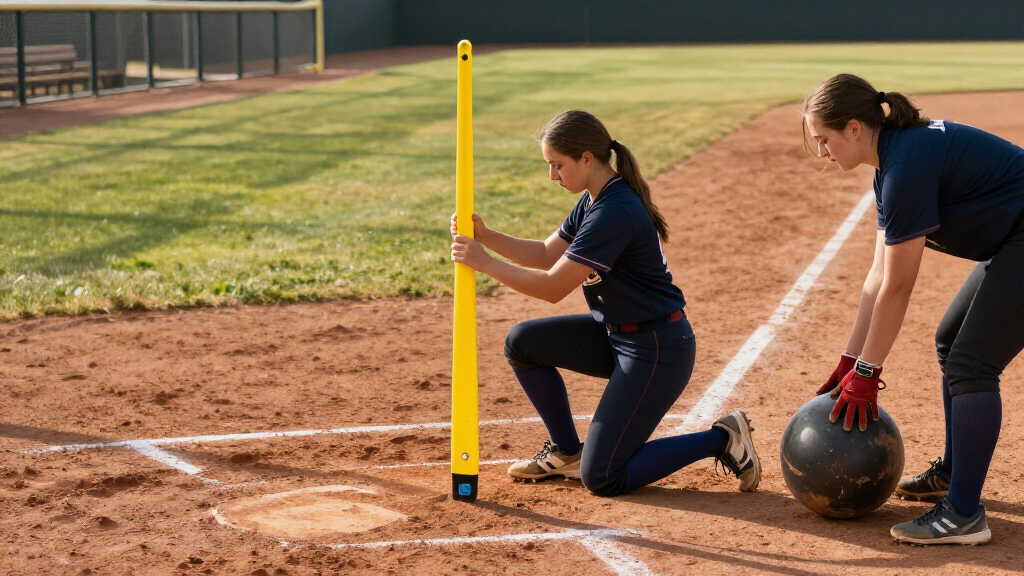
How We Picked
I compared these 13 softball training aids by the practice problem each one addresses, how clearly it supports a repeatable drill, and whether its design suits solo or partner work. I also weighed setup demands, portability, the amount of usable feedback, and how many types of practice the tool can support. Those factors matter because a specialized pitching aid can be more useful than a multi-use product for a player with a specific mechanical goal, while a net or swing trainer can serve a wider range of hitting sessions.
The ranking reflects skill coverage, ease of use, and practical fit, not a claim that one tool works for every player. Products that support repeatable practice with clear purpose rank ahead of tools whose value depends on an exact drill or additional setup. Specialized options remain strong choices for the right need, but players should match them to their practice space, age, coaching plan, and current equipment before buying.
Factors to Consider When Choosing Softball Training Aids
Before choosing among softball training aids, start with the practice problem you want to solve rather than the product type that looks most versatile. A tool can be well suited to a drill and still be a poor fit if it needs more space, a partner, or a coaching cue your player does not yet understand. These factors help separate useful practice equipment from gear that is likely to sit unused.
Match the Aid to One Practice Goal
Write down the skill you want to improve before comparing features: swing path, contact, pitching form, fielding hands, or general movement. A targeted tool can make a small part of practice more repeatable, but it rarely addresses every part of a skill. Players with several needs may get more use from a net or cones, provided they already know how to structure drills around them. A common mistake is buying equipment because it looks versatile without having a routine for it. If a coach has identified a specific mechanical issue, ask whether the aid reinforces that cue or could encourage a different movement. Choose the tool that supports the next practice step, not the longest list of possible uses.
Check Space, Storage, and Setup Time
A large net or pitching mat can make practice more consistent, but only if the available area is safe and the equipment is easy to set up regularly. Measure the usable space, including room for a hitter, pitcher, or moving balls—not just the product’s footprint. Check whether the intended surface is level and whether nearby windows, vehicles, or people could be at risk from missed hits. Smaller items such as cones and training gloves are easier to carry and store, though they may depend more on a coach or player creating the drill. Buyers often focus on whether a tool fits in the yard and overlook whether it fits in a car or storage closet. Frequent, quick setup can matter more than having the largest practice station.
Separate Feedback Tools from Repetition Tools
Some aids make a movement easier to repeat; others make errors more noticeable. A swing trainer may supply a consistent path for practice, while a fielding glove can challenge hand position and clean pickup technique. Neither kind automatically explains why a mistake happened. Players who already know the intended cue can often use a focused aid on their own, while newer players may need a coach or parent to translate feedback into an adjustment. Avoid assuming that more repetitions always mean better mechanics; repeating a flawed motion can reinforce it. Pair the tool with one simple cue and check progress during ordinary practice as well.
Use Weighted Equipment with a Clear Routine
Bat weights and weighted softballs are not interchangeable: one attaches to a bat for warmup swings, while the other changes the feel of ball-based drills. More weight does not automatically mean more useful training, and excessive or poorly timed loading can disrupt a player’s normal movement pattern. Follow the product’s intended use and any guidance from a coach, particularly for younger athletes. A common error is replacing regular swings or throws with weighted repetitions rather than using them as a limited part of a broader session. Players should return to standard equipment and check that their mechanics still feel controlled. If you are unsure which approach suits a player, ask a qualified coach before adding load.
Choose for Solo Practice or Partner Work
Think about who will run the drill and whether the player will practice alone. A net can support solo hitting when paired with a suitable tee or toss setup, while some popper or pitching drills are easier with a partner who can feed balls and observe technique. Cones are flexible, but they do not provide a built-in lesson or feedback. If a player is easily distracted, a simple tool with one repeatable task may be more productive than a kit with many possible drills. Check what the product includes and what else you must supply, such as a bat, balls, a tee, or a safe hitting area. The best choice is the one that matches the real practice routine, not an idealized one.
Prioritize Fit, Durability, and Skill Level
Age labels and adjustable designs can help narrow options, but they do not replace a check of player size, grip, strength, and experience. A beginner may benefit from a tool that makes one movement easy to understand, while an experienced player may prefer a narrower aid that targets a known weakness. Inspect materials and connection points that will take repeated impact or tension, and consider whether replacement parts or routine care are needed. Low-maintenance gear can be more practical for team bags and frequent travel, while a larger station may make sense for a dedicated practice area. Do not pay for complexity the player cannot use yet. A good fit should support sound technique without forcing uncomfortable or uncontrolled movement.
Frequently Asked Questions
Which softball training aid makes the most sense for a player who practices alone?
Start with the part of practice that can be done safely without someone feeding balls or correcting form. A hitting net can collect hits and support tee or self-toss drills, while a swing trainer can provide a repeatable movement task. Cones are useful for footwork but require the player to follow a planned drill. Solo practice is less effective when the athlete cannot tell whether a movement is correct, so keep the routine simple and arrange periodic feedback from a coach. Check the space and ball containment before setting up any hitting session.
Should I choose a bat weight or weighted training softballs?
Choose based on the activity you want to modify: bat weights attach to a bat for swing warmups, while weighted softballs are used in ball-based practice. They create different training experiences and should not be treated as substitutes. Follow the intended use and avoid making loaded repetitions the bulk of a session, especially for younger players. A coach can help decide whether either tool fits the athlete’s current mechanics and training plan. Regular swings and throws with standard equipment should remain part of practice.
Is a large training net worth choosing over a compact hitting aid?
A net is a better fit when the player needs a contained target for repeated hits and has enough room to set it up safely. A compact hitting aid takes less space and may be easier to bring to practice, but it will not provide the same ball collection or target area. Consider whether you have a tee, balls, and a suitable hitting surface, since a net alone does not create a complete drill. Also check storage and setup needs before choosing a larger station. If practice usually happens at a field with existing equipment, a portable skill-specific aid may see more use.
Can a fielding trainer replace regular ground-ball practice?
No single fielding aid reproduces the range of ball speed, bounce, direction, and decision-making found in regular ground-ball work. A training glove can focus attention on hand position and clean pickups, making it useful for targeted repetitions. Players still need ordinary fielding drills to apply that technique to realistic movement and throws. Use the aid to reinforce a specific cue, then return to normal glove work and game-like plays. If the tool causes an awkward posture or grip, get a coach to check the technique.
What should I buy first for a beginner who needs help with several skills?
Pick the area that most limits the player’s confidence or progress, rather than trying to cover hitting, pitching, and fielding with one purchase. A versatile item such as cones can support movement drills, but it will not teach a skill on its own. A focused aid may be a better first choice when a coach has identified a clear issue, while a net can support regular hitting if the player already has a safe routine. Ask what equipment the team or family already owns so you do not duplicate it. Add another aid only after the player is using the first one consistently.
Conclusion
My best overall choice is the SKLZ Hurricane for players seeking repeatable swing practice; the BAGAIL net suits buyers who want a broader hitting setup, while the Rawlings Pancake glove is my best value-style skill pick for focused fielding work. For a best premium-style setup, I would choose the 7-by-7-foot net when the space and practice routine justify a larger station. Beginners are better served by a simple, coach-guided aid matched to one skill than by a complex collection of gear. For specific needs, choose the Perfect Circle for pitching practice, cones for movement drills, or the GoSports weights for a planned weighted-ball routine. The right pick is the one that fits the athlete’s goal, available space, and regular practice habits.
NFL season / tailgating Picks
team gear
As an affiliate, we earn on qualifying purchases.