
To make every drill easier, set up your catching stance with your feet shoulder-width apart, knees slightly bent, and stay relaxed. Keep your glove up and ready, adjusting your stance based on the pitch height and speed. Focus on quick hand positioning, muscle memory, and proper gear fit. Consistent practice and adapting to different situations boost your confidence and reaction time. Keep exploring for tips to optimize your blocking setup and improve your game even further.

Get sports gear delivered free with Prime
- Fast, free delivery on millions of items
- Prime Video, Amazon Music and more included
- Member-only deals all year
Key Takeaways
- Establish a consistent, low, and balanced stance to improve reaction time and agility during drills.
- Keep your glove up and positioned for quick reaction on low or breaking pitches.
- Focus on proper hand and foot positioning to facilitate smooth, efficient blocking movements.
- Incorporate mental focus and visualization exercises to enhance reaction speed and confidence.
- Regularly review and adjust stance and gear for optimal comfort, responsiveness, and adaptability.
As an affiliate, we earn on qualifying purchases.
Why a Proper Blocking Setup Is Essential for Catchers
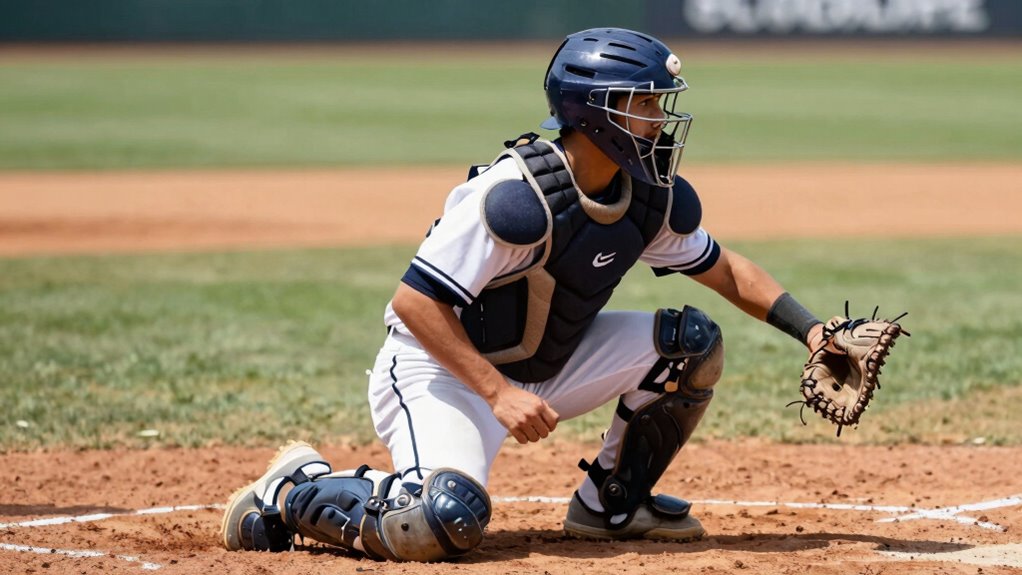
A proper blocking setup is essential for catchers because it directly impacts their ability to prevent wild pitches and passed balls. Effective training techniques focus on developing correct hand positioning, which guarantees quick reactions and minimizes gaps for the ball to slip through. When your hands are correctly placed, you’re better prepared to absorb and redirect pitches, especially in chaotic situations. Consistent drills that emphasize hand positioning help build muscle memory, making your movements instinctive during games. Proper setup also reduces fatigue and injury risk, keeping you agile and ready. Remember, a solid foundation in hand positioning not only improves your blocking skills but also boosts your confidence behind the plate, enabling you to handle even the most challenging pitches with ease.
As an affiliate, we earn on qualifying purchases.
Choosing the Best Gear for Effective Blocking
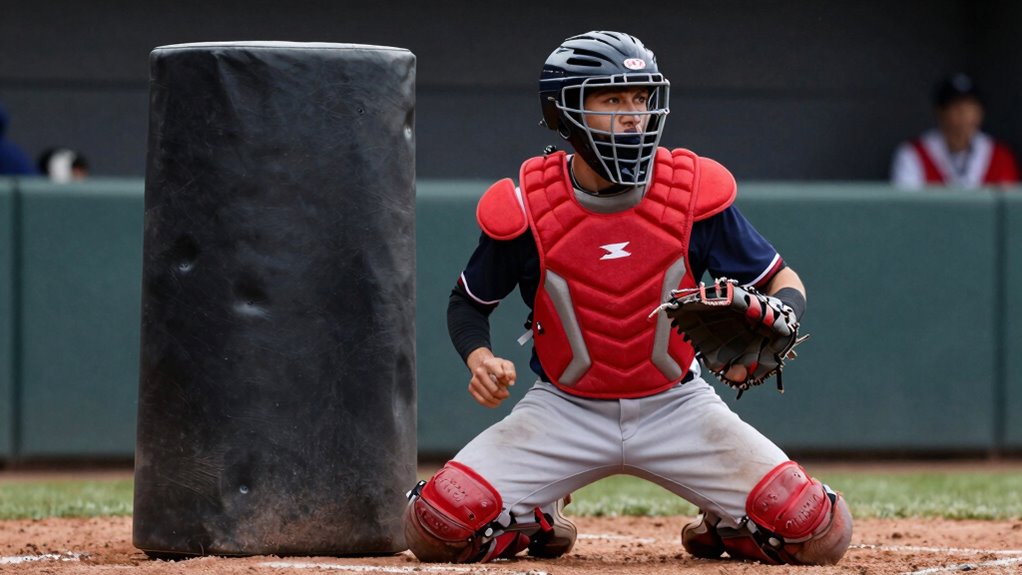
To block effectively, you need the right gear that keeps you protected and mobile. Proper knee pads offer support without restricting movement, while the right shoe grip guarantees stability on the field. Choosing gear that balances comfort and function is key to enhancing your blocking performance. Additionally, selecting equipment with adaptive design features can help players better respond to dynamic gameplay situations. Incorporating ergonomic considerations into gear design can further improve comfort and reduce fatigue during intense drills. Ensuring that your gear is made from body-appropriate materials can also minimize discomfort and potential injuries during extended practice sessions. Having gear that is designed with natural movement patterns in mind can further optimize performance and safety. Being aware of ethical manufacturing practices can guide you toward choosing gear produced responsibly and sustainably.
Proper Knee Pads Selection
Choosing the right knee pads is essential for effective blocking because they provide the protection and stability you need to dive and slide confidently. When selecting knee pads, consider how they fit and move with you, similar to how helmet fit affects comfort and safety. Look for pads that contour well without restricting movement, much like choosing the right glove types ensures better control and grip. The best knee pads should stay secure during quick movements and impact, so adjustable straps are a plus. Avoid overly bulky options that hinder agility. Proper fit reduces the risk of injury and keeps you comfortable during long drills. Remember, well-chosen knee pads enhance your overall blocking setup, helping you stay focused and prepared for every play.
Choosing the Right Shoe Grip
Selecting the right shoe grip is crucial for maintaining stability and control during blocking. Your shoe grip influences how well you can stay grounded, especially with proper hand positioning and foot placement. A good grip helps you react quickly and stay balanced when reacting to fast pitches. Focus on shoes with a non-slip sole that provides traction on different surfaces. Make certain your foot placement allows for quick lateral movement and quick stops. Proper hand positioning complements your footwork by guiding your movements and maintaining control. Additionally, understanding digital content concepts can help you choose the most effective gear based on your playing environment and personal preferences. Incorporating traction technology into your footwear can further enhance your stability and responsiveness during gameplay. Paying attention to shoe material can also improve durability and grip over time, ensuring consistent performance. Being aware of diversity in design can help you select footwear that caters to different foot shapes and preferences, optimizing comfort and function. Furthermore, considering performance optimization features can lead to better overall athletic performance and injury prevention.
As an affiliate, we earn on qualifying purchases.
Getting in the Right Stance for Fast Reactions
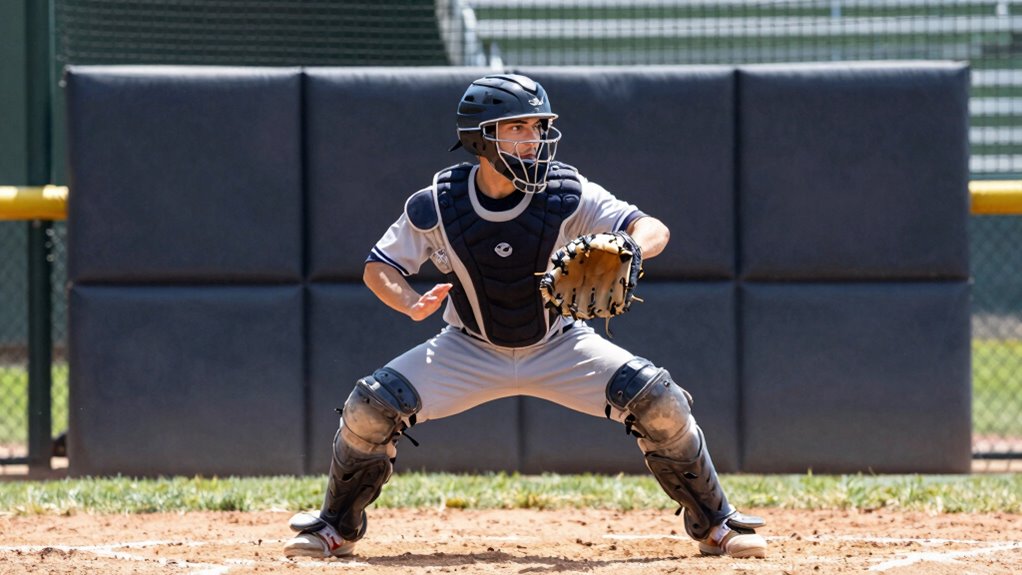
Getting into the right stance is essential for catching fast pitches and reacting quickly behind the plate. Start by positioning your feet shoulder-width apart, with knees slightly bent and weight centered. Keep your glove up and ready, with proper glove positioning to quickly scoop or block. Your hand placement should be comfortable and natural, allowing you to move swiftly in any direction. Keep your chest over your toes and stay balanced, so your reactions are fast and controlled. Maintaining a low, athletic stance enables you to spring into action without hesitation. Focus on staying relaxed and alert, so you can respond instantly to pitches in any location. A solid, balanced stance forms the foundation for quick reactions and effective blocking. Additionally, practicing reactive drills can help enhance your quickness and overall defensive skills. Incorporating work-life balance strategies can also improve your focus and reduce stress, ultimately sharpening your reaction time behind the plate.
baseball training drill equipment
As an affiliate, we earn on qualifying purchases.
As an affiliate, we earn on qualifying purchases.
Practicing Blocking Drills to Build Confidence

Practicing blocking drills regularly is essential for building your confidence behind the plate. When you focus on these drills, you improve your bat control and pitch recognition, which are pivotal for effective blocking. Consistent practice helps you anticipate pitches better, making it easier to move into proper blocking position quickly. It also sharpens your reflexes, so you can react faster to unpredictable shots. To maximize your training, incorporate these ideas:
Regular blocking drills boost confidence, refine pitch recognition, and sharpen reflexes for game-ready performance.
- Use live pitching to simulate game situations
- Focus on controlling your glove to block low and high pitches
- Practice tracking pitches to improve pitch recognition
- Incorporate quick footwork drills for better positioning
- Work on your breathing to stay calm under pressure
These practices build confidence, making every drill more natural and effective.
Common Blocking Mistakes and How to Avoid Them
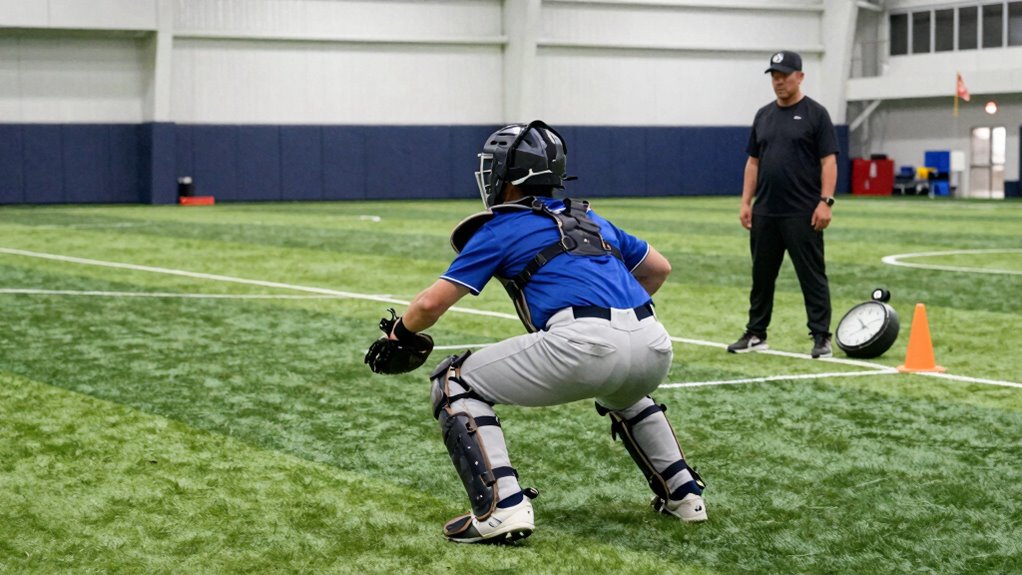
Even experienced catchers can fall into common blocking mistakes that compromise their effectiveness behind the plate. One mistake is not using a variety of drill variations, which can lead to stagnation and poor reaction to unpredictable pitches. Stick to different drills to build adaptability. Incorporating seasonal training can help catchers prepare for different game scenarios throughout the year. Another error is neglecting equipment maintenance; worn-out or ill-fitting gear hampers your ability to block accurately and comfortably. Make sure your gear fits well and is in top condition to avoid distractions or slips during vital plays. Additionally, over-relying on one blocking technique may limit your effectiveness. Focus on refining your skills continually and incorporating diverse drills. By avoiding these pitfalls, you’ll improve your blocking consistency and become a more reliable presence behind the plate. Incorporating training techniques that target different scenarios can further enhance your responsiveness and overall performance. Regularly practicing water-based exercises can also improve your core strength and stability, which are crucial for effective blocking. Developing proper mental focus strategies can help you stay calm and alert during high-pressure situations, ensuring consistent performance. Engaging in visualization drills can also boost your reaction time and confidence during game situations.
Adapting Your Setup for Different Pitches and Situations
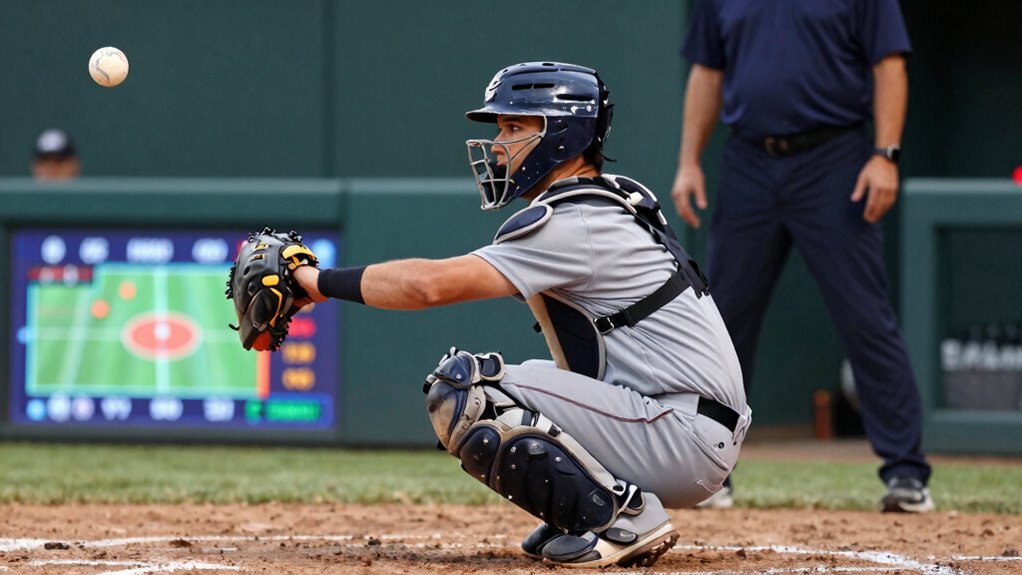
Adapting your setup for different pitches and situations is essential to maintaining effective blocking and framing. You need to adjust your stance based on pitch type, speed, and location, ensuring ideal bat control and quick reactions. Good catcher communication is key—use signals and eye contact to confirm pitch expectations, helping you prepare your setup beforehand. For low pitches, stay slightly crouched with hands closer to the ground; for high pitches, stay more upright. When expecting a breaking ball, position your glove for a quick reaction. Always be ready to shift your stance if the batter shows tendencies. Flexibility in your blocking setup allows you to stay ahead of the pitch, improve bat control, and maintain control over the game’s pace.
Adjust your stance and glove position to handle different pitches and stay flexible for quick reactions.
- Adjust stance based on pitch height and speed
- Use catcher communication to anticipate pitches
- Position glove for quick reaction on breaking balls
- Modify crouch level for low or high pitches
- Stay flexible to adapt to unexpected pitch changes
Maintaining and Personalizing Your Blocking Setup for Long-Term Success

To guarantee your blocking setup remains effective over time, you need to focus on consistent maintenance and personalized adjustments that suit your playing style. Regular glove maintenance ensures your gear stays flexible and reliable, which directly impacts your ability to stay focused during plays. Keep your glove clean, conditioned, and properly fitted to avoid distractions. Additionally, maintaining mental focus is vital; stay aware of your positioning and adjust your blocking stance as you gain experience. Personalizing your setup involves fine-tuning your stance, glove placement, and footwork to match your comfort and strengths. Regularly revisit your techniques and make small tweaks to enhance your confidence and consistency. Incorporating emerging sports tech tools can also help track your progress and identify areas for improvement. Utilizing tech-enabled training can provide real-time feedback and accelerate skill development. Paying attention to long-term success strategies, such as developing muscle memory and mental resilience, further supports your growth on the field. Consistently reviewing and adjusting your training routines ensures sustained improvement and prepares you for evolving game situations. This ongoing care and customization help you develop long-term success in your blocking game.
Frequently Asked Questions
How Often Should Catchers Adjust Their Blocking Setup During Games?
You should adjust your blocking setup as often as needed during the game, especially based on pitcher-catcher communication and how the game unfolds. Keep an eye on the pitcher’s tendencies and make quick equipment adjustments if something feels off or if your positioning isn’t ideal. Regularly check your equipment to guarantee everything stays secure, and stay flexible to adapt your blocking stance for different situations to improve overall effectiveness.
Can Different Pitches Require Completely Different Blocking Techniques?
Different pitches definitely require different blocking techniques because pitcher variability impacts how the ball behaves. You need to adjust your glove positioning accordingly to stay in front of the ball and prevent wild pitches. For example, a curveball might dip low, so you shift your setup downward, while a fastball might stay higher, requiring a different stance. Adapting your blocking approach based on pitch type keeps you effective and ready for anything.
What Are the Signs of a Poor Blocking Setup Affecting Performance?
You’ll notice poor blocking setup signs like inconsistent pitching, which affects your control, and improper glove positioning that makes it harder to block pitches effectively. If your glove isn’t aligned correctly or you struggle to stay low, your performance drops. These issues lead to missed pitches and increased errors. Addressing your setup by focusing on proper glove placement and maintaining pitching consistency helps you block more effectively and boost overall game performance.
How Does a Catcher’s Height Influence Their Blocking Stance?
Your catcher’s stance and blocking height are vital for effective performance. If you’re taller, lower your stance slightly and adjust your blocking height to keep your glove close to the ground. Shorter catchers might elevate their stance slightly to guarantee quick reactions. Properly aligning your blocking height with your stature helps you react faster and cover the plate better, making every drill more effective and increasing your chances of blocking pitches successfully.
Are There Specific Exercises to Improve Blocking Reaction Time?
Think of reaction time as a lightning strike—you need quickness and precision. You can improve it through drill variations like quick footwork and glove-to-ball reaction drills. Incorporate reaction drills that challenge your agility and decision-making, such as catching balls thrown at different angles or heights. Consistent practice hones your instincts, making your reactions sharper and faster, so you’re always ready to block pitches with confidence and ease.
Conclusion
So, now you’re practically a blocking wizard—well, almost. Just remember, a proper setup isn’t magic; it’s practice, gear, and a dash of stubbornness. Keep tweaking your stance, avoiding rookie mistakes, and adapting on the fly. Before long, you’ll be blocking like a pro—minus the dramatic flair. Because let’s face it, in the game of baseball, the only thing smoother than a good setup is the pitcher’s curveball. Stay committed, and the balls will fear you.
NFL season / tailgating Picks
team gear
As an affiliate, we earn on qualifying purchases.