

As a softball parent, you should avoid interfering with coaching, arguing with officials, or putting excessive pressure on your child. Stay calm and supportive, focusing on effort and fun, not just winning or skill. Refrain from gossip or negative talk and always prioritize safety. To create a positive environment and help your child thrive, it’s essential to understand what behaviors to avoid and how to foster a respectful, encouraging attitude—you’ll find more helpful tips ahead.

Get sports gear delivered free with Prime
- Fast, free delivery on millions of items
- Prime Video, Amazon Music and more included
- Member-only deals all year
Key Takeaways
- Avoid coaching from the sidelines; support your child’s enjoyment and effort without interfering with the coach’s decisions.
- Refrain from arguing with officials or opponents; model calmness and respect to promote good sportsmanship.
- Don’t pressure your child with criticism or unrealistic expectations; focus on fun, effort, and personal growth instead.
- Keep emotions in check during games; maintain patience and a positive attitude to foster a supportive environment.
- Avoid gossip and negative talk about players, coaches, or parents; promote kindness, respect, and camaraderie among all team members.
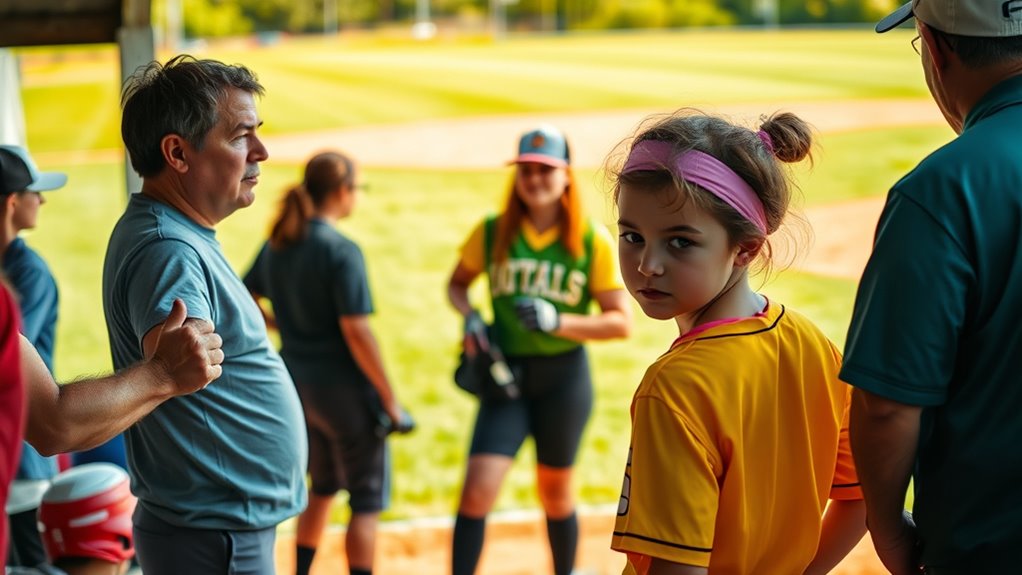
Being a softball parent can be rewarding, but it’s important to remember that certain behaviors can do more harm than good. One of the biggest pitfalls is trying to take over player coaching during the game. Your child’s coach is there to guide and develop their skills, so stepping in with unsolicited advice or instructions on the sidelines can undermine the coach’s authority and confuse your player. Instead of offering constant commentary, focus on supporting your child by cheering them on, encouraging effort, and showing confidence in the coach’s decisions. Remember, your role is to motivate positively, not to micromanage their every move.
Another common mistake is sideline arguing with officials, coaches, or even other parents. Engaging in disputes or yelling at referees creates a tense environment and sets a poor example for your child. It can also lead to unnecessary ejections or penalties that distract from the game. Instead, model sportsmanship by remaining calm, respectful, and composed regardless of the call or situation. If you have concerns about a decision, address them calmly after the game or through appropriate channels, rather than during the heat of the moment.
It’s also vital to avoid putting undue pressure on your child to perform. While it’s natural to want them to succeed, pushing them with constant criticism or high expectations can damage their confidence and enjoyment of the game. Focus on praising their effort and improvement, not just the outcome. Celebrate small victories and remind them that playing well and having fun matter most.
Additionally, don’t neglect your own behavior — losing your temper or yelling at your child during the game can be very upsetting for them. Instead, practice patience and keep your emotions in check. Remember, your attitude influences theirs, and fostering a positive environment helps your child develop a love for the sport.
Finally, steer clear of gossiping or badmouthing other players, parents, or coaches. Such negativity creates unnecessary drama and can divide the team. Instead, promote camaraderie and respect, showing your child how to be a gracious competitor and teammate. Your actions set the tone for their experience, so choose kindness, patience, and support every time you’re on the sidelines.
Furthermore, understanding the importance of proper equipment and safety measures can help ensure your child’s well-being and enjoyment of the game.
As an affiliate, we earn on qualifying purchases.
Frequently Asked Questions
How Can Parents Support Their Child’s Enjoyment of Softball?
You can support your child’s enjoyment of softball through consistent parental encouragement, celebrating their efforts and progress. Show sportsmanship by modeling respectful behavior towards coaches, players, and officials. Stay positive during wins and losses, emphasizing fun and learning rather than just winning. Attend their games, cheer them on, and listen to their feelings. Your active involvement and respectful attitude help foster a love for the game and boost their confidence.
What Are the Signs of Excessive Parental Pressure?
Remember, “too many cooks spoil the broth.” If you notice your child’s parental anxiety rising, they might show signs of excessive pressure, like withdrawal, irritability, or avoiding practice. They may seem overwhelmed by coaching feedback or lose their enthusiasm. Keep communication open, support their efforts, and remind them that growth matters more than perfection. Recognizing these signs early helps foster a positive environment and keeps their love for softball alive.
How Should Parents Handle Disagreements With Coaches?
When disagreements with coaches arise, you should prioritize parent-coach communication. Approach the coach calmly and privately to discuss your concerns, avoiding sideline behavior that can undermine authority. Focus on understanding their perspective and sharing yours respectfully. Remember, maintaining a positive dialogue helps resolve issues effectively, fosters a supportive environment, and shows your child that respectful communication is key to resolving conflicts.
When Is It Appropriate to Discuss Playing Time Concerns?
You should discuss playing time concerns privately with the coach when you notice your child’s player selection or coaching decisions seem unfair or unclear. Approach the conversation respectfully, focusing on your child’s development and team goals. Avoid making demands or expressing frustration in public. Timing matters—wait until practice or a suitable moment, and be open to understanding the coach’s perspective while sharing your concerns constructively.
What Are Healthy Ways for Parents to Show Team Spirit?
You can show team spirit by actively supporting your child’s teammates and celebrating their efforts. Engage in positive sideline behavior, cheering respectfully and avoiding negative comments. Your parental involvement should focus on encouragement rather than pressure, creating a supportive environment. Demonstrating enthusiasm for the game and respecting all players helps foster a healthy team atmosphere, making practices and games enjoyable for everyone while setting a good example for your child.
As an affiliate, we earn on qualifying purchases.
Conclusion
Remember, supporting your child’s love for softball means staying positive and respectful. Avoiding common pitfalls like yelling or criticizing can make a huge difference in their experience. Did you know that kids whose parents are supportive are 50% more likely to enjoy sports and stay active? By focusing on encouragement and teamwork, you help your child develop confidence and lifelong skills. Keep these tips in mind, and watch their passion for softball thrive!
As an affiliate, we earn on qualifying purchases.
As an affiliate, we earn on qualifying purchases.
Columbus Day / Indigenous Peoples' Day Picks
long weekend sales
As an affiliate, we earn on qualifying purchases.