
When using a massage gun, focus on muscle groups like shoulders, thighs, and calves to relieve tension effectively. Avoid bony areas such as joints, the spine, neck front, and bony prominences to prevent injury. Keep movements steady and use gentle pressure, adjusting as needed. Always listen to your body and stop if you feel pain. For best results and safety tips, continue exploring how to maximize your massage gun sessions safely.
Key Takeaways
- Use massage guns on large muscle groups like shoulders, thighs, and calves to relieve tension and promote flexibility.
- Avoid applying directly over bony areas, joints, and the spine to prevent injury and nerve damage.
- Target trigger points and muscle knots carefully, focusing on soft tissue rather than bony prominences.
- Steer clear of sensitive zones such as the front of the neck, collarbone, elbows, and knees.
- Always monitor your body’s response, stop if pain occurs, and consult professionals for persistent or severe discomfort.
As an affiliate, we earn on qualifying purchases.
How Do Massage Guns Work, and Why Are They Good for You?

Massage guns work by delivering rapid, targeted vibrations to your muscles, which helps increase blood flow and reduce muscle tension. These vibrations penetrate deep into trigger points—knots of tight muscle fibers—that often cause pain and discomfort. By targeting these spots, a massage gun can effectively loosen tight areas and alleviate soreness. Additionally, they promote fascia release, helping to break down adhesions in the connective tissue surrounding your muscles. This process improves flexibility and reduces stiffness, making recovery faster. The rhythmic pulses stimulate circulation and encourage the removal of metabolic waste, which accelerates healing. Overall, massage guns are a powerful tool for managing muscle tightness, easing pain, and supporting your muscles’ natural recovery processes.
As an affiliate, we earn on qualifying purchases.
How Can You Identify Muscle Tension and Target the Right Spots?

To effectively target muscle tension with a massage gun, you first need to learn how to identify where your muscles feel tight or sore. Pay attention to trigger points—small, sensitive spots that cause pain or discomfort when pressed—and muscle knots, which are tight, hard areas often resulting from overuse or stress. Use your fingers to palpate muscles gently; tender spots or lumps indicate tightness. When you find a trigger point or muscle knot, focus the massage gun directly on that area, applying gentle pressure and slow movements. Remember, these spots may be tender but shouldn’t be painfully painful. Recognizing these signs allows you to target your massage gun precisely, helping release tension and improve your muscle flexibility. Being aware of common muscle strain patterns can further enhance your effectiveness in relieving discomfort. Additionally, understanding muscle anatomy can aid in more precise targeting and prevent injury. Learning to identify muscle fatigue signs can also help you avoid overusing certain areas and reduce the risk of injury. Developing a good understanding of muscle response to pressure can improve your overall self-massage technique, making it more effective and safe.
massage gun for shoulders and thighs
As an affiliate, we earn on qualifying purchases.
As an affiliate, we earn on qualifying purchases.
Where Should You Use Your Massage Gun for the Best Relief?

Wondering where to use your massage gun for maximum relief? Focus on trigger points, those tight knots that cause pain or discomfort. Applying gentle pressure to these spots can help release muscle tension and reduce pain. Target areas with fascia restrictions, as massage guns can assist in fascia release, improving flexibility and movement. Use the device along muscle groups like shoulders, thighs, and calves, where tension often accumulates. Be cautious around bony areas or joints, avoiding direct contact that could cause discomfort. For best results, start with light pressure and gradually increase as needed. Incorporating proper technique can enhance the effectiveness of your massage gun sessions. Regular use on trigger points and fascia can support muscle recovery and improve overall muscle health. Understanding muscle anatomy can also help you target treatment more effectively. Additionally, paying attention to muscle groups that tend to hold tension can optimize your relief efforts. Incorporating self-massage practices can further augment the benefits of your massage gun routine.
As an affiliate, we earn on qualifying purchases.
Which Zones Should You Avoid When Using a Massage Gun?

You should avoid using your massage gun on bony areas, as the vibrations can cause discomfort or injury. Stay clear of the spine to prevent any nerve damage or irritation. Also, limit use around your neck, since this area is sensitive and more prone to strain. Additionally, be cautious of indoor air quality factors, such as dust or microplastics, which can exacerbate discomfort if inhaled during massage sessions. Considering that support and boundaries are essential for safe massage practices, always ensure the environment is clean and free of irritants to maximize comfort and safety. Furthermore, maintaining good ergonomic conditions in your space can help reduce overall discomfort and promote better recovery after using a massage gun. Proper equipment maintenance also ensures your massage device functions safely and effectively, preventing potential malfunctions during use.
Avoid Bony Areas
Because bony areas are less cushioned and more sensitive, you should avoid using a massage gun on bony prominences and delicate areas. These spots, like the edges of your bones or joints, lack muscle tissue to absorb the impact, increasing the risk of discomfort or injury. Applying pressure directly over bony prominence can cause pain or even bruising. Focusing your massage on muscles and soft tissues instead allows the device to work effectively without causing harm. Remember, sensitive areas such as the collarbone, elbow, or kneecap are especially vulnerable. Understanding body anatomy helps you identify these areas and ensure a safe and beneficial massage experience while avoiding unnecessary discomfort or injury. Additionally, being aware of muscle and soft tissue zones can enhance your overall safety during massage gun use. Recognizing bony landmarks is essential for safe application and preventing accidental harm. Knowing how to identify vulnerable areas helps in preventing injuries during use.
Steer Clear of Spine
The spine is a sensitive area that warrants careful attention when using a massage gun. You should avoid applying direct pressure over the vertebral column to protect your spinal health and ensure vertebral safety. Massaging the surrounding muscles is beneficial, but the spine itself is too fragile for intense percussion.
Be cautious and steer clear of:
- The vertebral bones
- The spinal cord area
- The bony prominences along the spine
- The cervical vertebrae in the neck
- The lower back vertebrae, especially near the sacrum
Focusing on muscle tissue around the spine helps prevent injury and maintains your spinal health. Always prioritize safety and avoid direct contact with the spine to prevent discomfort or damage.
Limit Neck Usage
While massage guns can effectively relieve tension, certain zones on the neck should be avoided to prevent injury. Your neck safety is essential, so steer clear of the front of the neck and the cervical spine area. Applying pressure here risks hitting sensitive arteries, nerves, or the windpipe, which can cause discomfort or more serious issues. Always exercise cervical caution and focus on the muscles around the neck’s sides and base. Keep the device at a safe distance from the throat and avoid pressing directly on bony structures. If you feel any pain or discomfort, stop immediately. Remember, gentle, targeted use is key to safely benefiting from your massage gun without risking neck injury. Understanding anatomical sensitivities can help guide safer application techniques. Additionally, being aware of common muscle groups in the neck can enhance your safety and effectiveness when using a massage gun.
Tips for Safe and Effective Massage Gun Use at Home or Gym

To get the most benefit from your massage gun, focus on using proper technique and selecting the right settings for your needs. Keep an eye on how your body responds, stopping if you experience pain or discomfort. Staying attentive guarantees you use your device safely and effectively every time.
Proper Technique and Settings
Using a massage gun safely and effectively requires paying attention to proper technique and settings. Start with low pressure settings to avoid overstimulation or discomfort, gradually increasing as needed. Adjust the massage speed based on your target area; slower speeds work well for deeper tissue, while faster speeds suit surface muscles. Keep the device moving smoothly to prevent tissue irritation. Avoid holding the massage gun in one spot for too long to reduce risk of bruising. Always listen to your body, stopping if you feel pain or excessive discomfort. Remember, proper technique enhances benefits and minimizes risks.
- Use gentle pressure initially, increasing gradually
- Adjust massage speed to suit muscle depth
- Keep movements steady and smooth
- Avoid prolonged contact on one spot
- Pay attention to your body’s responses
Monitoring Body Responses
Paying close attention to how your body responds during massage gun use helps guarantee safety and effectiveness. If you notice increased muscle fatigue or soreness beyond normal relief, reduce the intensity or duration. Keep an eye out for skin irritation, redness, or discomfort, which signals you should stop or modify your technique. Monitoring your body’s reactions prevents overstimulation or damage, especially in sensitive areas. If you feel sharp pain or persistent discomfort, pause immediately and reassess your settings. Staying attentive ensures you target tight muscles effectively without risking skin irritation or exacerbating fatigue. Remember, every body responds differently, so listen carefully and adjust accordingly to maximize benefits safely.
Common Mistakes to Avoid With Your Massage Gun

Even though massage guns can provide quick relief and muscle recovery, many users make mistakes that can reduce their effectiveness or cause injury. One common mistake is falling for massage gun myths or believing common misconceptions about their use. To get the best results, avoid these pitfalls:
Massage guns are effective but can cause injury if myths and misconceptions lead to misuse.
- Using the device on bony areas or joints
- Applying excessive pressure or holding it in one spot too long
- Relying solely on a massage gun for all muscle pain
- Ignoring your body’s signals or pain
- Overusing it without rest days
Understanding these errors helps prevent injury and maximizes benefits. Remember, some massage gun myths can lead you to misuse the device, so stay informed and cautious. Proper technique and awareness are key to safe, effective muscle recovery.
When Should You See a Professional Instead of Doing It Yourself?

While massage guns can be effective for muscle relief, there are times when seeking professional help is essential. If you experience persistent pain, swelling, or suspect an injury, schedule a professional consultation instead of DIY treatments. An expert can perform a thorough injury assessment, identifying underlying issues that a massage gun might not address safely. Use the table below to determine when professional intervention is recommended:
| Symptom/Condition | Action Needed |
|---|---|
| Severe or ongoing pain | Consult a healthcare provider |
| Sudden swelling or bruising | Seek injury assessment |
| Numbness or tingling | Get professional evaluation |
| Restricted movement | See a specialist |
| Signs of nerve impingement | Prioritize professional advice |
Trust your body—if in doubt, consult a professional before using a massage gun.
Summary: Maximize Benefits and Stay Safe With Proper Technique

Using a massage gun correctly can considerably enhance your recovery and muscle relief. To maximize benefits and stay safe, focus on proper technique. Target trigger points and muscle knots carefully, avoiding bones and sensitive areas. Use light pressure initially, gradually increasing as needed. Keep sessions to about 1-2 minutes per muscle group to prevent overuse. Always listen to your body—stop if you feel pain or discomfort. Stay hydrated and stretch afterward to improve results. Remember, improper use can cause bruising or injury. For best outcomes, learn the right angles and avoid prolonged pressure on one spot. Incorporate these tips to make your massage gun routine effective and safe, ensuring you get relief without risking harm.
Use your massage gun carefully—target knots, avoid bones, and limit sessions for safe, effective relief.
- Target trigger points and muscle knots effectively
- Avoid bones, joints, and sensitive areas
- Use gentle pressure to start
- Limit session time per muscle group
- Listen to your body’s signals
Frequently Asked Questions
Can Massage Guns Replace Professional Massages Entirely?
A massage gun can’t fully replace professional massages because of its limitations, but it offers great self-massage benefits for muscle relief and relaxation. You can use it regularly to target sore spots, improve circulation, and reduce tension. However, it may not handle deep tissue issues or complex therapies that a trained therapist provides. For ideal results, combine self-massage with professional treatments when needed.
Are Massage Guns Effective for Chronic Pain Management?
Yes, massage guns can provide some relief for chronic pain, but their effectiveness varies. They may help soothe soreness and increase circulation, offering temporary comfort. However, for persistent pain, you should seek professional advice because massage guns aren’t an all-encompassing cure. While they can assist with chronic pain relief, they shouldn’t replace targeted treatments or medical interventions. Use them wisely, and always consult a healthcare provider if pain persists.
How Long Should I Use a Massage Gun on One Spot?
You should generally use a massage gun on one spot for about 15 to 30 seconds, following duration guidelines to avoid overstimulation. Focus on spot treatment by gently pressing into tense muscles and moving the device slowly. If you notice discomfort, reduce the time or intensity. Always listen to your body and avoid prolonged use in one area to prevent irritation or bruising.
Can Children or Seniors Safely Use Massage Guns?
Children and seniors can use massage guns safely, but you should prioritize child safety and senior use guidelines. Always choose devices with lower intensity settings for children and monitor their use closely. For seniors, verify the massage gun isn’t applied over sensitive areas or bones. Consult a healthcare professional before use, especially if there are medical conditions involved. Proper supervision and cautious application help confirm safe, beneficial massage gun use for both groups.
Do Different Attachments Provide Different Therapeutic Benefits?
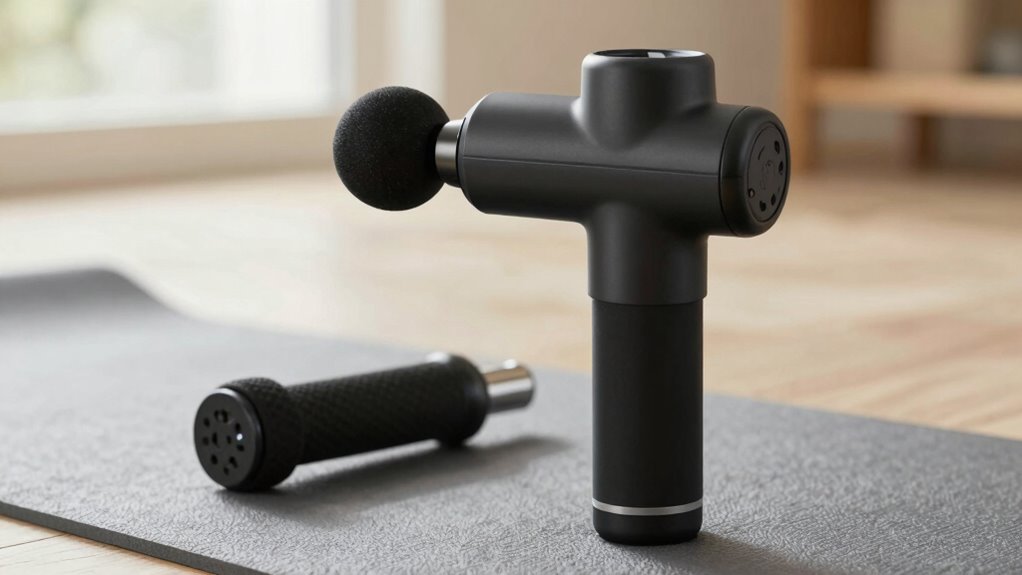
Yes, different attachments provide different therapeutic benefits. With a variety of attachments, you can target specific muscles or areas more effectively. For example, a ball attachment works well for larger muscle groups, while a pointed tip offers deeper, precise relief. The attachment variety allows you to customize your massage, addressing various needs like soreness, stiffness, or relaxation, making your massage gun more versatile and effective for your personal therapy.
Conclusion
By mastering proper massage gun techniques, you’ll unseal relief faster than you can say “muscle magic.” Remember to target the right spots, avoid risky zones, and listen to your body. When used correctly, your massage gun can become your ultimate weapon against tension and soreness. Stay cautious, stay informed, and you’ll experience benefits so impressive, they’ll feel like a personal spa day—every day! Keep safe, and enjoy the powerful healing at your fingertips.