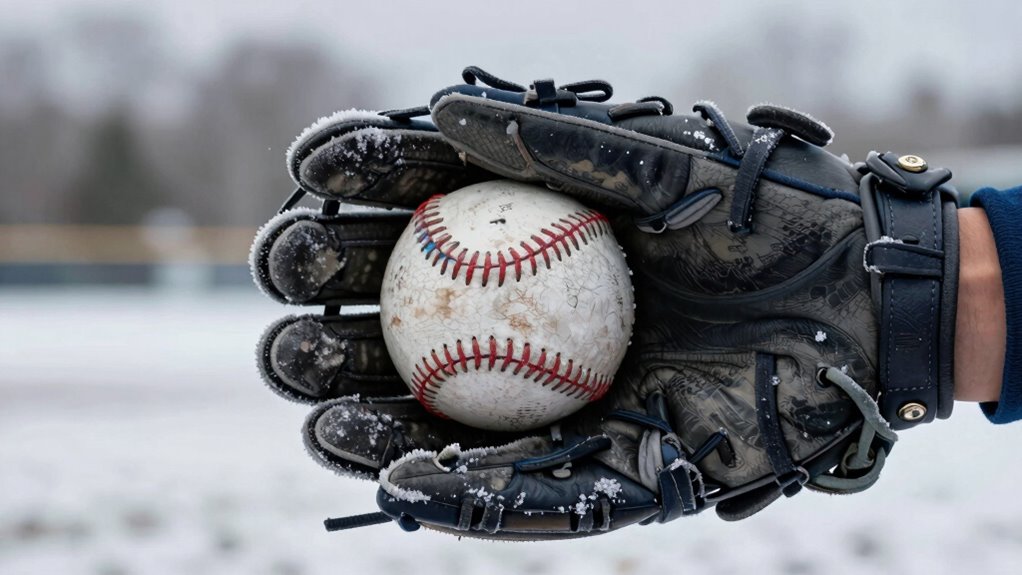

To keep your hands functional during cold-weather softball, you should layer properly with moisture-wicking base layers, insulated glove liners, and thermal gloves that fit snugly without restricting movement. Add hand warmers for instant heat and choose outerwear that blocks wind while allowing flexibility. Regularly adjust your layers if you get too hot or cold, and keep gloves dry and well-maintained. Stay focused on these strategies, and you’ll discover how to stay warm and agile all game long.

Get sports gear delivered free with Prime
- Fast, free delivery on millions of items
- Prime Video, Amazon Music and more included
- Member-only deals all year
Key Takeaways
- Layer with moisture-wicking gloves, glove liners, and hand warmers to trap heat and maintain hand flexibility during cold games.
- Use insulating, stretchable fabrics like wool or synthetic materials for optimal warmth without restricting movement.
- Adjust layers mid-game by removing outerwear or adding breathable layers to stay comfortable and prevent overheating or chills.
- Select outerwear that is windproof, insulated, and breathable to block cold air while allowing mobility and moisture management.
- Regularly maintain gear, use dehumidifying products, and keep hand warmers accessible to ensure hands stay warm and responsive.
As an affiliate, we earn on qualifying purchases.
How Can I Keep My Hands Warm When Playing Softball in Cold Weather?

When playing softball in cold weather, keeping your hands warm is essential for maintaining good grip and performance. One effective method is using hand warmers, which provide instant heat and can be conveniently placed inside your gloves. Pairing these with glove liners creates an additional insulating layer, trapping heat close to your skin. Opt for thin, moisture-wicking liners that fit snugly to avoid restricting movement. Before gameplay, activate your hand warmers and slide them into the glove liners for maximum warmth. Remember to replace or reheat the warmers as needed during breaks. These simple tools help keep your hands flexible and responsive, preventing stiffness and discomfort, so you can focus on your game instead of the cold. Additionally, using proper layering techniques ensures your hands stay warm without overheating or restricting movement. Incorporating insulating materials designed for cold weather can further enhance your comfort and performance during chilly games. Proper hand coverage with gloves that are both insulated and breathable can also make a significant difference in maintaining warmth and dexterity throughout the game. To maximize warmth, consider selecting battery-powered hand warmers, which can provide sustained heat for extended periods during play. Employing moisture management strategies, such as moisture-wicking gloves and liners, can also help keep your hands dry and warm in damp conditions.
thermal glove liners for softball
As an affiliate, we earn on qualifying purchases.
As an affiliate, we earn on qualifying purchases.
Choosing Base Layers for Hands and Body Warmth

Choosing the right base layers is key to staying warm during cold weather softball. You’ll want materials that trap heat, offer good fit and flexibility, and can be layered effectively. By selecting the right combination, you’ll stay comfortable and perform your best on chilly days. Opting for tights made from moisture-wicking performance fabrics can also help keep you dry and warm during active play. Additionally, selecting thermal insulation that is lightweight and breathable can enhance overall warmth without restricting movement. Incorporating layers with moisture management properties is essential to prevent sweat from cooling and to maintain consistent body temperature. Using quality gear designed specifically for winter sports can further improve your comfort and performance.
Materials for Warmth
Selecting the right materials for your base layers is essential to staying warm during cold weather softball games. Thermal fabrics help trap heat close to your skin, providing insulation without adding bulk. Look for materials like wool or synthetic options specifically designed for warmth, as they retain heat even when damp. Moisture wicking materials are equally important; they draw sweat away from your skin to keep you dry and prevent chilling. Combining thermal fabrics with moisture-wicking layers ensures you stay warm and comfortable, no matter how active you are on the field. Material efficiency is crucial in selecting fabrics that maintain heat without sacrificing mobility. Proper layering techniques enhance warmth and flexibility during play, allowing you to perform at your best. Avoid cotton, which absorbs moisture and can lead to rapid heat loss. Investing in high-quality base layers made from these materials makes a significant difference in maintaining your body heat during cold games. Understanding insulation properties can help you choose the most effective fabrics for varied weather conditions.
Fit and Flexibility
Ensuring your base layers fit well and offer enough flexibility is essential for maintaining warmth and mobility during cold weather softball. Proper fit prevents bunching or constriction, which can hinder hand mobility and reduce your ability to grip and throw effectively. Look for materials that stretch comfortably with your movements, so your hands and body aren’t restricted during play. Incorporate flexibility training into your routine to improve joint movement, making it easier to perform quick, precise actions. Avoid overly tight or loose layers that compromise comfort and function. Selecting well-fitting, flexible base layers helps sustain warmth without sacrificing the freedom needed for ideal performance on the field. Prioritize comfort and mobility to keep both your hands and body functioning at their best in cold conditions. Proper fit is crucial for optimal performance and comfort in cold weather sports. Additionally, choosing stretchable fabrics enhances overall mobility and prevents discomfort during active movements, especially when maintaining body temperature effectively.
Layering Strategies
Effective layering starts with identifying the right base layers that keep your hands and body warm without restricting movement. For your hands, thermal gloves are essential; they trap heat while allowing dexterity needed for catching and throwing. On your feet, moisture wicking socks prevent sweat buildup, which can lead to cold feet and discomfort. Choose socks made from synthetic fibers designed to wick moisture away from your skin, keeping your feet dry and warm during long innings. When selecting base layers for your body, consider thermal undershirts and leggings that fit snugly without restricting movement. These layers act as a foundation, maintaining core warmth and preventing heat loss. Properly chosen base layers ensure your hands stay functional and your body stays warm enough to perform at your best. Incorporating sustainable materials into your base layers can also help you stay warm while supporting environmentally friendly choices.
battery-powered hand warmers for sports
As an affiliate, we earn on qualifying purchases.
As an affiliate, we earn on qualifying purchases.
What Type of Outerwear Keeps You Warm and Moves With You?
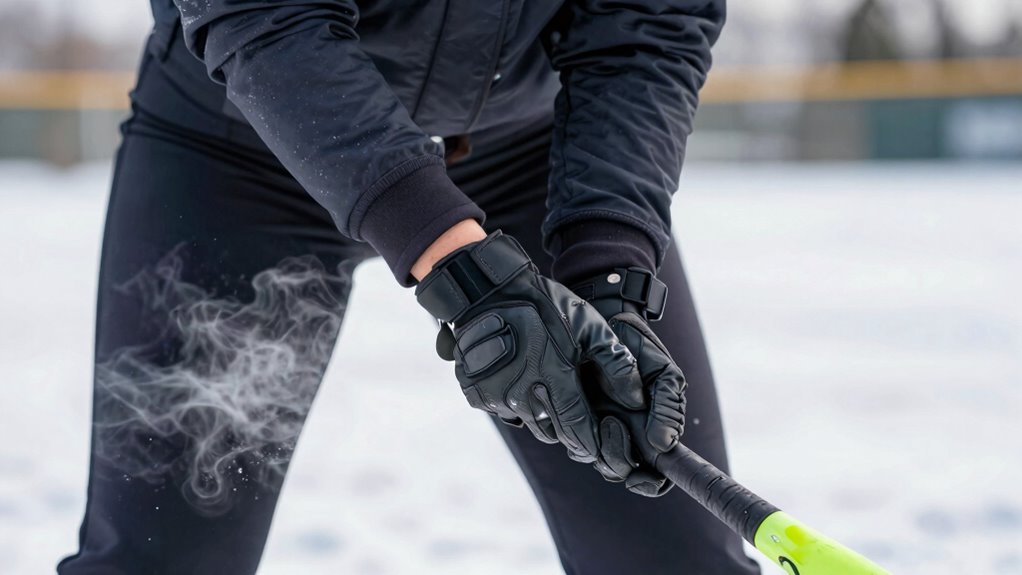
When choosing outerwear for cold weather softball, look for pieces made from flexible, breathable materials that let you move freely. Insulated designs help keep you warm without adding bulk, while windproof features block chilly gusts. Combining these elements guarantees you stay warm and agile on the field. Additionally, selecting layers that can be easily adjusted for temperature changes ensures comfort and performance throughout the game. Incorporating performance fabrics can further enhance your mobility and comfort during play. Opting for clothing with moisture-wicking properties can also help keep sweat away from your skin, maintaining dryness and warmth. Understanding the importance of layering systems helps athletes adapt quickly to changing weather conditions during the game.
Flexible, Breathable Materials
Choosing the right outerwear for cold-weather softball means prioritizing materials that are both flexible and breathable. Look for fabrics that offer thermal insulation without sacrificing mobility, so you stay warm but can still move freely. Moisture-wicking fabrics are essential—they pull sweat away from your skin, keeping you dry and comfortable during intense plays. These materials stretch and flex with your movements, preventing restrictions that can hinder your performance. Breathable fabrics also allow excess heat and moisture to escape, reducing the risk of overheating or getting too sweaty. By selecting outerwear made from these flexible, breathable materials, you guarantee your body stays at a comfortable temperature, your movements remain unrestricted, and you maintain focus on the game rather than discomfort.
Insulated, Windproof Designs
To stay warm and mobile during cold-weather softball, insulated, windproof outerwear is essential. Thermal insulation traps body heat, keeping you warm even in chilly conditions. Look for windproof gear that blocks cold air from penetrating your layers, preventing heat loss and maintaining your flexibility on the field. Materials like windproof shells combined with insulating linings allow you to move freely without feeling restricted. Opt for designs that are lightweight yet effective at blocking the wind, so you stay warm without sacrificing agility. The right insulated, windproof outerwear ensures you can focus on your game, not on shivering or discomfort. Investing in quality windproof gear enhances your performance and keeps you comfortable throughout every inning.
moisture-wicking softball base layers
As an affiliate, we earn on qualifying purchases.
As an affiliate, we earn on qualifying purchases.
How to Select Gloves That Stay Warm and Maintain Dexterity

Selecting the right gloves for cold weather softball means finding a balance between warmth and flexibility. You want gloves that provide sufficient glove insulation without sacrificing dexterity. Here are four tips to help you choose:
- Look for gloves with a snug fit that won’t restrict movement.
- Prioritize models with grip enhancement features for better control.
- Choose gloves with a thin, insulating layer designed for warmth without bulk.
- Opt for materials that wick moisture away, keeping your hands dry and warm.
How to Stay Dry and Warm During the Game

When the temperature drops and the wind picks up, staying dry and warm becomes essential to perform your best on the field. Cold weather hydration is important; even in chilly conditions, you need to drink water to stay alert and avoid dehydration. Keep your gear dry by using waterproof or water-resistant clothing and avoid sweating too much, which can make you cold once you stop moving. Regular softball glove maintenance is vital—keep your gloves dry and well-conditioned to guarantee they stay flexible and functional. Consider using glove sprays or dehumidifying packs to prevent moisture buildup. Staying dry and warm allows your hands to stay nimble, so you can catch, throw, and swing effectively, even in cold, windy weather.
Adjusting Your Layers for Comfort Mid-Game
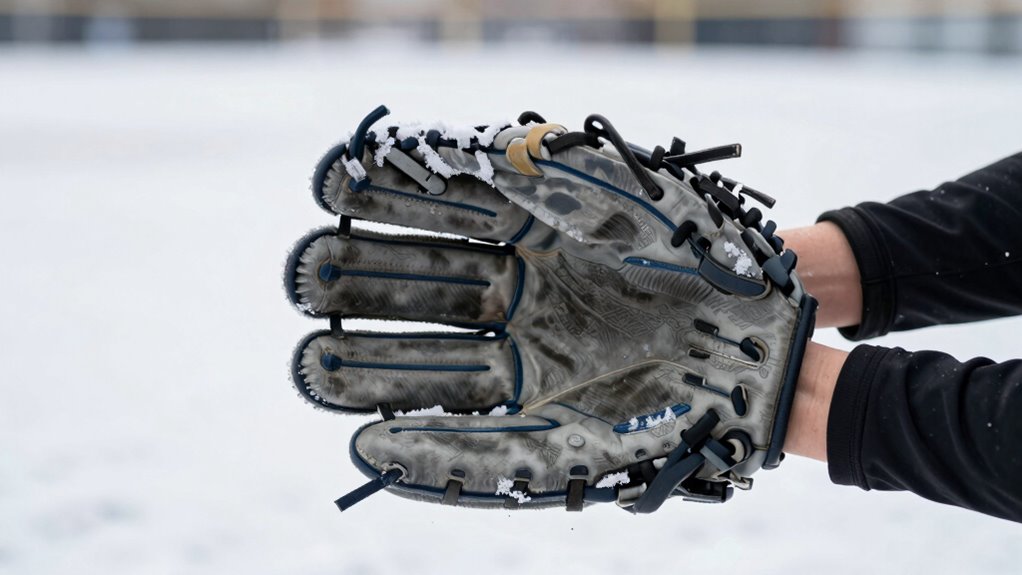
As the game progresses and your body temperature fluctuates, adjusting your layers guarantees you stay comfortable and focused. To maintain mid game comfort, consider these layer adjustments:
- Remove an outer layer if you notice you’re overheating.
- Add a lightweight, breathable layer if you feel yourself cooling down.
- Zipper or unbutton your jacket to regulate heat quickly.
- Keep hand warmers accessible for quick layer adjustments in your gloves.
These simple modifications help prevent overheating or chills, ensuring your hands stay functional. Regularly assess how you feel and make targeted layer adjustments to stay comfortable without overheating or freezing. Staying proactive with layer adjustments keeps your focus sharp and performance steady throughout the game.
Signs of Cold-Hand Fatigue and How to Prevent It
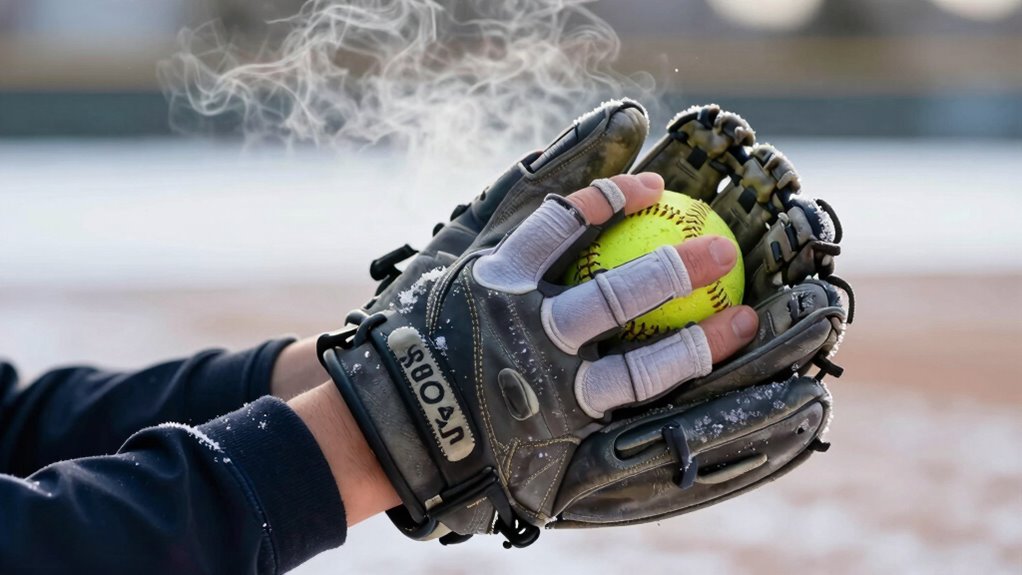
Cold-hand fatigue often sneaks up on players during chilly games, making it harder to catch or throw accurately. You might notice your fingers feeling numb, tingly, or weak, signaling cold hand fatigue. Your grip may loosen, and coordination declines, increasing the risk of mistakes. If you ignore these signs, frostbite prevention becomes critical, as prolonged exposure can cause tissue damage. To prevent this, pay attention to your hands and act quickly when you feel fatigue setting in. Keep moving your fingers, adjust your gloves, or take quick breaks to warm up. Staying proactive helps maintain dexterity and reduces the risk of cold-related injuries, keeping your hands functional and safe throughout the game. Recognizing these signs early is key to staying in the game.
Preparing Your Softball Gear for Cold Weather Play
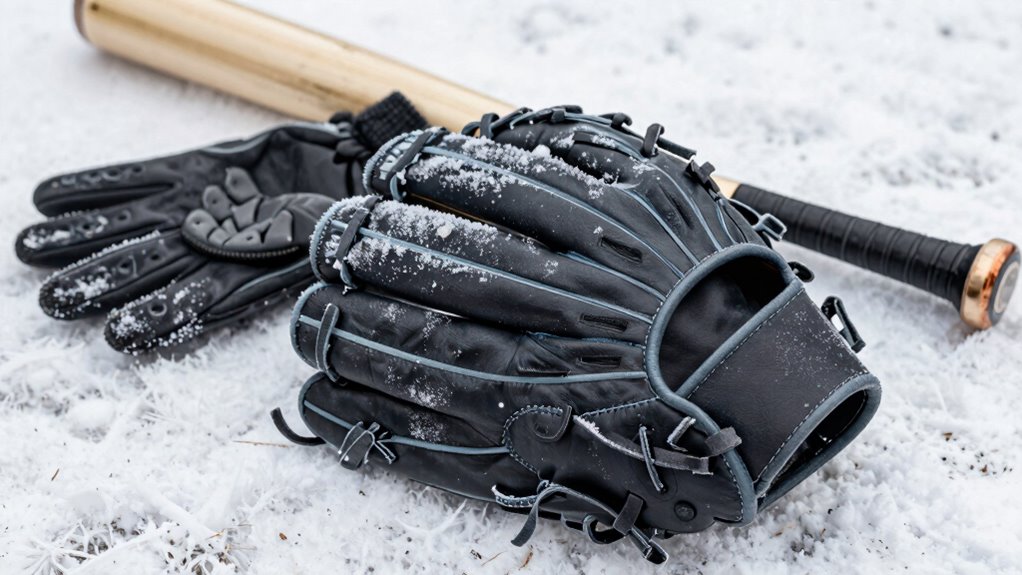
To stay warm and maintain performance during cold weather softball games, you need to prepare your gear effectively. Properly readying your equipment helps keep your batting stance steady and ensures smooth softball field maintenance. Here are four key steps:
- Layer your gloves and wear thermal hand warmers to keep your hands flexible.
- Use insulated, moisture-wicking apparel to stay warm without restricting movement.
- Check your softball gear, including bat grips and gloves, for wear and tear caused by cold conditions.
- Keep your equipment in a warm place before games to prevent stiffening and guarantee optimal grip and control.
Preparing your gear this way helps you stay focused on the game, rather than battling cold hands or slipping on icy patches.
Frequently Asked Questions
What Are the Best Materials for Cold Weather Softball Gloves?
You should choose softball gloves made from materials like leather or synthetic fabrics that prioritize durability and moisture resistance. Leather offers excellent durability, but synthetic options often provide better moisture resistance, keeping your hands dry and warm. Look for gloves with reinforced stitching and water-resistant coatings to guarantee they withstand cold conditions and last through tough games. These materials help maintain flexibility and grip, making sure your hands stay functional even in chilly weather.
How Can I Prevent Frostbite on My Hands During Games?
To prevent frostbite on your hands during games, prioritize proper hand safety strategies. Keep your hands warm with insulated gloves and make certain they stay dry. Take regular breaks to warm up and avoid prolonged exposure to freezing temperatures. Stay active to stimulate circulation, and don’t forget to layer clothing effectively. By combining these frostbite prevention tips, you’ll safeguard your hands and stay focused on the game, even in icy conditions.
Are Heated Hand Warmers Effective for Softball Players?
Heated hand warmers are effective for softball players because they provide quick, targeted warmth that complements glove insulation. When you use heated hand warmers inside your gloves, they help keep your hands warm and improve dexterity during cold games. Just guarantee you activate them properly and fit them snugly to maximize warmth. Combining heated hand warmers with good glove insulation offers the best defense against cold hands on the field.
How Do I Layer if I Start Overheating Mid-Game?
If you start overheating mid-game, you should adjust your layers to stay comfortable. Remove or unzip your outer layer to allow better airflow, and consider shedding a thermal or insulating layer if needed. Managing overheating is vital for maintaining focus and performance, so listen to your body and make quick adjustments to stay warm without getting too hot. Proper layering helps you stay functional and comfortable throughout the game.
Can Hand Exercises Improve Circulation and Warmth in Cold Weather?
Yes, hand massage and circulation exercises can improve warmth and circulation in cold weather. You should regularly perform simple circulation exercises like finger stretches or squeezing a stress ball, and give your hands gentle massages to boost blood flow. These activities help keep your hands warmer and more functional during cold games. Incorporate them into your routine to maintain better circulation and prevent cold-related numbness or stiffness.
Conclusion
By layering smartly and choosing the right gear, you can keep your hands warm and maintain your performance in cold weather softball. For example, imagine you’re in a vital playoff game, and thanks to your insulated gloves and moisture-wicking base layers, your hands stay nimble despite freezing temperatures. With proper preparation and adjustments, you’ll stay comfortable, focused, and ready to play your best—even when the weather turns chilly.
NFL season / tailgating Picks
team gear
As an affiliate, we earn on qualifying purchases.