Swing sensors measure how fast your bat moves through the hitting zone by capturing acceleration and rotational data. They don’t directly assess your bat’s weight, grip strength, or technique but analyze your swing’s speed and movement patterns. Factors like calibration affect accuracy, and higher speed doesn’t always mean more power. If you want to understand what your bat speed really indicates—and what it misses—there’s more to uncover below.
Key Takeaways
- Bat speed sensors measure how fast the bat moves through the hitting zone during a swing, not the physical attributes like weight or grip strength.
- They use accelerometers and gyroscopes to track real-time motion, providing data on swing velocity, but do not directly assess power or contact quality.
- Sensor calibration and technology influence measurement accuracy; external factors and swing angles can affect the data captured.
- Bat speed indicates potential for power but does not account for timing, contact point, or swing mechanics critical for effective hitting.
- Swing sensors focus on movement data and do not measure mental focus, decision-making, or nuanced technique elements of hitting performance.

Blast Motion Baseball Swing Analyzer – Improve Your Swing at Every Level – Batting Trainer – Real-time Feedback, Swing Metrics, Video Capture Highlights, Track Performance (GEN3 Sensor)
MAKE EVERY SWING COUNT: With Blast's natural motion capture technology, there is no need for sensor calibration -…
As an affiliate, we earn on qualifying purchases.
As an affiliate, we earn on qualifying purchases.
What Do Swing Sensors Measure About Your Bat Speed?
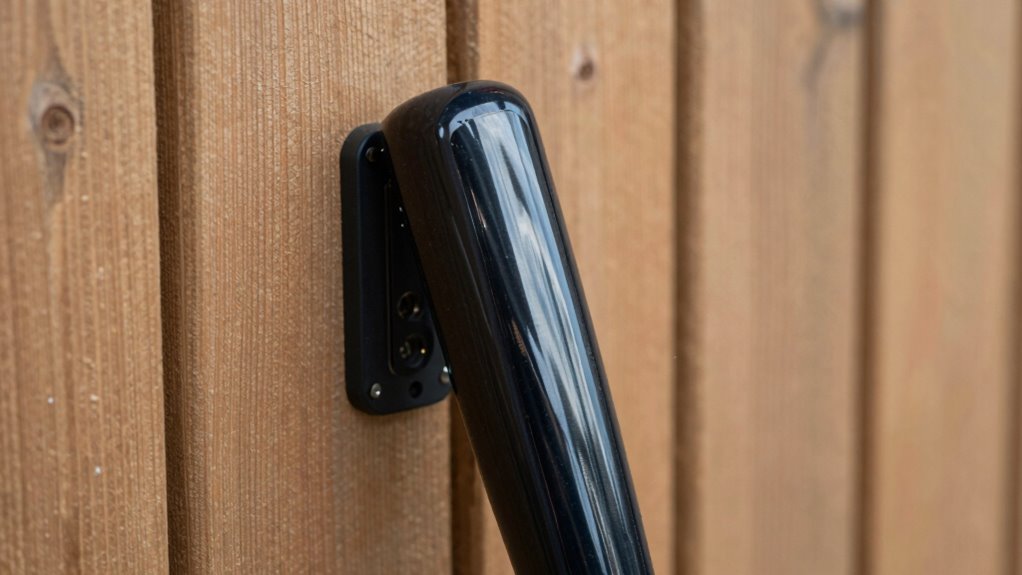
Swing sensors are designed to provide precise data on your bat speed during each swing. They measure how fast your bat moves through the hitting zone, but they don’t directly assess factors like bat weight or grip strength. Instead, they focus on the velocity of the bat itself, which can be influenced by how much force you generate. Your grip strength can affect how smoothly you swing, potentially impacting speed, but the sensor primarily captures the movement rather than the physical qualities like grip or bat weight. Remember, a lighter bat might allow quicker swings, while a heavier bat can slow you down. The sensor’s role is to track the speed, helping you understand how your swing mechanics translate into bat movement. Additionally, understanding the limitations of swing sensors can help you interpret the data more effectively. Knowing the body position and how it influences swing dynamics can also enhance your training. Furthermore, factors like bat speed are crucial for assessing your overall swing performance but should be considered alongside other physical and technical elements for a comprehensive evaluation. Recognizing that swing speed is just one aspect, integrating data on swing mechanics can provide a more complete picture of your hitting proficiency. To optimize your training, focusing on technique adjustment based on sensor feedback can lead to better results.

DRM Hands-Free Speed Radars, Multi-Sports Radar Gun for Baseball/Lacrosse/Soccer/Tennis/Golf, Baseball Speed Training Equipment Speed Measurement Device
Measure your shooting speed in sports such as soccer, handball, ice hockey, baseball, golf or tennis. Warning 一…
As an affiliate, we earn on qualifying purchases.
As an affiliate, we earn on qualifying purchases.
How Do Swing Sensors Calculate Bat Speed?

Swing sensors determine bat speed by analyzing data from motion sensors, such as accelerometers or gyroscopes, embedded in the device. These sensors capture the rapid movements during your swing, enabling precise bat speed measurement. Sensor technology processes this data to calculate how fast the bat moves at key points, often near impact. The calculation involves:
Swing sensors use accelerometers and gyroscopes to accurately measure bat speed during your swing.
- Tracking acceleration and rotational data throughout the swing
- Filtering out noise and irrelevant movements
- Applying algorithms to determine peak velocity
- Converting raw data into understandable bat speed metrics
This method relies on real-time data collection and sophisticated algorithms to provide an accurate estimate of your swing speed. Understanding sensor technology helps you appreciate the technology behind the readings and the accuracy of bat speed measurement. Additionally, advancements in motion sensor accuracy continue to improve the reliability of these measurements.

Blast Softball & Youth Bat Attachment (Replacement) for GEN3 Blast Sensor
BLAST SENSOR BAT ATTACHMENT: The Blast Softball and Youth Bat Attachment is designed for the Blast GEN3 sensor….
As an affiliate, we earn on qualifying purchases.
As an affiliate, we earn on qualifying purchases.
How Do Different Devices Track Bat Speed? (Sensor Comparison)

Different devices use a variety of sensors and technologies to track bat speed, which can affect their accuracy and usability. Some sensors rely on accelerometers, measuring changes in motion directly, while others use gyroscopes or magnetometers. Sensor calibration is essential; poorly calibrated devices can produce inconsistent results, leading to inaccurate readings. High-quality sensors often undergo rigorous calibration processes to guarantee device accuracy across different swings and environments. Additionally, some devices incorporate algorithms that filter out noise and account for variables like swing angle or bat orientation. As a result, their ability to consistently measure bat speed depends on both the sensor technology and proper calibration. Sensor calibration is particularly important for ensuring data reliability. Understanding these differences helps you choose a device that offers reliable, precise data for your training.

SWINGRAIL Baseball/Softball Hitting Trainer – Swing Trainer Aid for Batting & Hitting Practice – Baseball Training Equipment to Improve Bat Speed, Swing Mechanics, Contact & Timing – For Ages 9 and Up
SWINGRAIL IS A SCIENCE- BACKED PATENTED WAY TO IMPROVE YOUR SWING MECHANICS & BECOME BETTER HITTER!
As an affiliate, we earn on qualifying purchases.
As an affiliate, we earn on qualifying purchases.
What Factors Influence Bat Speed According to Sensors?

Sensors analyze multiple factors that influence the measured bat speed, giving you a clearer picture of what affects your performance. Your bat weight plays a key role—heavier bats may slow your swing but can also generate more force. Grip strength impacts control and acceleration, enabling faster, more efficient swings. Other factors include your technique, timing, and body mechanics, which sensors detect through motion data. Proper coordination ensures maximum bat speed. Additionally, the way you grip the bat can influence how quickly it accelerates during the swing. Understanding these elements helps identify areas for improvement. By monitoring these factors with sensors, you gain insights into how your physical attributes and swing mechanics contribute to your overall bat speed. Sensor technology also allows for real-time feedback, helping you make immediate adjustments to optimize performance.
Does Higher Bat Speed Always Lead to More Power?

Just because you swing faster doesn’t mean your ball will go further. Bat speed and exit velocity are connected, but other factors also influence power. For example, sound vibrations can enhance cellular regeneration and overall health, which may indirectly affect muscle performance during swings. Additionally, engine upgrades like a high-performance flywheel can improve your swing efficiency by providing more consistent power transfer throughout your motion. Moreover, understanding the biomechanics of swinging helps optimize force transfer and maximize impact. Recognizing how muscle engagement influences swing dynamics can also lead to better performance. Furthermore, paying attention to training techniques that improve coordination and timing can significantly impact your overall hitting power. Let’s explore why higher bat speed isn’t always the whole story.
Bat Speed vs. Exit Velocity
While increasing bat speed often correlates with stronger hits, it doesn’t automatically guarantee higher exit velocities or more power. Many players hold bat speed misconceptions, assuming faster swings always produce faster balls. However, exit velocity differences depend on multiple factors beyond just bat speed, including contact point, bat angle, and swing mechanics. Higher bat speed increases the potential for greater exit velocity, but it’s not the sole determinant. Key points to consider include:
- Ideal contact point enhances exit velocity more than raw bat speed
- Bat angle influences ball launch speed regardless of swing speed
- Contact quality can outweigh bat speed in generating power
- Swing path and timing considerably affect exit velocity outcomes
Understanding these nuances helps you recognize that maximizing power involves more than just increasing bat speed.
Power Depends on More
Higher bat speed alone doesn’t guarantee more power; in fact, other factors play a vital role in maximizing your hitting strength. You need to focus on bat strength and swing rhythm to truly enhance your power. A faster swing isn’t enough if your timing or core strength isn’t optimized. Consistent timing allows your bat to connect with maximum force, while strong muscles generate more energy transfer. Consider how these elements work together:
| Factor | Impact on Power |
|---|---|
| Bat Strength | Increases energy transfer efficiency |
| Swing Rhythm | Ensures optimal timing and contact |
| Technique | Improves bat control and force |
| Core Stability | Supports consistent swing motion |
Balancing these elements ensures that higher bat speed translates into real power, not just swing velocity.
Additionally, developing muscle coordination can significantly improve your ability to generate and transfer power effectively.
Limitations of Using Bat Speed Data From Swing Sensors
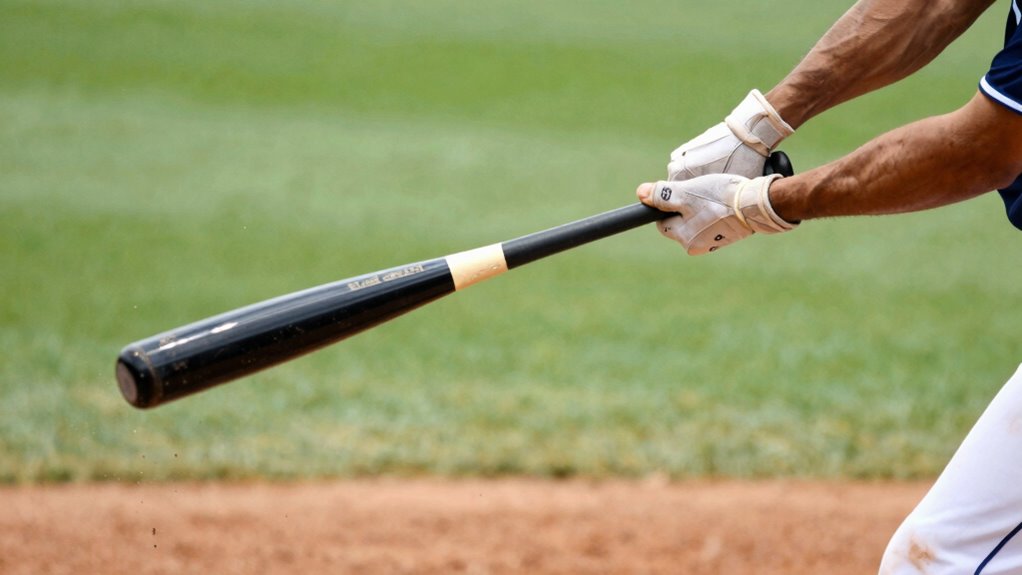
Although swing sensors can provide valuable bat speed data, there are notable limitations to relying on this information alone. Sensor calibration is essential; if not properly calibrated, data accuracy suffers, leading to misleading insights. Additionally, sensors may struggle to consistently track the swing, especially during high-velocity movements. External factors like grip, angle, and environmental conditions can skew results. You should also consider that bat speed isn’t the sole indicator of performance — data from sensors doesn’t account for timing, contact quality, or swing path. Finally, sensor placement impacts measurements considerably; even slight misalignments can affect the data. Relying solely on bat speed readings without considering these limitations can give a false sense of progress or overlook key swing elements.
How Can You Use Bat Speed Data to Improve Your Swing?

Using bat speed data helps you identify how consistent your swing is, allowing you to make targeted adjustments. By tracking these measurements, you can refine your technique for more reliable results. Additionally, analyzing bat speed trends helps you fine-tune your timing, so you hit more effectively. Incorporating insights from smart design principles can also create a more comfortable and welcoming environment for practice and improvement. Understanding the performance metrics behind your swing enables you to set measurable goals and track progress over time. Leveraging testing protocols can help monitor your training space and ensure safety during practice sessions. Moreover, advances in AI have demonstrated the potential to revolutionize sports training and analysis, offering new ways to optimize athletic performance.
Track Swing Consistency
Ever wonder how consistent your swing really is? Tracking your swing consistency with a sensor helps identify patterns and areas for improvement. To maintain reliable contact, focus on steady core strength, which stabilizes your swing, and consistent grip pressure, preventing unnecessary tension. These factors influence your bat speed and overall rhythm. You can monitor variations in bat speed and timing, adjusting your mechanics accordingly. Keeping your swing fluid and repeatable leads to better contact and improved performance. Consider these points:
- Regularly review swing data to spot inconsistencies
- Maintain core strength for stability throughout the swing
- Keep grip pressure uniform to avoid tension
- Use data to develop a repeatable swing pattern
- Understanding sensor accuracy ensures your data reflects true swing metrics and helps you make informed adjustments
Adjust Timing Techniques
Bat speed data is a powerful tool for refining your timing, as it provides real-time feedback on how quickly your swing accelerates and decelerates. Use this data to make precise timing adjustments, ensuring your swing matches the ideal pace needed for different pitches. Focus on rhythm training to develop a smooth, consistent tempo that promotes better bat speed control. By analyzing how your bat speed fluctuates during swings, you can identify inconsistencies and work on syncing your timing with the pitch arrival. Incorporate drills that emphasize maintaining a steady rhythm, which helps you stay balanced and react more effectively. Over time, these adjustments will lead to more synchronized swings, improved bat speed control, and greater overall hitting performance.
What Do Swing Sensors Miss When Measuring Hitting Skill?
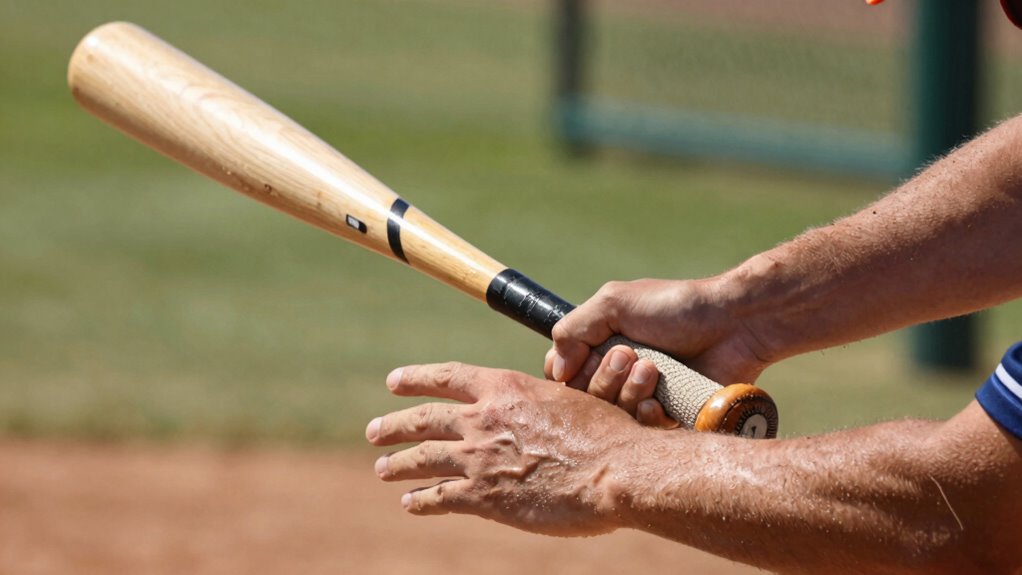
Swing sensors have revolutionized how players and coaches analyze hitting performance, but they don’t capture everything that contributes to a good swing. One key limitation is that sensor calibration is vital for accurate measurements; if not properly calibrated, data accuracy suffers. Additionally, sensors mainly track physical metrics like bat speed and angle but miss nuances like timing, decision-making, and feel. They also overlook:
Sensor calibration is essential; without it, data accuracy and insights are compromised.
- The player’s mental approach and focus during the swing
- The influence of environmental factors, such as wind or surface conditions
- Subtle adjustments in grip or stance that affect contact
- The quality of contact, such as sweet spot hits versus mis-hits
While sensors provide valuable data, they can’t fully quantify the complex, dynamic nature of hitting skill.
Can Bat Speed Data Help You Hit Better?

Many coaches and players rely on bat speed data to improve hitting performance, but does it really tell the whole story? While higher bat speed often correlates with power, it doesn’t guarantee better contact or consistency. Bat speed misconceptions can lead you to focus solely on raw numbers, ignoring other vital factors like timing and swing path. Also, swing sensor limitations mean that the data may not capture your entire swing mechanics. Here’s a quick comparison:
| Aspect | What it Measures |
|---|---|
| Bat Speed | Speed of the bat at contact |
| Swing Mechanics | Overall swing path and timing |
| Power Output | Force generated during the swing |
| Contact Quality | Quality of contact with the ball |
Focusing only on bat speed can mislead you; balanced training is essential.
Frequently Asked Questions
Do Swing Sensors Measure Bat Acceleration or Just Speed?
Swing sensors primarily measure bat speed, but they also capture acceleration data, which requires proper sensor calibration for accurate readings. When you analyze the data, remember that raw acceleration values reflect how quickly your bat’s velocity changes during the swing. By understanding both speed and acceleration, you can better interpret your swing mechanics, ultimately improving your performance. Always make certain your sensor is calibrated correctly for precise data interpretation.
Can Swing Sensors Distinguish Between Different Types of Swings?
You bet swing sensors can distinguish between different types of swings! They analyze swing mechanics and detect subtle variations, like a powerful uppercut or a quick slap. With their precision, you’ll see if your swing consistency improves or falters. It’s like having an expert coach in your pocket, pointing out exactly how your swings differ and helping you refine your technique to crush those home runs!
How Accurate Are Swing Sensors for Different Skill Levels?
Swing sensors’ accuracy varies with skill level because calibration plays a key role. For beginners, sensors might be less precise due to inconsistent swings, but as you improve and calibrate the device properly, accuracy increases. Advanced players will benefit from better calibration and consistent swings, making sensor data more reliable. Keep in mind, skill level impacts how well the sensors interpret your swings, so regular calibration is essential for accurate measurements.
Do Swing Sensors Account for Bat Angle or Only Speed?
Think of swing sensors as your trusted navigator—they primarily measure bat speed, but some advanced models also factor in bat angle, offering a fuller picture. To guarantee accurate readings, proper sensor calibration is vital, as it maintains data consistency. While speed is the focus, don’t forget that bat angle influences your swing dynamics, and high-quality sensors can capture this nuance, helping you refine your technique like a seasoned pro.
Is There a Standard for Measuring Bat Speed Across Devices?
There isn’t a universal standard for measuring bat speed across devices, so you should focus on device calibration for accurate results. Different sensors may use varied algorithms, affecting measurement consistency. To get reliable data, make certain your device is properly calibrated regularly. By doing this, you’ll improve the accuracy of bat speed readings, making it easier to track progress and compare measurements over time across various training sessions and equipment.
Conclusion
By understanding what swing sensors really measure, you can better interpret your bat speed data. Think of it as tuning into the rhythm of your swing, not just chasing a number. While these devices reveal part of your power, they don’t capture the full swing’s artistry. Use this insight to refine your approach, trusting the feeling of the bat in your hands, and let your swing flow naturally toward improvement.