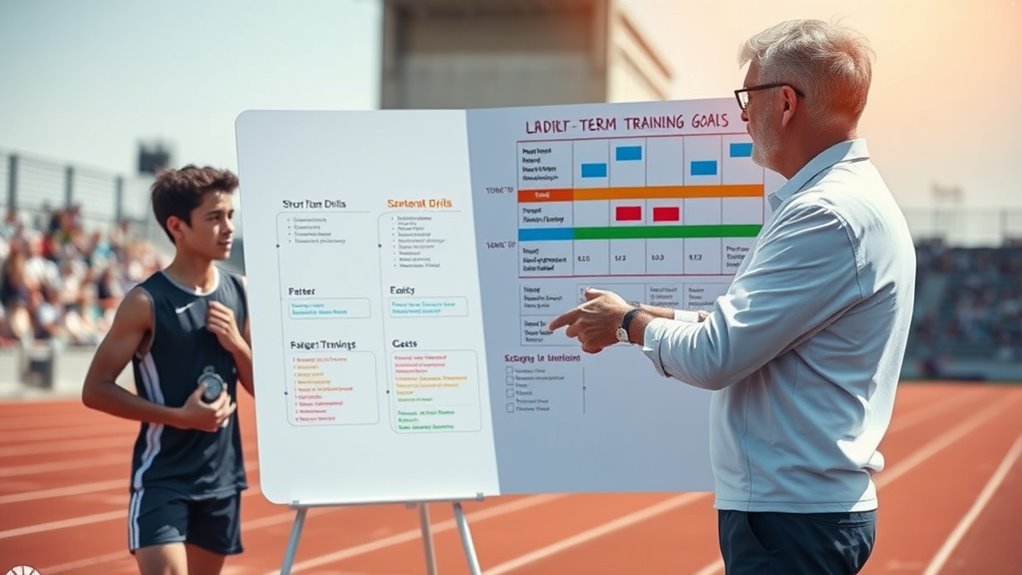

To help athletes set goals effectively, focus on balancing short-term and long-term planning. Short-term goals, like weekly improvements, keep motivation high and provide immediate feedback, while long-term goals give a clear vision and purpose for sustained growth. Revisit and adjust these goals regularly to stay aligned with progress. By understanding how to integrate both types of goals, you’ll set up athletes for lasting success—continue exploring these strategies to learn more.
Key Takeaways
- Short-term goals provide immediate motivation and measurable benchmarks, while long-term goals offer overall vision and direction.
- Balancing both types ensures sustained effort, with short-term wins maintaining engagement and long-term aims guiding progress.
- Breaking long-term goals into smaller milestones makes them manageable and keeps athletes motivated over time.
- Regular reassessment aligns short- and long-term plans with evolving performance and personal development.
- Incorporating recovery and resilience strategies supports ongoing progress and prevents burnout in both planning types.
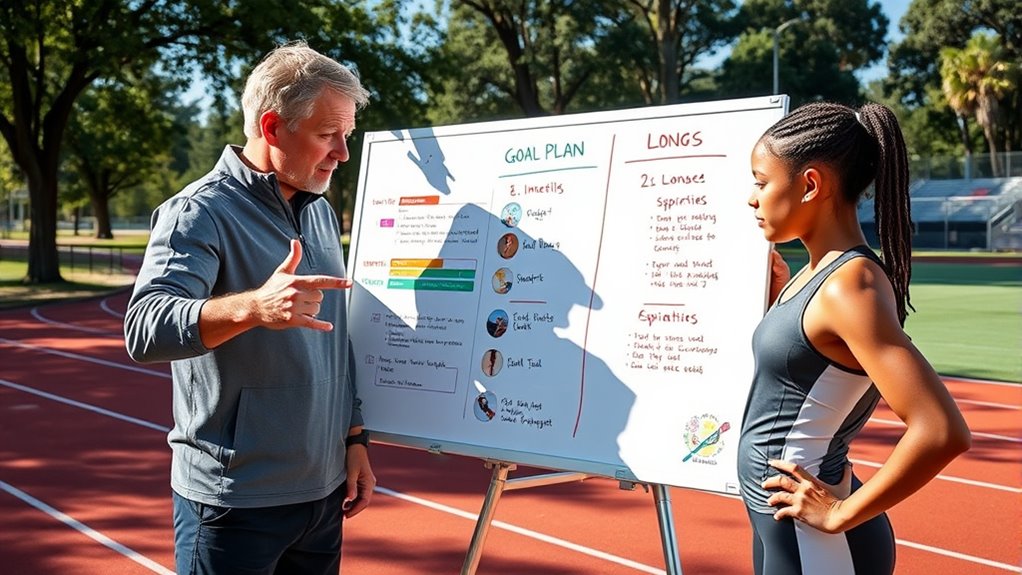
Have you ever wondered how top athletes stay motivated and focused? The answer often lies in their ability to set clear, achievable goals that keep them driven through both setbacks and successes. When it comes to goal setting, understanding the difference between short-term and long-term planning is essential. Short-term goals act as stepping stones, providing immediate motivation and a sense of progress. They might include improving your sprint time this week or mastering a new technique in training. These goals help you stay engaged and give you tangible benchmarks, but they also require mental resilience to keep pushing forward, especially when results aren’t immediate. Developing strong recovery strategies becomes critical here because setbacks—like injuries or performance dips—are inevitable. Recovery strategies help you bounce back quickly, maintain your mental resilience, and stay focused on your broader objectives.
Long-term goals, on the other hand, are about vision and direction. They might involve qualifying for a national championship or achieving a personal best within a year. These goals give you purpose and a roadmap, but they can also feel distant and sometimes overwhelming. That’s why breaking them down into smaller, manageable milestones is necessary. This approach keeps your motivation high and prevents burnout. When you encounter obstacles, your mental resilience is tested, but by having a clear long-term goal, you’re more likely to persevere. Recovery strategies come into play here too, as they help you manage fatigue, prevent injuries, and stay mentally sharp over time. Regularly reassessing your progress and adjusting your plans guarantees you stay aligned with your ultimate ambitions.
In both short-term and long-term planning, balance is key. You need the immediate satisfaction of short-term wins to fuel your motivation, but also the big-picture focus that keeps you committed over months or years. Building mental resilience involves not just pushing through hardships but also understanding your limits and knowing when to take recovery seriously. Incorporating recovery strategies, like proper rest, nutrition, mental health practices, and injury prevention, guarantees you can sustain your efforts over the long haul. When you integrate these elements into your goal-setting process, you develop a resilient mindset that thrives on steady progress and adaptability. Ultimately, this balance makes the journey more manageable and rewarding, bringing your athletic ambitions within reach while safeguarding your well-being along the way.
athlete goal setting journal
As an affiliate, we earn on qualifying purchases.
As an affiliate, we earn on qualifying purchases.
Frequently Asked Questions
How Often Should Athletes Reassess Their Goals?
You should reassess your goals regularly, ideally every few months, to track your progress and stay motivated. Regular progress tracking helps you see what’s working and where adjustments are needed. Be flexible with your goals, allowing changes based on your development or new priorities. This ongoing reevaluation ensures your goals remain relevant, challenging, and achievable, helping you stay focused and committed to your athletic journey.
What Role Does Mental Health Play in Goal Setting?
They say, “A healthy mind is a healthy body,” and that couldn’t be truer. Mental health plays a crucial role in goal setting, as it influences your motivation and focus. Practicing mindfulness and building emotional resilience help you stay grounded and adaptable when faced with setbacks. Prioritizing mental well-being ensures you set realistic goals, maintain consistency, and ultimately achieve your athletic aspirations with confidence and clarity.
How Can Coaches Effectively Motivate Athletes Toward Their Goals?
You can motivate athletes effectively by using motivational techniques like positive reinforcement and setting achievable milestones, which boost confidence. Incorporate accountability strategies such as regular check-ins and progress tracking to keep them committed. By creating a supportive environment and celebrating small wins, you help athletes stay focused and driven toward their goals, fostering resilience and a strong sense of purpose throughout their journey.
What Are Common Pitfalls in Short-Term Goal Planning?
You might face motivation barriers if your short-term goals are too vague or not meaningful, making it hard to stay committed. Unrealistic expectations can also lead to frustration and loss of motivation when progress stalls. To avoid these pitfalls, set specific, achievable goals, and regularly reassess them. This keeps you motivated, focused, and confident, ensuring you stay on track without feeling overwhelmed or discouraged.
How Do Goal-Setting Strategies Differ Across Sports?
Did you know that individual sports often focus on personalized training routines, while team sports emphasize team dynamics? You tailor goal-setting strategies accordingly; for example, individual athletes prioritize skill mastery and personal records, whereas team sports stress cohesion and collective objectives. Your approach should adapt to the sport’s nature, ensuring that short-term goals enhance performance within training routines, and long-term goals foster team synergy and sustained success.
recovery foam roller for athletes
As an affiliate, we earn on qualifying purchases.
As an affiliate, we earn on qualifying purchases.
Conclusion
Now that you understand the importance of balancing short-term and long-term goals, you’re better equipped to guide athletes effectively. Remember, setting clear, achievable milestones keeps motivation high, while long-term visions give direction. It’s all about finding that sweet spot—working towards big dreams without losing sight of immediate wins. Keep pushing, stay adaptable, and you’ll see that success is often a case of the right plan at the right time. After all, Rome wasn’t built in a day.
sports nutrition supplements for recovery
As an affiliate, we earn on qualifying purchases.
As an affiliate, we earn on qualifying purchases.
training progress tracker for athletes
As an affiliate, we earn on qualifying purchases.
As an affiliate, we earn on qualifying purchases.